



Housing providers and public‑sector asset owners are under increasing pressure to improve energy performance, ensure regulatory compliance and make better long‑term investment decisions, often while working with incomplete or unreliable stock data. A recent pilot delivered by Mears for the Ministry of Defence (MOD) demonstrates how a data‑led approach can provide the clarity needed to manage complex estates more effectively.
 The pilot was carried out in Barrow-in-Furness under Mears’ MOD Rented Living Accommodation Project (RLAP) contract and focused on defence accommodation where homes are predominantly sourced through the private rented sector. The pilot was designed to test how improved data integrity and non‑intrusive survey techniques can support better understanding of stock condition and energy performance.
Through its IRT Surveying division, Mears’ approach starts with data aggregation and validation, addressing a challenge common across both housing and defence estates: Asset, EPC and condition data often exists across multiple systems, is out of date or has been built on assumptions. Mears collated available datasets, addressed missing information and recalculated SAP (Standard Assessment Procedure) Score and EPC ratings using verified sources such as the EPC register. The emphasis was on establishing confidence in the data and creating a reliable baseline for informed decision‑making.
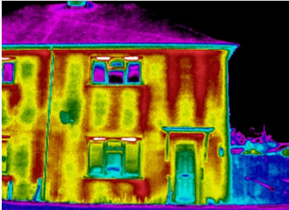
A key component of the pilot was the integration of thermal imaging surveys, adding a layer of intelligence that traditional stock data cannot provide. Using vehicle‑mounted systems, drones and handheld cameras, qualified thermographers captured thermal images at scale, accurately identifying heat loss, insulation deficiencies and potential moisture issues. These surveying methods are fully security cleared and carefully planned, reflecting the operational requirements of defence estates.
While the Barrow pilot was intentionally limited to the first two stages of the asset management and intelligence process, it demonstrated the value of investing in this early discovery phase to achieve a comprehensive understanding of stock performance.
This stock performance data provides an evidence‑based picture of the thermal performance of homes, rather than simple, unreliable EPC ratings, supporting informed decisions about energy efficiency, condition risks and future estate strategy. The surveying and data production are aligned to decent homes standard and support the critical delivery of damp and mould compliance. The insights demonstrated how data can be used to tailor retrofit, planned and capital works to achieve maximise return on investment by prioritising homes, identifying estate‑wide patterns and reducing reliance on assumptions. The data generated can also be used to identify properties eligible for government funding (where available).
Overall, the MOD Barrow IRT pilot illustrates how targeted, data‑driven interventions can support better asset management decisions, even within constrained delivery models. As defence and housing providers face growing pressure to meet energy, safety and value‑for‑money objectives, this approach offers a replicable model for improving insight, reducing risk and supporting long‑term estate planning.
For more information click here.

Post written by: Vicky Maggiani
Vicky has worked in media for over 25 years and has a wealth of experience in editing and creating copy for a variety of sectors.
RELATED ARTICLES

July 23, 2026
Why supply chain resilience is so important for the defence sector
The impact of climate change is becoming more significant, visible and severe, and organisations within defence need to assess whether

July 23, 2026
Safe and secure hazardous waste management for the defence sector
Efficient and sustainable waste management is crucial for operations and construction within the defence sector. The main priority is ensuring