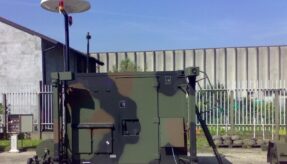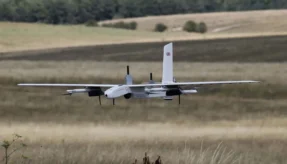



BAE Systems has signed a Memorandum of Understanding with Turkish defence technology firm TUALCOM to explore joint development of communications, navigation and electronic warfare technologies for future autonomous platforms.
The agreement, announced on 12 August 2026, establishes a strategic framework rather than a funded programme, with the two companies set to investigate how advanced RF communications and assured navigation systems could be integrated into autonomous aircraft designed to operate in contested and degraded environments.
The work sits within FalconWorks, BAE Systems’ advanced research and technology business inside its Air sector, which has been positioned as the delivery vehicle for the UK’s next generation of combat air and autonomous systems concepts. Dave Holmes, FalconWorks’ Managing Director, framed the collaboration around resilience rather than platform design alone, saying future autonomous capability “will depend not only on advanced aircraft, but on resilience of systems that enable them to sense, communicate and decide in contested environments.” TUALCOM’s chief executive, Ali Pastonoglu, described the tie-up as a chance “to combine our respective strengths and accelerate innovation.”
The stated ambition is to produce sovereign, exportable technology that can serve UK, Turkish and international customers, with the MoU intended to let both companies evaluate concepts before deciding whether to progress any of them into funded programmes.
A MoU of this kind carries no contract value and no guaranteed procurement activity, but it does mark out RF communications, navigation and electronic warfare as growth areas where BAE Systems is actively looking to build capability ahead of future combat air and autonomous systems requirements, likely including work connected to the UK’s wider Global Combat Air Programme ecosystem. Companies in the resilient navigation, secure communications and EW supply chain, particularly UK and Turkish SMEs already working with either partner, should treat this as an early marker rather than a live opportunity, and one worth watching as it matures from concept evaluation toward any funded work package that BAE Systems or TUALCOM subsequently puts out to their respective supply chains.
Post written by: Alastair Roberts
RELATED ARTICLES

August 11, 2026
Air - MOD Hands Thales £9.8m Link 16 Network Contract
The Ministry of Defence has awarded Thales UK Limited a contract worth £9.82 million to continue providing the Link 16