



The Ministry of Defence has awarded Thales UK Limited a contract worth £9.82 million to continue providing the Link 16 Network Management System, the software that monitors and reconfigures one of the UK armed forces’ core tactical data links. The award, published as a contract award notice on 10 August 2026, runs for a two-year base term with two further one-year extension options, plus provision for out-of-hours crisis operations support, and follows a signature date of 7 August 2026.
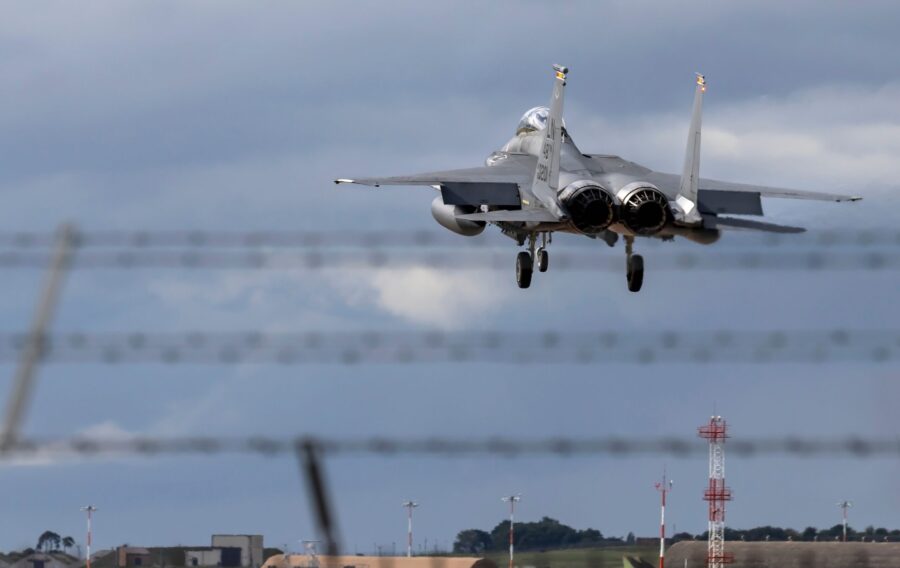
Link 16 is the NATO-standard secure data link that lets aircraft, ships and ground systems exchange real-time situational awareness across a battlespace, and it also operates inside UK airspace alongside civil traffic under a Frequency Clearance Agreement with the Civil Aviation Authority. The Network Management System is the layer that keeps that shared picture coherent: it lets the department monitor network activity and reconfigure architecture so that UK forces can run, or support, two simultaneous deployed operations without the network falling out of compliance with its civil aviation obligations.
The notice, issued under the Defence and Security Public Contracts Regulations 2011, cites technical grounds: Thales owns the proprietary software underpinning the system and holds the specialist expertise needed to operate and modify it, and only one tender was received. The department’s stated concern is that switching supplier would risk both operational capability and the training pipeline built around the existing configuration.
For the defence procurement and supply chain community, the notice is a reminder of how proprietary software and legacy configuration can narrow a market to a single credible bidder long before a contract notice appears. Link 16 management is a specialist niche, but the pattern is a familiar one across defence IT and communications: systems built around one vendor’s architecture tend to stay that way, whatever wider policy says about open competition. For smaller suppliers, the practical route in is more likely to be subcontracting into primes like Thales than head-on bidding for the core contract — unless and until the MOD designs its next generation of network management capability around competition rather than continuity.
Post written by: Alastair Roberts
RELATED ARTICLES

September 9, 2026
Homeland - Dstl launches new strategic communications wargame
The Defence Science and Technology Laboratory has developed a wargame based on the 2021 HMS Defender incident to teach strategic

September 9, 2026
Homeland - Innovating for Defence: IP Strategies for Dual-Use Innovators
The MoD is actively encouraging startups and tech-led SMEs to innovate for Defence to capitalise on fast-moving civilian technologies and