
This week, Stuart John, from the Future Defence Support Services (FDSS) Bid Team at Leidos, examines new research with the Institute for Collaborative Working into how government, prime contractors and SMEs can move beyond traditional, contract-led supplier relationships towards structured collaboration — and why this shift is becoming essential to delivering defence capability at the pace the Armed Forces now require.
“Through our work with the Institute for Collaborative Working, Leidos is helping to shape the conversation on how major defence programmes can work more effectively with SMEs and unlock greater value from the wider supply chain.”
Defence Support Ecosystem
“The UK’s defence support ecosystem has never been more interconnected. Modern capability depends on integrating digital technologies, advanced manufacturing, software, data and specialist expertise across multiple organisations. As a result, delivering military capability is rarely the responsibility of any single company.”
“Success increasingly depends on how well government, prime contractors and SMEs work together. The challenge is no longer just building a strong supply chain, but creating an environment where organisations work towards shared goals.
“Traditional supplier relationships, built around discrete contracts and short-term commercial objectives, are increasingly ill-suited to today’s operating environment. They can discourage information sharing, limit long-term investment and reduce opportunities to build the trusted relationships that strengthen the defence industrial base. Future programmes require organisations to move beyond contract management alone and towards partnerships that align commercial incentives with programme outcomes.”
Supplier Relationships
“Recent research by Leidos and the Institute for Collaborative Working highlights that collaboration should not be viewed as a softer alternative to robust commercial management. Rather, structured collaboration is a disciplined approach to improving delivery by aligning organisations around shared objectives. In doing so, it enables programmes to balance accountability with innovation and resilience.
“This sort of structured collaboration establishes common ways of working and encourages partners to address challenges collectively rather than through the lens of an individual contractual position. Importantly, it enables organisations to balance commercial accountability with the flexibility needed to manage increasingly complex programmes.
“This matters particularly for SMEs. Many bring world-leading niche expertise but can face uncertainty when engaging with large defence programmes. Collaborative delivery models give smaller suppliers greater confidence to invest in innovation, strengthening the wider industrial base in the process.
“The benefits extend well beyond individual suppliers. Organisations that collaborate effectively are often better able to identify risks earlier and can respond more quickly when circumstances change, as is so often the case. This becomes especially valuable as defence programmes operate in an environment that is increasingly characterised by evolving threats and rapid technological change.”
Benefits Beyond Suppliers
“Of course, collaboration inevitably encourages innovation. By sharing unique advances in defence capability, organisations with different perspectives are able to combine their expertise to solve shared challenges. Any environment that facilitates knowledge sharing allows ideas to be tested and innovation to flow across organisational boundaries. The result is that key programmes can access a broader range of capability than any single organisation could develop alone.
“As defence continues to modernise, collaborative delivery is becoming less a competitive advantage and more a prerequisite for success. The organisations that create environments where partners can share knowledge, manage risk collectively and align around common objectives will be better placed to deliver capability at the pace the Armed Forces increasingly require.
“The obvious question, however, is what effective collaboration actually looks like in practice. Building genuinely resilient defence supply chains requires more than good intentions – it demands the right structures, behaviours and leadership. That is where the conversation now needs to move.”
You might also like:
How Can Defence Programmes Unlock More Value from SMEs?
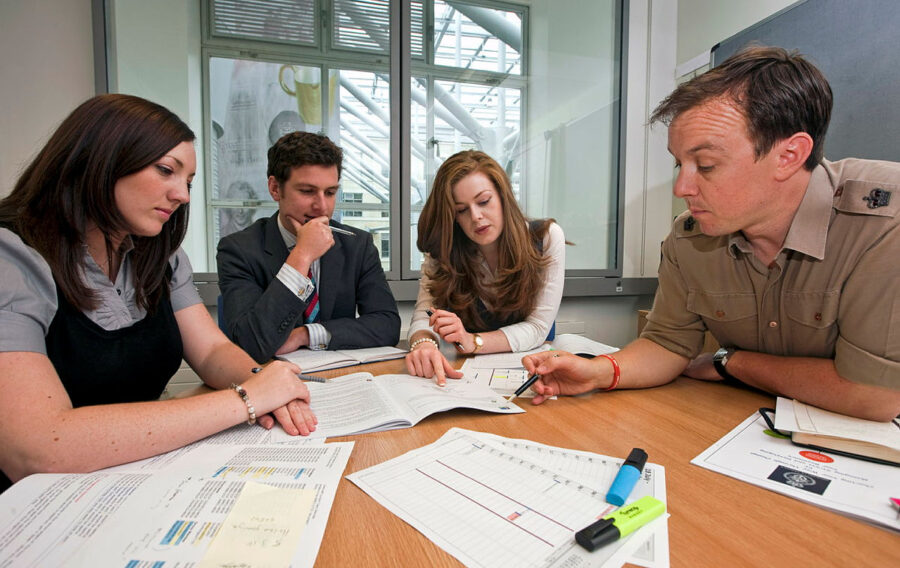
Image: MoD Crown Copyright.

September 9, 2026
Homeland - Innovating for Defence: IP Strategies for Dual-Use Innovators
The MoD is actively encouraging startups and tech-led SMEs to innovate for Defence to capitalise on fast-moving civilian technologies and

September 9, 2026
Countdown Continues Towards DPRTE Defence Summit as UK Defence Industry Marks Pivotal Year
With six weeks to go, the DPRTE Defence Summit returns to Manchester at a critical moment for UK defence —