



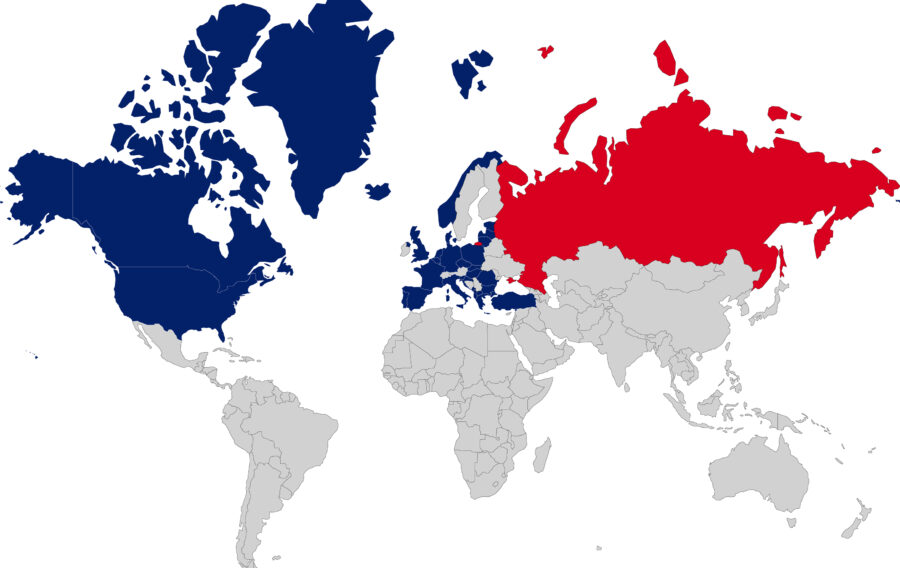
The United Kingdom has delivered a firm and direct statement to the Organisation for Security and Cooperation in Europe (OSCE) in Vienna, rejecting Russian attempts to portray increased European defence spending and NATO readiness as acts of aggression, and making clear that these are defensive measures taken in direct response to Russia’s war against Ukraine.
The statement was delivered on 15 July by Ankur Narayan, UK Counsellor for Politico-Military Affairs at the UK Delegation to the OSCE, and represents one of the clearest public articulations of the UK’s position on the relationship between Russian aggression and European rearmament.
Cause and Effect
The OSCE Forum had heard arguments from Russia claiming that Europe is “militarising” and that NATO poses a threat to the Russian Federation. The UK statement addressed those claims directly and without equivocation.
Narayan said: “The Russian Federation invites this Forum to treat cause and effect as though they were reversed. We should restore them to their proper order. NATO Allies are indeed increasing their military capability and readiness. These are not the opening moves of an aggressor; they are defensive measures taken in response to a profoundly deteriorated security environment.”
The statement went on to make the case that increased defence spending, higher readiness, and stronger national capabilities are not evidence of hostile intent but a rational and proportionate response to demonstrated Russian aggression, including the invasion of sovereign territory and the forcible seizure of land by force.
NATO’s Purpose Restated
The UK statement used the OSCE platform to restate clearly the defensive nature and purpose of the NATO alliance, pushing back on Russian characterisations of the alliance as a threat.
“NATO is a defensive alliance. Its essential purpose is to safeguard the freedom and security of its members through collective defence. Let me be completely clear: NATO seeks no war with the Russian Federation, and it threatens none. What Russia presents as encirclement is the predictable consequence of its own choices: the invasion of sovereign neighbours and the seizure of territory by force.”
Ukraine and the Path to Peace
Reaffirming the UK’s long-term commitment to Ukraine, the statement noted that Russia continues mass strikes against Ukrainian cities, sustaining casualties of tens of thousands each month for negligible territorial gains, while refusing the full, immediate, and unconditional ceasefire that Ukraine has repeatedly offered.
The UK concluded its statement with a clear message to Moscow: “If the Russian Federation is troubled by the scale of Europe’s investment in its own defence, there is a straightforward remedy available to it. Withdraw its forces from Ukraine’s internationally recognised territory, cease its attacks, and return to genuine diplomacy.”
Why This Matters for UK Defence
The UK’s statement at the OSCE reflects the broader strategic context that is driving record defence investment at home and across NATO allies. The argument that European rearmament is a rational and necessary response to demonstrated aggression, rather than a provocation, is central to the political case for sustained increases in defence spending across the alliance.
For the UK defence industry and supply chain, that strategic context translates directly into long-term demand. The trajectory of NATO defence spending, reinforced by statements like this one, underlines that the current investment cycle is not a short-term surge but a structural shift in how European nations are approaching their own security, with significant and sustained procurement implications for years to come.
Join our new expanding community at DPRTE.co.uk – our new Defence Community Platform, creating a single, year-round digital hub for the UK’s defence procurement and supply chain sector.

Post written by: Vicky Maggiani
Vicky has worked in media for over 25 years and has a wealth of experience in editing and creating copy for a variety of sectors.
RELATED ARTICLES

July 27, 2026
Air - BAE Systems Unveils Brontanax: The UK's First Autonomous Collaborative Combat Aircraft
The unveiling of Brontanax at Farnborough International Airshow marks a defining moment for UK sovereign combat air capability – and