



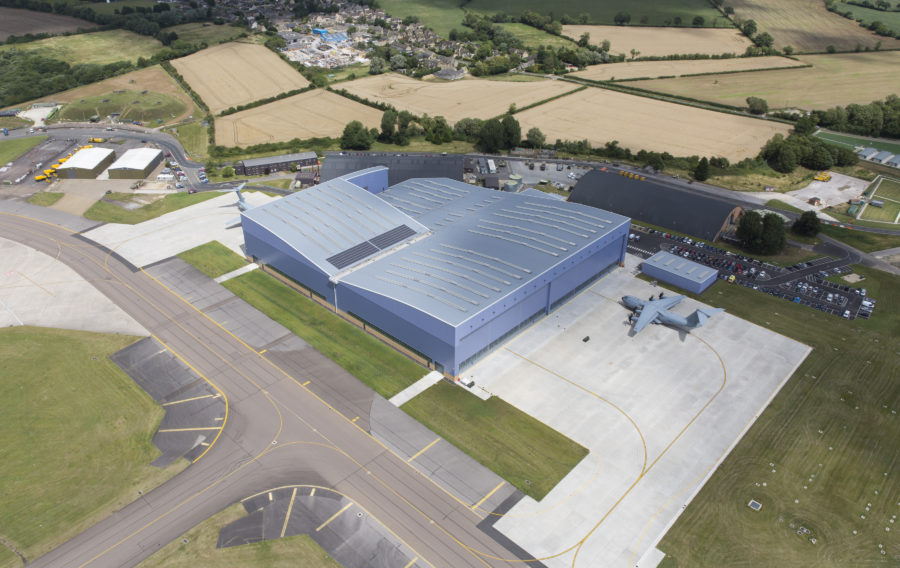
A major infrastructure programme is now underway at RAF Brize Norton, the UK’s busiest military air base, as part of a wider push to renew and future-proof critical airfield infrastructure across the Defence estate.
The project, delivered by the Defence Infrastructure Organisation, will see the base’s 3km runway surface fully replaced alongside refurbishment of taxiways, airfield lighting upgrades and improvements to drainage and supporting infrastructure. VolkerFitzpatrick has been awarded the £180 million contract under the RAF’s Aircraft Operating Surface Programmatic Approach, with AECOM providing technical services. The scale of the works is considerable, with around 350,000 tonnes of material set to be used during construction, equivalent to the weight of 29,000 double-decker buses.
The programme sits within the Defence Investment Plan’s Project Trenchard, the RAF’s £10 billion, ten-year effort to modernise its bases and reverse decades of underfunding. Minister for Defence Readiness and Industry Luke Pollard MP said the base “is the backbone of UK air mobility,” and that the investment would ensure it stays that way while creating jobs and opportunities locally. John Crennell, Deputy Head Air Infrastructure Major Programmes, confirmed the project has moved from design into delivery and is being phased carefully around a planned runway closure later this year, with the RAF working to ensure operations continue seamlessly from bases elsewhere in the UK during that period.
Bob Noyes, DIO Principal Project Manager, described the scheme as “a landmark investment in one of the RAF’s most critical assets.” Beyond the airfield itself, the project is expected to create 20 full-time local jobs, including five apprenticeships, and provide 30 weeks of work experience for local candidates, with VolkerFitzpatrick prioritising its supply chain within a 50-mile radius to support businesses near the base. Jeff Carter, Project Director at VolkerFitzpatrick, said early planning has positioned the team for delivery through to 2027. Alongside the runway works, construction is also underway for 265 new military family homes at the station, part of the wider Defence Housing Strategy.
For the UK defence and infrastructure supply chain, this programme reflects the kind of sustained, phased investment now flowing through Project Trenchard, with demand spanning heavy civil engineering, airfield systems and long-term facilities support, alongside the local subcontracting opportunities that come with a strict regional supply chain commitment.
This story touches on capability areas including:
- Airfield and runway construction and resurfacing
- Airfield lighting, drainage and utilities infrastructure
- Military housing and accommodation construction
- Regional subcontracting and local supply chain engagement
- Defence estate modernisation and technical services

Post written by: Vicky Maggiani
Vicky has worked in media for over 25 years and has a wealth of experience in editing and creating copy for a variety of sectors.
RELATED ARTICLES

September 10, 2026
Homeland - Why 'Structured Collaboration' is Becoming a Defence Necessity
This week, Stuart John, from the Future Defence Support Services (FDSS) Bid Team at Leidos, examines new research with the

September 7, 2026
Homeland - Government commits £71m to Hemerdon tungsten and tin mine near Plymouth
The National Wealth Fund has committed up to £71 million to Tungsten West to restart the Hemerdon tungsten and tin