



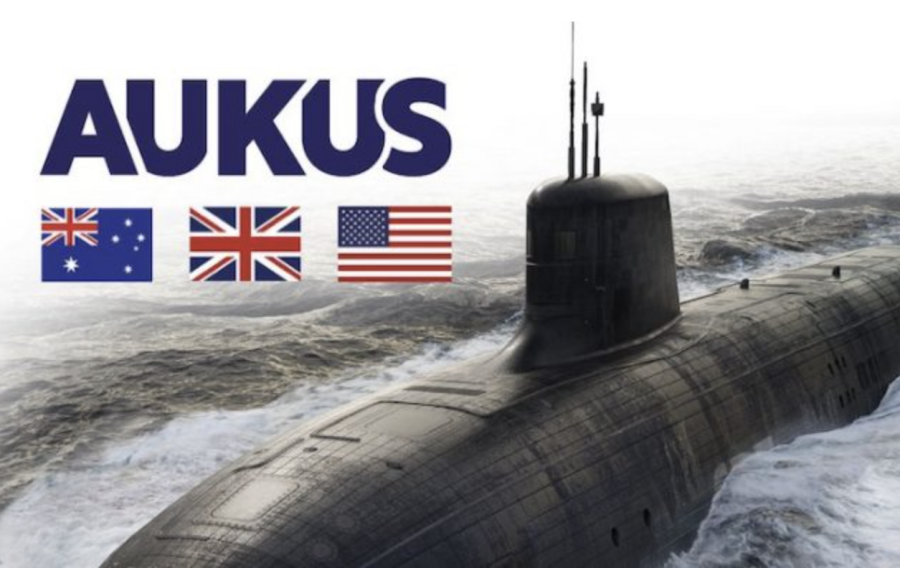
The House of Commons Defence Committee published its long-awaited AUKUS report on Tuesday 28 April with the unusually direct title “AUKUS: Government must do more – and do it faster.”
The report, the first major committee output specifically focused on UK delivery of the trilateral partnership, was the headline parliamentary event in the run-up to Prorogation.
Chair Tan Dhesi MP took aim at political drift, telling colleagues: “AUKUS is a once-in-a-generation chance to deliver state-of-the-art military capabilities, bolster the UK’s defence industrial base and skills, and to strengthen the UK’s relations with its partners, the US and Australia. The opportunities AUKUS presents are great, but so are the challenges it poses … the UK’s political leadership on AUKUS has dwindled.” Dhesi called for the Prime Minister to be a personal advocate within
Whitehall and warned that without “committed, consistent political will” the Committee has “serious doubts that AUKUS can be delivered.”
The report’s industrial messages are blunt. Submarine availability is described as “critically low.” HMNB Devonport in Plymouth and HMNB Clyde require infrastructure improvements “at pace” to relieve pressure on the in-service fleet and prepare for SSN-AUKUS. Barrow-in-Furness, home to BAE Systems’ submarine build facility, is judged “absolutely essential to the success of AUKUS”; the Committee calls for more central-government investment in the town and warns that “the planned regeneration is too big to fail.” It also flags concern that the AUKUS investment pipeline “has already faltered” and that this “cannot be allowed to happen again.”
On Pillar 2 – the trilateral hypersonics, AI and advanced-technology track – the Committee finds that delivery faces an uphill battle to restore credibility after a “disappointing start” and calls for a more joined-up Whitehall approach to the prosperity benefits. It also calls for the urgent removal of workforce-mobility barriers and for consideration of a dedicated AUKUS visa, warning that current bottlenecks could threaten SSN-AUKUS delivery in the UK and Australia.
For the supply chain, the report puts firm political wind behind capex bids at Devonport, Clyde and Barrow, and reinforces the case for Pillar 2 entrants at hypersonics, AI and quantum tier-2 level. It will also frame how the next government, whoever forms it, sets the parameters of the post-election Defence Investment Plan.

Post written by: Vicky Maggiani
Vicky has worked in media for over 25 years and has a wealth of experience in editing and creating copy for a variety of sectors.
RELATED ARTICLES

September 10, 2026
Homeland - Why 'Structured Collaboration' is Becoming a Defence Necessity
This week, Stuart John, from the Future Defence Support Services (FDSS) Bid Team at Leidos, examines new research with the

September 7, 2026
Homeland - Government commits £71m to Hemerdon tungsten and tin mine near Plymouth
The National Wealth Fund has committed up to £71 million to Tungsten West to restart the Hemerdon tungsten and tin