


The Defence Science and Technology Laboratory (Dstl) has successfully concluded a major trial assessing the capability of robotic and autonomous systems to manage recovery operations in hazardous environments.
The trial was funded by the Department for Environment, Food and Rural Affairs (Defra) and focused on Chemical, Biological, and Radiological (CBR) incident response. By deploying advanced robotics in a simulated real-world scenario -an empty shopping unit – the exercise demonstrated how autonomous platforms can navigate, detect, sample, and remediate contaminated areas, allowing human operators to remain at a safe distance from high-risk substances.
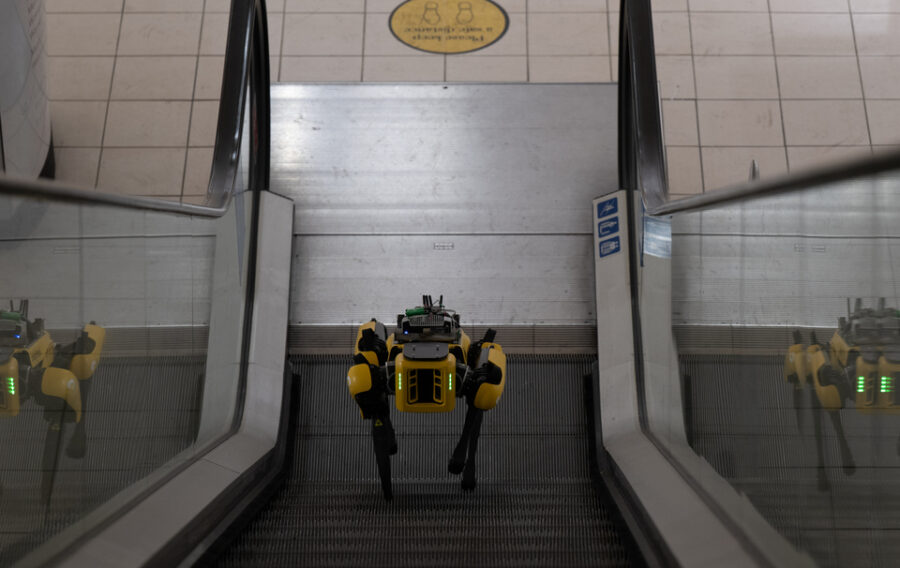
The trial addressed specific challenges inherent to urban interior spaces, including low lighting, physical obstacles, and difficult-to-reach surfaces, which often impede standard drone airflow and navigation. For businesses in the UK defence supply chain, this development signals a growing demand for robust autonomous platforms capable of operating in complex, GPS-denied, or confined environments. The participation of several academic and industrial partners highlights the multi-disciplinary nature of this emerging market. Notable contributors included Createc, which provided world-leading robot control software to manage a diverse fleet comprising drones, robotic dogs, and four-wheeled vehicles capable of climbing stairs and opening doors.
Further technological demonstrations included a multi-directional drone developed by Autonomous Devices, featuring a specialised swabbing system for contamination testing and a decontamination spray applicator. Additionally, the University of Bristol showcased an uncrewed ground vehicle (UGV) equipped with a robotic arm, working in tandem with a tethered drone to conduct decontamination at various heights. These advancements offer actionable insights for sub-contractors specialising in robotics, sensor integration, and specialised chemical engineering, as the MOD and Defra seek to transition these technologies from laboratory research into operational capabilities.
Strategically, this trial forms part of a long-term partnership between Dstl and Defra, the lead government department for environmental remediation following homeland CBR events. A significant outcome of this collaboration is the establishment of the National Technical Advisory Group for CBR Recovery (NTAG-R). This group will be responsible for providing authoritative technical advice on the requirements and capabilities needed for future recovery operations. For industry stakeholders, the NTAG-R will likely become a key body for defining the standards and procurement specifications of future CBR resilience technology. As Dstl continues to bridge the gap between research and operational deployment, the focus remains on delivering high-value, cutting-edge science to enhance UK national resilience and ensure taxpayer value through representative environment testing.
Image: DSTL
If you would like to join our community and read more articles like this then please click here

Post written by: Vicky Maggiani
Vicky has worked in media for over 25 years and has a wealth of experience in editing and creating copy for a variety of sectors.
RELATED ARTICLES
September 10, 2026
Homeland - Why 'Structured Collaboration' is Becoming a Defence Necessity
This week, Stuart John, from the Future Defence Support Services (FDSS) Bid Team at Leidos, examines new research with the

September 7, 2026
Homeland - Government commits £71m to Hemerdon tungsten and tin mine near Plymouth
The National Wealth Fund has committed up to £71 million to Tungsten West to restart the Hemerdon tungsten and tin