


CONNECTING THE DEFENCE COMMUNITY WITH INSIGHT, INTELLIGENCE & OPPORTUNITIES

Officially Supported By:   Supply2Defence

Official Media Partners for:

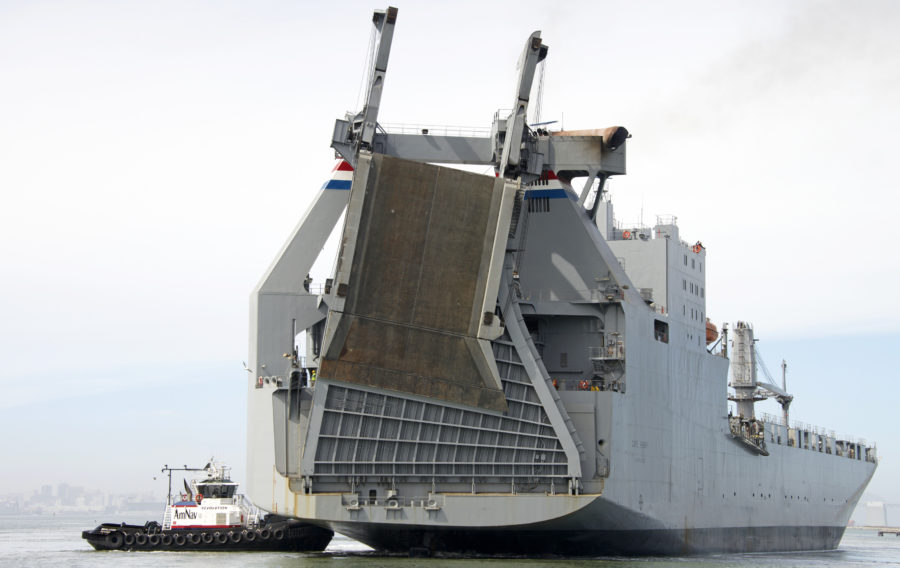
McKean Defense Group has been awarded a contract with the Army Watercraft System Product Directorate (PD AWS).

With a maximum ordering value of $47 million, McKean will provide systems technical support for Landing Craft, Ship to Shore Enablers, Towing and Terminal Operations vessels, and watercraft operations systems support over a five-year period of performance.

Tasking under the contract includes engineering and safety analysis, design support, integrated logistics, test asset support, obsolescence management, training and business case analyses. Work will be performed at Army sites across the country and at select international locations.

McKean will focus on improving the quality and availability of logistic products and the integration of these assets into AWS Engineering Process. Army watercraft support reflects a growing portion of McKean’s contract diversification.

Joseph Carlini, Chief Executive Officer of McKean Defense, said: “PD AWS requires a strong systems integrator with a real understanding of the unique mission, capability, and interoperability requirements of the Army Watercraft Fleet.

“Our team provides a depth of experience throughout the Life Cycle Management (LCM), Engineering Change Development (ECD), and AWS Engineering Processes.”

image © Sheila Fitzgerald / Shutterstock.com

If you would like to join our community and read more articles like this then please click here.

Army Watercraft System Product Directorate McKean Defense Group PD AWS

Post written by: Matt Brown

RELATED ARTICLES
ZeroUSV welcomed recently representatives from the Royal Navy, MOD and NSO (National Shipbuilding Office) to Manor Marine’s headquarters in Portland for a VIP tour showcasing the company’s expanding autonomous maritime capabilities. The visit follows ZeroUSV’s recent strategic investment in Manor Marine, strengthening the partnership and boosting sovereign UK production capacity for the company’s Oceanus class uncrewed surface vessels (USVs). During the tour, guests were shown around Manor Marine’s facilities and given an update on the ongoing build of ZeroUSV’s next-generation Oceanus17 platform, which remains on track to be launched in July this year. The tour demonstrated ZeroUSV’s ability to rapidly scale production of advanced British-built autonomous vessels, while highlighting the strength of UK sovereign shipbuilding and innovation within the maritime defence sector. Designed for long-range, over-the-horizon operations, Oceanus17 represents a significant step forward in modular, multi-role autonomous maritime capability. The 17-metre platform features a 4-tonne payload capacity and a 20ft ISO-compatible mission deck, enabling rapid reconfiguration for a wide range of defence, security and commercial maritime missions. Matthew Ratsey, Managing Director of ZeroUSV, said: “It was a pleasure to welcome representatives from the Royal Navy and MOD, and showcase the progress being made across our Oceanus programme. “The visit highlighted not only the pace at which we are developing advanced autonomous capabilities, but also the strength of British engineering and sovereign shipbuilding. Through our partnership with Manor Marine, we are building the foundations needed to deliver scalable, mission-ready USV capability for both defence and commercial applications.” Picture caption: Matthew Ratsey with the VIP tour aboard the Oceanus17 vessel 

May 27, 2026

Maritime - ZeroUSV Demonstrates UK Sovereign Maritime Capability During VIP Tour

ZeroUSV welcomed recently representatives from the Royal Navy, MOD and NSO (National Shipbuilding Office) to Manor Marine’s headquarters in Portland

Decision Advantage Under Fire: Why military connectivity must become a mission fabric

May 27, 2026

Land - Decision Advantage Under Fire: Why military connectivity must become a mission fabric

By Mark Todd, Innovation and Technology Director, BAE Systems Digital Intelligence In modern operations, the traditional definition of “connectivity” is no