



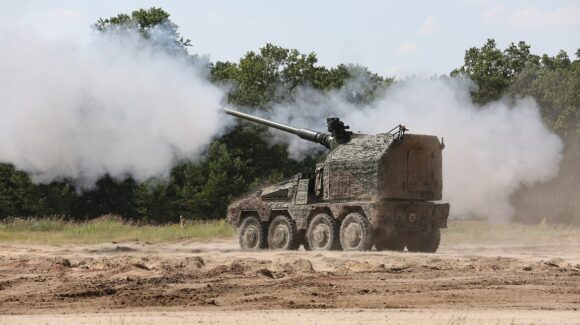
The British Army is to be equipped with 72 Remote Controlled Howitzers (RCH 155) under a nearly £1 billion contract – the most significant British artillery procurement in a generation, and a direct response to the capability gap created when the UK donated its AS90 systems to Ukraine in 2023. The ...
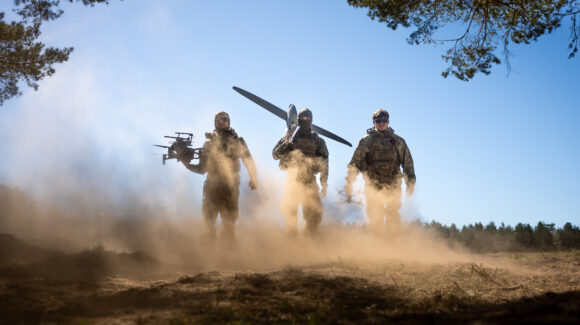
Sweden has conducted its largest military exercise as a NATO member, bringing together 18,000 soldiers from 12 Allied nations and Ukraine to rehearse the reinforcement and defence of Gotland and the Baltic Sea region – in what marks a historic milestone for Sweden’s fully integrated role within the Alliance. Exercise Aurora ...

Saab UK has completed its 100th Giraffe 1X radar system at its Fareham Campus, marking a significant production milestone for one of the UK’s most capable sovereign radar programmes – and simultaneously opening a new Integration & Verification (I&V) testing facility on the same site. The twin announcements underscore Fareham’s growing ...

QinetiQ-led Team Elaris has been awarded a £6 million Ministry of Defence contract to develop a deployable solution for enhanced Long-Range Navigation (eLoran) — a terrestrially based alternative to satellite navigation that can operate in environments where GPS signals are jammed or spoofed. The two-year Urgent Compass programme will produce a ...
Previous Next
RELATED ARTICLES

July 23, 2026
Homeland - MoD Publishes SME Action Plan with Ambition to Increase SME Spend by £2.5 Billion by 2028
The Ministry of Defence has set out its most comprehensive commitment to small and medium-sized enterprise growth in a generation,

July 23, 2026
Homeland - Ministers Set Out Golden Age Vision for UK Defence Industry at Farnborough International Airshow
Lord Coaker and Minister for Defence Readiness and Industry Luke Pollard used keynote speeches at Farnborough to deliver the clearest