



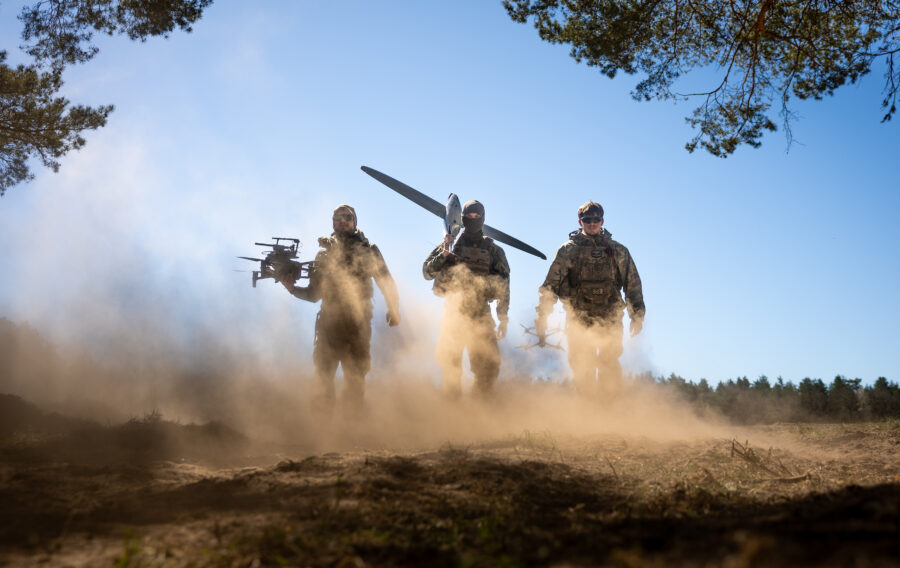
Sweden has conducted its largest military exercise as a NATO member, bringing together 18,000 soldiers from 12 Allied nations and Ukraine to rehearse the reinforcement and defence of Gotland and the Baltic Sea region – in what marks a historic milestone for Sweden’s fully integrated role within the Alliance.
Exercise Aurora 26, ran from 27 April to 13 May, is a large-scale validation of Sweden’s operational plans under NATO’s collective defence framework. It is the first time Sweden has conducted the Aurora exercise as a full NATO Ally, following its accession to the Alliance in 2024.
Gotland: The Baltic’s Strategic Pivot Point
The exercise centres on Gotland, Sweden’s large island in the middle of the Baltic Sea, which military planners across NATO regard as one of the most strategically significant pieces of territory in the region. Control of Gotland affects air and maritime access across the entire Baltic – making its rapid reinforcement a critical test of Alliance responsiveness.
The swift movement of Swedish and Allied units from mainland Sweden to Gotland formed a key moment of Aurora 26, with over 1,000 soldiers reinforcing the island during the exercise’s final stages. Allied contributions included air defence units, logistics capabilities, infantry and – in a notable first – drone teams from Ukraine, bringing direct frontline expertise in unmanned systems and modern defence tactics to a NATO exercise environment.
Rear Admiral Jonas Wikström, exercise director of Aurora 26, said: “An important piece of the puzzle for our collective defence is ensuring that units arrive in the right place, at the right time, and with the right capability.”
UK Forces Among the Participants
British forces are among those participating alongside Danish, American, Swedish and Ukrainian units – continuing a pattern of sustained UK engagement in Baltic region security that has intensified since Russia’s full-scale invasion of Ukraine in 2022. The exercise builds on the UK’s existing commitments to NATO’s enhanced Forward Presence in the region and its bilateral defence relationships with Nordic and Baltic allies.
Ukraine’s Role: Sharing Frontline Lessons
Ukraine’s participation with drone units is one of the most operationally significant aspects of Aurora 26. The conflict in Ukraine has produced more real-world experience of drone warfare at scale than any other theatre in recent history, and the integration of Ukrainian drone teams into a NATO exercise environment represents a direct transfer of that hard-won knowledge to allied forces rehearsing collective defence scenarios.
For the UK and other NATO members investing heavily in counter-UAS and autonomous systems capability, the lessons emerging from Aurora 26 – particularly around drone tactics, electronic warfare and the integration of uncrewed systems into combined arms operations — will carry direct procurement relevance.
Host Nation Support: A Procurement Dimension
Aurora 26 has also validated Sweden’s ability to provide Host Nation Support – enabling Allied forces to move soldiers, material and vehicles across Swedish territory and onto Gotland at operational pace. This logistical and legal framework is increasingly recognised as a critical enabler of NATO’s deterrence posture, and its validation in a live exercise environment has implications for how the Alliance plans and contracts for forward logistics, infrastructure and support services across the Baltic region.
Rear Admiral Wikström noted that the exercise had validated “Sweden’s ability to support Allied and international troops – enabling forces to move across Allied borders in order to conduct exercises or respond to crises and threats.”
The Broader Context
Aurora 26 takes place against a backdrop of sustained Russian aggression in Ukraine and a significantly deteriorated European security environment. Sweden’s defence establishment has been explicit about the context: “Russia’s relentless war of aggression against Ukraine poses the gravest threat to European security since the end of the Second World War.”
For the UK defence industry, exercises of this scale and complexity generate sustained demand across logistics, communications, air defence, uncrewed systems and force protection – and signal the Alliance’s direction of investment for years ahead.

Post written by: Vicky Maggiani
Vicky has worked in media for over 25 years and has a wealth of experience in editing and creating copy for a variety of sectors.
RELATED ARTICLES

September 10, 2026
Homeland - Why 'Structured Collaboration' is Becoming a Defence Necessity
This week, Stuart John, from the Future Defence Support Services (FDSS) Bid Team at Leidos, examines new research with the

September 7, 2026
Homeland - Government commits £71m to Hemerdon tungsten and tin mine near Plymouth
The National Wealth Fund has committed up to £71 million to Tungsten West to restart the Hemerdon tungsten and tin