



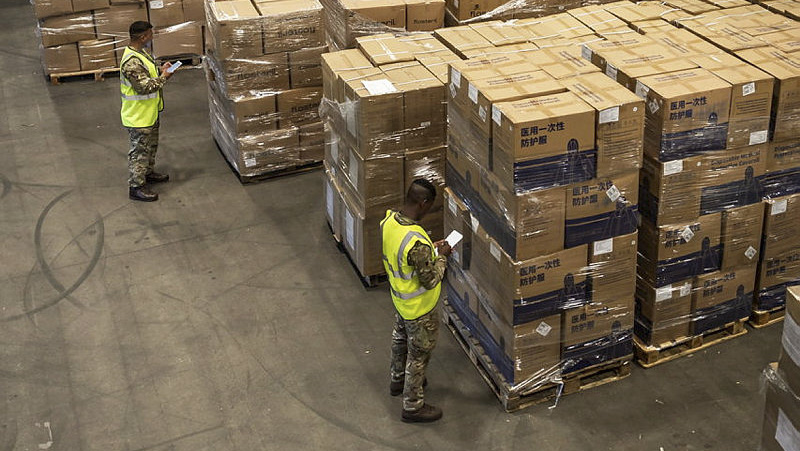
This week, Stuart John, from the Future Defence Support Services (FDSS) Bid Team at Leidos, gives his perspective on what effective defence supply chains should aspire to deliver.
“Resilience has become one of the defining priorities for defence. As geopolitical uncertainty grows and operational requirements evolve more rapidly, supply chains must do more than simply withstand disruption. They need to adapt and continue delivering capability when circumstances change.
“Traditionally, resilience has often been associated with continuity of supply or reducing dependence on individual suppliers. While those remain important, today’s defence environment requires a broader understanding of what makes a supply chain resilient.”
Structured Collaboration
“Modern defence programmes rely on a network of government, prime contractors, SMEs and specialist suppliers, each contributing different expertise. No single organisation possesses every capability required to deliver increasingly complex programmes. Instead, resilience comes from creating an environment where those organisations can work together effectively, share information, manage risk collectively and respond quickly when new challenges emerge.
“Structured collaboration provides the framework that enables those organisations to work effectively together. By establishing shared objectives, clear governance and trusted relationships, it allows supply chains to respond more quickly when operational priorities change and creates greater confidence across the wider delivery ecosystem.
“In practice, resilient supply chains share a number of common characteristics. They provide greater visibility across multiple tiers of suppliers, encourage early sharing of information, build long-term relationships with specialist SMEs and create the flexibility to bring new capabilities into programmes as requirements evolve. Rather than simply absorbing disruption, they are designed to adapt to it.
The result is a supply chain that is better able to identify risks earlier, integrate new technologies more quickly and respond to changing operational priorities without compromising delivery.”
Diverse Industrial Base
“Resilience also depends on maintaining a strong and diverse industrial base. SMEs play a vital role in bringing specialist expertise, innovation and agility into defence programmes, but their contribution is often greatest when they are supported to participate as long-term partners rather than individual suppliers.
“Creating the conditions for SMEs to invest in people, technology and capability strengthens the wider defence ecosystem while supporting sovereign capability across the UK. As the joint Leidos and Institute for Collaborative Working paper explores, unlocking the full potential of SMEs requires deliberate collaboration that aligns commercial objectives with wider national priorities.
“Importantly, the benefits extend well beyond operational delivery. Too often, social value, economic growth and defence capability are viewed as separate objectives that compete for attention. In reality, the opposite is true. A well-designed supply chain can strengthen all three simultaneously. When organisations collaborate effectively, they create opportunities for regional growth, support skilled employment, encourage innovation and build stronger local supply chains, while also improving programme performance and operational readiness.”
You might also like:
Image: MoD Crown Copyright.
Post written by: Stephen Donlan
RELATED ARTICLES

January 22, 2025
Land - Dstl showcases the future of electromagnetic warfare
The Defence Science and Technology Laboratory (Dstl) has successfully trialled advanced electromagnetic (EM) technology, heralding the next generation of capabilities
January 21, 2025
Homeland - Telford at forefront of UK Defence manufacturing and innovation
The Defence Minister has hailed Telford as the heart of UK defence manufacturing during a visit to key facilities producing