



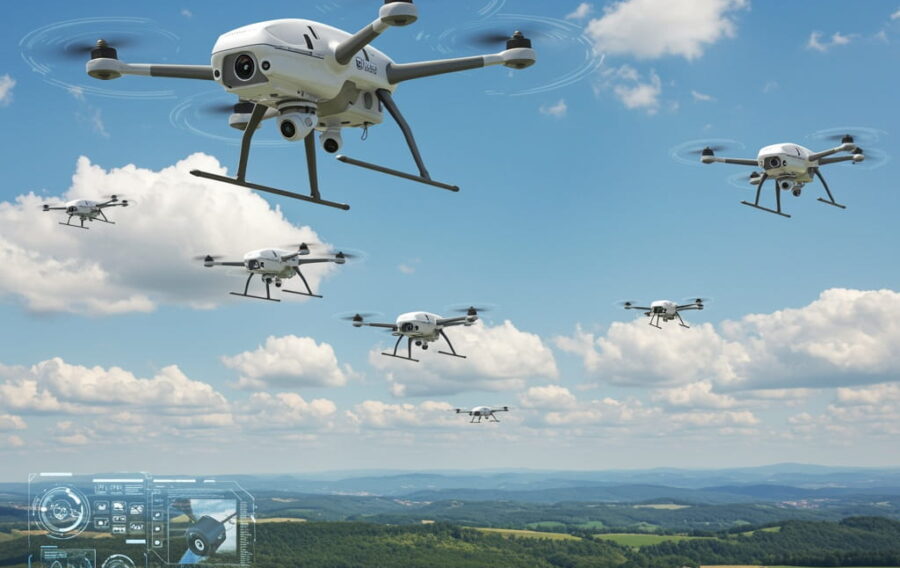
Two Dstl programmes are accelerating the British Army’s adoption of drone and counter-drone technology for future battlefield operations – with direct implications for UK industry partners developing AI, autonomous systems and counter-UAS capability.
Scientists at the Defence Science and Technology Laboratory are working with the British Army, industry partners and international allies to test and develop the drone and counter-drone technologies that will define future battlefield operations. Through two distinct but complementary programmes – Project VANAHEIM and the ANVIL computer vision system – Dstl is helping the Army move from experimental evidence to operational deployment at a pace that reflects the urgency of the threat environment.
The context is well established. Modern battlefields, as demonstrated comprehensively in Ukraine, are increasingly shaped by uncrewed aerial systems operating at scale and at low cost. The ability to counter hostile drones and to deploy friendly autonomous systems effectively has become a core operational requirement rather than an emerging consideration, and the British Army is investing significantly in accelerating its capability in both areas.
Project VANAHEIM is a UK-US initiative focused on counter-drone protection for light infantry forces. Led by the Army’s RAPSTONE initiative, the programme uses a structured series of field experiments that place counter-drone technology directly with infantry units to assess performance under realistic operational conditions – identifying what works, what does not, and how adoption can be accelerated to inform tactics, training and equipment decisions across the British Army. Dstl has worked alongside 13 industry suppliers, the Army Trials Unit, the Joint Effects Trials and Development Group, Soldierworks and US partners to generate operational evidence from testing in Germany and Poland during summer 2025. Further testing is planned in Lithuania in summer 2026 under the US Project FLYTRAP, extending the operational evidence base and deepening the UK-US collaboration underpinning the programme.
ANVIL takes a different but equally significant approach, focusing on AI-enabled computer vision for target identification in drone-based search and reconnaissance missions. Developed by Dstl in partnership with the British Army and building on technology from the AUKUS Resilient Autonomy and AI Technologies programme, ANVIL represents the first soldier-led development of computer vision models designed to help drones find and identify targets. Operating alongside the FALLING INSTRUMENTS Ground Control Station as part of an Initial Experimentation System, ANVIL enables operators to identify new targets and adapt to changing battlefield conditions within 24 hours – significantly reducing the mental effort and time burden on soldiers while maintaining rapid and accurate target identification capability.
The speed of adaptation is central to ANVIL’s operational value. By accelerating model retraining and deployment, the system allows computer vision capability to keep pace with the evolving target sets and conditions that characterise modern conflict, rather than requiring lengthy development cycles each time the operational environment changes. The Initial Experimentation System is now being deployed with three Army units to build familiarity with computer vision on the battlefield, and is described by Dstl as a critical building block in the UK’s effort to develop swarming UAS capability – one of the most tactically significant areas of autonomous systems development currently underway across allied forces.
Together, VANAHEIM and ANVIL illustrate the dual nature of the Army’s drone technology challenge: protecting forces from hostile uncrewed systems while simultaneously developing the AI-enabled autonomous capability to operate effectively in the same environment. Both programmes involve structured industry engagement, with VANAHEIM’s 13 supplier partners providing a direct indication of the breadth of commercial capability being drawn into counter-UAS development.
For the UK defence supply chain
VANAHEIM and ANVIL are active, evidenced programmes generating operational data and procurement decisions that will shape British Army investment in counter-drone and autonomous systems capability for years to come. For industry partners with relevant capability – particularly those in AI, computer vision, autonomous systems and counter-UAS technology – the structured experimentation model both programmes use represents an accessible and evidence-based route to demonstrating capability in realistic operational conditions. The involvement of 13 industry suppliers in VANAHEIM, and ANVIL’s AUKUS technology lineage, also signal international partnership dimensions that broaden the commercial opportunity beyond domestic procurement.
Join our new expanding community at DPRTE.co.uk – our new Defence Community Platform, creating a single, year-round digital hub for the UK’s defence procurement and supply chain sector.

Post written by: Vicky Maggiani
Vicky has worked in media for over 25 years and has a wealth of experience in editing and creating copy for a variety of sectors.
RELATED ARTICLES

September 10, 2026
Homeland - Why 'Structured Collaboration' is Becoming a Defence Necessity
This week, Stuart John, from the Future Defence Support Services (FDSS) Bid Team at Leidos, examines new research with the

September 7, 2026
Homeland - Government commits £71m to Hemerdon tungsten and tin mine near Plymouth
The National Wealth Fund has committed up to £71 million to Tungsten West to restart the Hemerdon tungsten and tin