



The UK has signed a major new defence and security treaty with Poland, with Prime Ministers Starmer and Tusk meeting in London on 26 May to formalise what is being described as the most significant step forward in the bilateral defence relationship in a generation.
The treaty follows similar agreements with France and Germany, and forms part of a broader drive to strengthen the UK’s defence partnerships across Europe in response to an accelerating threat environment – including hybrid attacks, cyber operations and hostile state activity.
What the Treaty Covers
The defence strand of the agreement is wide-ranging and carries direct implications for industry on both sides. Key areas include:
Complex weapons and air defence – the UK and Poland will collaborate on the design, development and manufacturing of next-generation air defence effectors, including co-production of a next-generation medium-range air defence missile. Sovereign production chains and high-skilled jobs are explicitly cited as priorities.
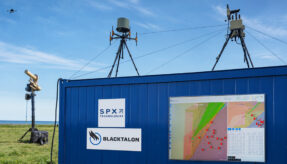
Uncrewed systems and land capability – both nations will step up the use of uncrewed systems to reinforce NATO’s Eastern Flank, with joint exercises across counter-drone warfare, electronic warfare and engineering support, and a shared focus on disruptive technologies for future land forces.
Cyber and information resilience – accelerated cooperation on cyber defence, with coordinated responses to hostile state actors and shared expertise to counter malign information campaigns.
Border security and organised crime – a new Joint Action Plan on Irregular Migration, focused on disrupting smuggling networks and harnessing advanced targeting and surveillance capabilities.
Supply Chain Implications
For the UK defence industry, the treaty opens a significant forward pipeline across several high-growth domains. Co-production of complex weapons, air defence systems and uncrewed platforms will require sustained industrial capability and a deep, resilient supply chain – spanning advanced manufacturing, electronics, propulsion, guidance systems, software and integration.
The explicit commitment to sovereign production chains is particularly significant. As with the Defence Industrial Strategy more broadly, the direction of travel is clear: UK government investment in capability is intended to generate UK industrial and supply chain benefit, with long-term programme commitments creating durable commercial opportunity.
For businesses positioned in complex weapons, air defence, uncrewed systems, electronic warfare or cyber – or those looking to build capability in these areas – this treaty represents a substantial new chapter in the UK’s forward defence industrial programme.

Post written by: Vicky Maggiani
Vicky has worked in media for over 25 years and has a wealth of experience in editing and creating copy for a variety of sectors.
RELATED ARTICLES
August 7, 2026
Air - Thales Secures NSPA Contract for Deployable Air Navigation System in Demonstration of NATO Procurement Route
Thales has been selected by the NATO Support and Procurement Agency to supply a Deployable Tactical Air Navigation system to
August 7, 2026
Air - Royal Navy's Dragon Rider Trials Prove Drone Armada Concept Over 200 Miles of Southern England
A week-long exercise integrating multiple uncrewed systems with Wildcat helicopters, Royal Marines and ship commanders has demonstrated that long-range drone