


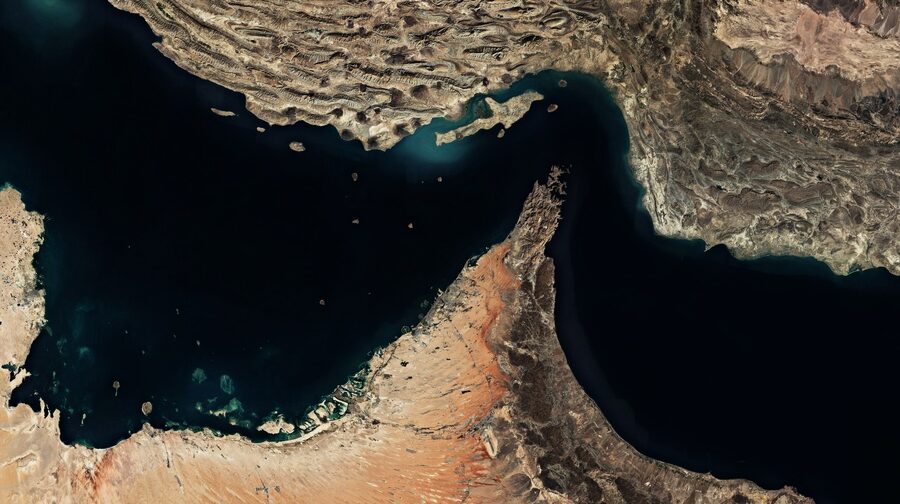
The UK and France are co-hosting the first ministerial-level meeting of the multinational mission to reopen the Strait of Hormuz, as the Ministry of Defence confirms HMS Dragon will forward deploy to the region – positioning the UK to contribute to the defensive operation the moment conditions permit.
Defence Secretary John Healey MP will co-chair the meeting of over 40 nations alongside French counterpart Minister Catherine Vautrin, bringing together defence ministers from across every continent to outline national military contributions to the mission.
Why the Strait of Hormuz Matters
The Strait of Hormuz remains effectively closed to international shipping, with approximately one fifth of the world’s oil supply disrupted as a result. The economic consequences are already being felt – global energy prices have risen, supply chains have been disrupted, and costs for households and businesses in the UK and internationally have increased as a direct result.
The multinational mission is strictly defensive in character, focused on restoring confidence for commercial shipping along the route once hostilities have ceased – not on offensive action. Planning has been under way for several weeks, with military planners from 44 nations convening at the UK’s Permanent Joint Headquarters on 22-23 April in a session described as critical to converging national perspectives into a coherent multinational plan.
HMS Dragon’s Role
HMS Dragon, a Type 45 destroyer equipped with the advanced Sea Viper air defence system, is one of the Royal Navy’s most capable surface combatants. Its forward deployment to the region gives the UK an immediately available asset should the multinational mission move to operational phase.
The ship recently completed rigorous weapons and sensor testing at a NATO facility off Crete, including live firing exercises in high-threat conditions – making clear that Dragon is deploying in a high state of readiness rather than as a symbolic gesture.
Once operational, HMS Dragon’s contributions to the mission are expected to span air defence coverage, support for mine-clearance efforts, and protection of commercial vessels transiting the strait. Its presence is also intended to strengthen confidence among commercial shippers that the route is being actively secured.
Defence Secretary Healey said he had directed the deployment specifically so that “Britain is in position to support this mission the moment it is needed,” adding: “We are turning diplomatic agreement into practical military plans to restore confidence for shipping through the Strait of Hormuz.”
Procurement and Supply Chain Implications
For the UK defence industry, the Hormuz mission carries significant near-term and medium-term implications. Sustained naval deployments consume expendable stores, munitions and support services at pace. The MoD’s National Armaments Director Group has already established a dedicated Task Force – referenced in connection with the Skyhammer counter-drone programme – specifically to manage the impact of regional operations on the UK defence supply chain and gather requirements for stock replenishment.
Businesses supplying naval munitions, maritime surveillance systems, mine countermeasures technology, force protection equipment and logistics support should be monitoring developments closely. A multinational mission of this scale and duration, co-led by the UK, will generate a substantial and sustained demand signal across all of those categories.
The mission also has an export dimension. The UK’s leadership role – hosting planning sessions, co-chairing ministerial meetings, and deploying a flagship asset – reinforces its position as a credible and capable partner for allied nations investing in their own naval capabilities.

Post written by: Vicky Maggiani
Vicky has worked in media for over 25 years and has a wealth of experience in editing and creating copy for a variety of sectors.
RELATED ARTICLES
August 7, 2026
Air - Thales Secures NSPA Contract for Deployable Air Navigation System in Demonstration of NATO Procurement Route
Thales has been selected by the NATO Support and Procurement Agency to supply a Deployable Tactical Air Navigation system to
August 7, 2026
Air - Royal Navy's Dragon Rider Trials Prove Drone Armada Concept Over 200 Miles of Southern England
A week-long exercise integrating multiple uncrewed systems with Wildcat helicopters, Royal Marines and ship commanders has demonstrated that long-range drone