



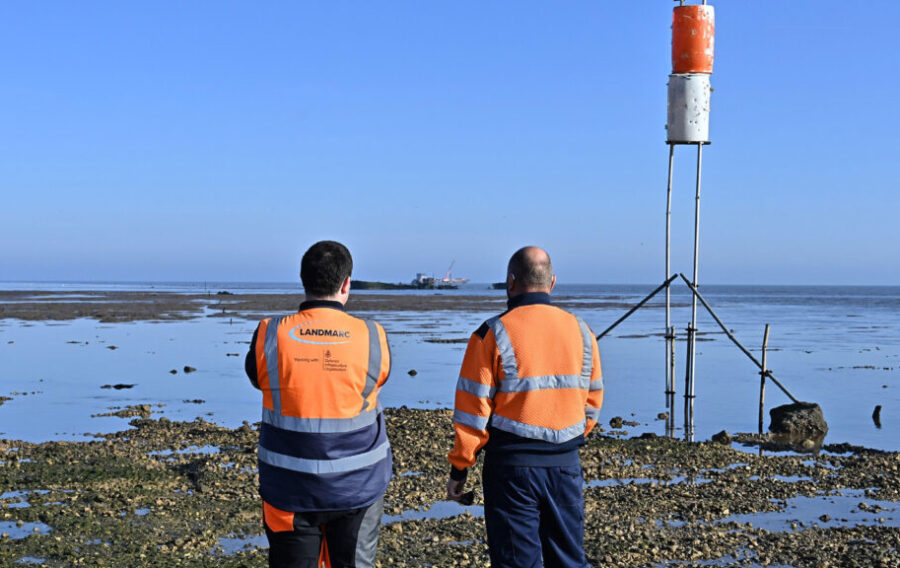
Two repurposed marine vessel targets have been successfully delivered and installed at Holbeach Air Weapons Range (AWR) in Lincolnshire, enhancing live weapons training capability for both fixed wing and rotary wing air platforms.
The project, delivered through a joint effort between the Defence Infrastructure Organisation (DIO), Landmarc and marine and construction specialists Topbond PLC, involved transporting the steel vessels from the River Crouch in Essex along the coastline to Holbeach, with specialist tug support provided from the Netherlands. The targets have been adapted specifically for military use and will support a diverse range of aircraft conducting live and inert weapons training, including pre-deployment preparation.
Part of a Wider Training Estate Investment Programme
The Holbeach installation sits within a broader DIO-led programme of training estate improvements across the UK. Brigadier Gavin Hatcher, DIO’s Head of the UK Training Estate, pointed to parallel investments including new urban skills houses at Catterick and Larkhill, and training area improvements in Thetford, as evidence of sustained commitment to ensuring Defence can “train and be operationally ready to deploy at a moment’s notice.”
Air Commodore Simon Blackwell, Commander Airbases, linked the investment directly to the current security environment: “Against the backdrop of current global volatility, the importance of these targets to maintain ready access to realistic training is clear, enabling our combat aircrew to maintain their skills and readiness to respond to any demand.”
A Complex Delivery
The logistics of the project were considerable. Transporting large steel marine vessels along the coast, positioning them on an active military range, and doing so while managing ecological requirements, weather and tidal conditions presented a significant planning and coordination challenge across multiple organisations.
Tom Davidson from Landmarc said the successful delivery demonstrated “how complex infrastructure projects can be delivered while carefully considering environmental factors – a strong example of what can be achieved when organisations work together towards a common goal.”
To offset the environmental impact of the installation, DIO has invested in Biodiversity Net Gain Credits supporting the development of grassland, woodland and ponds at the Heacham Habitat Bank in west Norfolk – an approach that reflects the growing expectation across defence infrastructure procurement that environmental considerations are built into project delivery rather than treated as an afterthought.
Procurement Signals
For businesses operating in the defence training and infrastructure space, the Holbeach project is a useful indicator of the type of multi-discipline, multi-organisation delivery model DIO is applying to training estate investment. The combination of infrastructure specialists, range management expertise and environmental compliance in a single project reflects the complexity of modern defence estate procurement – and the opportunities that complexity creates across a broad supply chain.
With DIO’s training estate investment programme active across multiple sites simultaneously, businesses in construction, marine logistics, environmental services and range infrastructure should be monitoring the pipeline closely.
Image: Landmarc – Landmarc employees conducting a routine inspection on Target 5, with the newly installed target visible in the background.

Post written by: Vicky Maggiani
Vicky has worked in media for over 25 years and has a wealth of experience in editing and creating copy for a variety of sectors.
RELATED ARTICLES

September 10, 2026
Homeland - Why 'Structured Collaboration' is Becoming a Defence Necessity
This week, Stuart John, from the Future Defence Support Services (FDSS) Bid Team at Leidos, examines new research with the

September 7, 2026
Homeland - Government commits £71m to Hemerdon tungsten and tin mine near Plymouth
The National Wealth Fund has committed up to £71 million to Tungsten West to restart the Hemerdon tungsten and tin