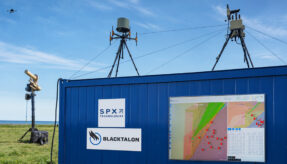



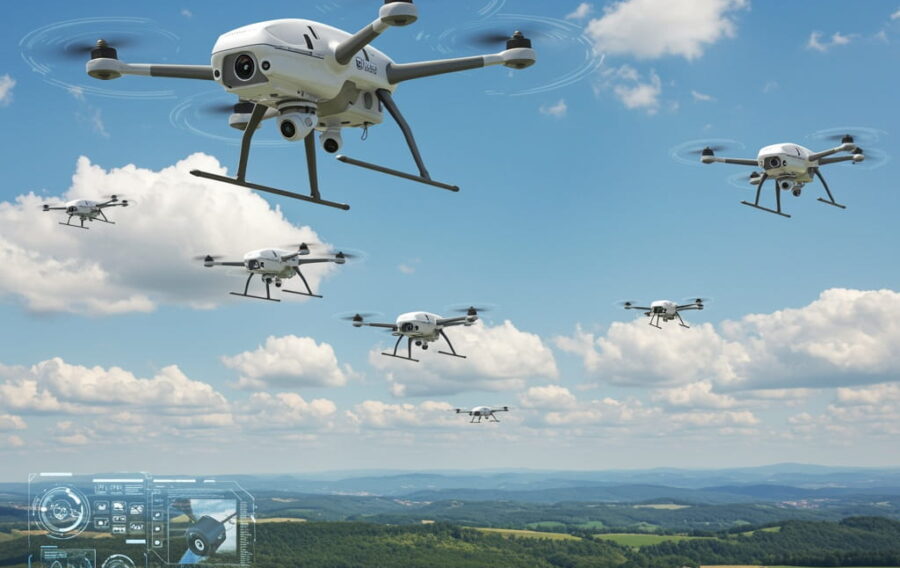
The Ministry of Defence (MOD) has confirmed a significant escalation in the development of autonomous capabilities following successful trials of AI-powered drone technology designed to detect landmines and explosive ordnance.
Led by the Defence Science and Technology Laboratory (Dstl) on behalf of the British Army, the trials represent a pivotal shift in the UK’s approach to explosive ordnance disposal (EOD) and search operations. This development aligns with the broader Strategic Defence Review (SDR) mandate to accelerate the integration of advanced technologies into frontline service, moving personnel away from high-risk environments while increasing operational tempo.
Conducted at the Essex base of the 33 Engineer Regiment, the trials utilised small uncrewed aerial systems (UAS) equipped with advanced sensors to relay data to Army operators. These operators employed artificial intelligence tools to locate and identify replica munitions across diverse terrains. A critical finding of the exercise was the ability to rapidly retrain AI models to recognise emerging threat types and adapt to changing environments. For the UK defence supply chain, this requirement for adaptable software and sensor integration represents a significant opportunity for growth, particularly for firms specialising in machine learning, sensor miniaturisation, and digital connectivity.
In a move that signals clear long-term opportunities for prime contractors and sub-contractors, the UK government has announced it is doubling its investment in autonomous platforms. The funding commitment is set to rise from £2 billion to £4 billion over the current parliament. This financial surge is intended to support the British Army’s objective of delivering a tenfold increase in lethality over the next decade. To achieve this, the MOD is prioritising five key technological pillars: firepower, surveillance technology, autonomy, digital connectivity, and data exploitation.
Minister for Defence Readiness and Industry, Luke Pollard MP, noted that the trial exemplifies the innovation necessitated by the Strategic Defence Review. The focus remains on exploiting new technologies at a wartime pace, directly influenced by observations of drone and explosive device usage in recent conflicts, such as that in Ukraine. For businesses looking to enter or expand within the UK defence sector, the government’s commitment to maturing this technology is immediate. Further trials are scheduled for later in 2026 to refine the capability and guide the formal procurement of deployable systems. These upcoming milestones offer a clear roadmap for industry partners to align their research and development with the MOD’s requirement for lighter, more power-efficient sensors and robust autonomous platforms.
If you would like to join our community and read more articles like this then please click here

Post written by: Vicky Maggiani
Vicky has worked in media for over 25 years and has a wealth of experience in editing and creating copy for a variety of sectors.
RELATED ARTICLES
August 7, 2026
Air - Thales Secures NSPA Contract for Deployable Air Navigation System in Demonstration of NATO Procurement Route
Thales has been selected by the NATO Support and Procurement Agency to supply a Deployable Tactical Air Navigation system to
August 7, 2026
Air - Royal Navy's Dragon Rider Trials Prove Drone Armada Concept Over 200 Miles of Southern England
A week-long exercise integrating multiple uncrewed systems with Wildcat helicopters, Royal Marines and ship commanders has demonstrated that long-range drone