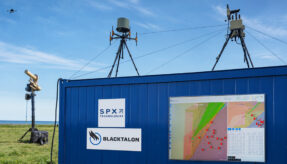




Modern Warfare’s Economic Inflection Point
The war in Ukraine, and the expanding effect of low-cost military systems on the economies of Middle East and global supply chains, mark a profound shift in the economics of modern warfare. For the UK and Europe, the implications are acute: traditional defence procurement, rooted in slow, capital-intensive models, has made Western militaries unadaptable to real-time developments on the battlefield.
The experience in Ukraine demonstrates a furious pace of R&D being carried out on the frontline. Adaptability, Ukraine learned, means survival, and this realisation is now reshaping capital allocation and M&A activity across the UK and European defence sector, as investors and incumbents pursue agility, technological dynamism and scalable production.
The Cost Asymmetry Problem
Battlefield evidence from Ukraine and the Middle East underscores the new economics of war. Ukrainian and Russian forces have deployed swarms of short-range and first-person view drones, exploiting their low cost, rapid production, and ease of local manufacture. Ukraine’s Ministry of Defence, for example, procured 1.5 million drones in 2024, with domestic production capacity forecast at 4.5 million units in 2025.
By comparison, the United States produced approximately 500 Patriot missiles in 2024, with each missile costing around $5 million; THAAD interceptors are even more expensive, at $12.8 million each, with limited annual output. In the Middle East, Iranian Shahed-136 “suicide” drones, meanwhile, are produced at a fraction of the cost ($50,000 per unit) with volumes in the thousands annually. As seen in recent conflict, Shahed-136 drones regularly evade missile defence systems with devastating effect.
These figures illustrate a widening capability gap: Western systems, though technologically superior, are outpaced by adversaries’ ability to saturate the battlefield with affordable, adaptable platforms. The traditional Western model of lengthy R&D cycles, bespoke engineering and slow procurement is misaligned with the demands of modern conflict.
Defence Spending and Policy Shifts
This imbalance has catalysed a strategic response across Europe and the UK. Defence budgets are rising, propelled by NATO spending targets (2-4% of GDP), and policymakers are restructuring procurement to prioritise speed, technological innovation and homegrown capability. Policy frameworks are responding in kind: the EU’s EDIRPA allocated €310 million in 2024 to subsidise joint procurements, while the UK’s DSIS, the EU’s PESCO, and the European Defence Fund prioritise rapid technology adoption and cross-border collaboration.
The Rise of Defence Tech
The imperative for rapid innovation has repositioned startups and dual-use technology companies at the centre of European defence strategy. Leaner and more agile than primes, they now play a pivotal role in plugging capability gaps. Munich-based Helsing, which integrates AI into defence platforms, has secured over €1.3 billion in funding, while Dutch firm DeltaQuad and Portugal’s Tekever are establishing leadership in ISR drone technologies.
A striking example: startups Helsing and Stark were chosen by the German government to supply unmanned kamikaze drones, initially beating out defence heavyweight Rheinmetall. Rheinmetall has since been included, but the initial decision signalled a meaningful shift in how European governments may allocate defence funds. When it comes to defence, smart money often follows government contracts and spending.
Implications for M&A: Acquisition as a Strategic Imperative
These defence priorities are now manifesting directly in M&A and investment activity. Incumbent contractors, private equity investors, and governments are targeting acquisitions and partnerships with defence-tech startups to:
- Acquire and consolidate technological know-how, R&D talent and geographically desirable production capacity, thereby shortening supply chains;
- Bypass slow internal development cycles and respond swiftly to battlefield-driven demand;
- Secure IP and software assets that underpin next-generation defence systems; and
- Bridge capability gaps in AI and autonomous systems.
Recent transactions and strategic collaborations, such as the teaming agreement with the British Army for Project NYX, and investment into European defence startups Frankenburg Technologies and Tytan Technologies, exemplify this trend.
Ukraine’s defence sector has grown at an unforeseen pace, drawing foreign investors to its dual-use potential; Quantum Systems, a German drone manufacturer, recently acquired a 10% stake in Ukrainian defence-robotics firm Frontline, with private sector activity poised to grow further.
For institutional investors, venture and growth capital is flowing into defence-tech startups, reflecting the urgency of the geopolitical moment and the recognition that startups offer solutions traditional defence manufacturers are too slow to deliver.
Conclusion: Reshaping the UK/European Defence Industrial Base
The new paradigm of warfare, defined by cost-effective, scalable and adaptable systems is transforming the UK and European defence sector. As Russia and Iran deploy low-cost technologies at scale, Western policymakers, investors and corporates are recalibrating their strategies. M&A has become the primary mechanism for acquiring know-how and technical innovation, with British and European startups now viewed as critical in plugging capability gaps. Whether the awaited UK Defence Investment Plan will act as a further accelerator remains to be seen.
Ultimately, the future structure of the UK and European defence industry will be shaped by the ability of both incumbents and new entrants to deliver rapid, defence-tech innovation backed by capital, enabled by policy and forged in the crucible of modern conflict.
Article submitted by: Richard Tall (partner), Jeremy Andrews (partner), Hans Mehrens (associate) and James Shepherd (trainee) at Faegre Drinker Biddle & Reath LLP
If you would like to join our community and read more articles like this then please click here

Post written by: Vicky Maggiani
Vicky has worked in media for over 25 years and has a wealth of experience in editing and creating copy for a variety of sectors.
RELATED ARTICLES
August 7, 2026
Air - Thales Secures NSPA Contract for Deployable Air Navigation System in Demonstration of NATO Procurement Route
Thales has been selected by the NATO Support and Procurement Agency to supply a Deployable Tactical Air Navigation system to
August 7, 2026
Air - Royal Navy's Dragon Rider Trials Prove Drone Armada Concept Over 200 Miles of Southern England
A week-long exercise integrating multiple uncrewed systems with Wildcat helicopters, Royal Marines and ship commanders has demonstrated that long-range drone