


16 Air Assault Brigade, the British Army’s high-readiness global response force, has integrated advanced Cyber and Electromagnetic Activities (CEMA) capabilities into its tactical operations, signaling a shift in how airborne units manage the electromagnetic spectrum.
During Exercise Orion in France, which involved approximately 2,000 personnel from the UK’s 16 Air Assault Brigade and France’s 11e Brigade Parachutiste, the 2nd Battalion, The Parachute Regiment (2 PARA) deployed its specialised “Phantom Platoon” to demonstrate the operational utility of localised electronic warfare. This binational exercise, part of a partnership established in 2013, underscores the increasing requirement for modular, rapidly deployable CEMA solutions within the UK’s primary response forces.
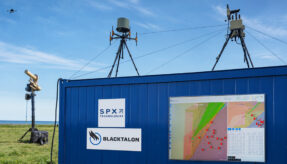
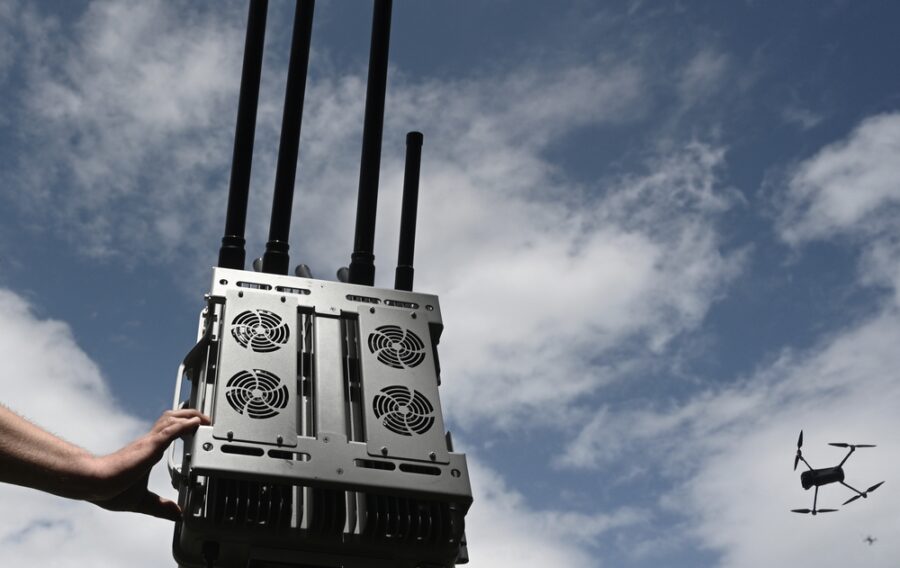
The CEMA framework utilised by Phantom Platoon integrates electronic warfare, cyber operations, and spectrum management to identify enemy positions and disrupt communications. Of particular interest to the defence supply chain is the platoon’s use of software-defined radio (SDR) and modular hardware. Key technologies deployed during the exercise included the “Kraken,” an SDR-based signal tracking system; “Unagi,” a transmitter capable of radio frequency jamming and deceptive signal emulation; and “Plankton,” a Wi-Fi extender designed to intercept or sever links between unmanned aerial vehicles (UAVs) and their controllers. These systems are notable for being developed or modified by personnel using commercial-off-the-shelf (COTS) components and bespoke coding, highlighting an “airborne initiative” aimed at rapid innovation.
For contractors and sub-contractors within the UK defence sector, the success of these trials indicates a growing demand for agile, low-footprint electronic warfare equipment. The ability of 2 PARA to reconfigure hardware in the field to mimic headquarters signals or jam specific frequencies suggests that the Ministry of Defence (MOD) will increasingly value modularity and open-architecture software in future procurement cycles. Lieutenant Colonel Craig Shephard, Commanding Officer of 2 PARA, emphasised that CEMA provides the essential tactical advantage in time and space required for modern high-intensity conflict.
The move toward indigenous, soldier-led innovation reflects a broader MOD strategy to foster a more responsive industrial base capable of delivering specialised, safety-critical electronic components. As 16 Air Assault Brigade continues to refine its CEMA capabilities, there are clear opportunities for SMEs specialising in single-board computers, ruggedised sensors, and adaptive EW software to support the next generation of airborne operations. This development confirms that the modern battlefield requires not only traditional kinetic capabilities but also a sophisticated, resilient presence within the electromagnetic spectrum to ensure mission success and force protection.
If you would like to join our community and read more articles like this then please click here

Post written by: Vicky Maggiani
Vicky has worked in media for over 25 years and has a wealth of experience in editing and creating copy for a variety of sectors.
RELATED ARTICLES
August 7, 2026
Air - Thales Secures NSPA Contract for Deployable Air Navigation System in Demonstration of NATO Procurement Route
Thales has been selected by the NATO Support and Procurement Agency to supply a Deployable Tactical Air Navigation system to
August 7, 2026
Air - Royal Navy's Dragon Rider Trials Prove Drone Armada Concept Over 200 Miles of Southern England
A week-long exercise integrating multiple uncrewed systems with Wildcat helicopters, Royal Marines and ship commanders has demonstrated that long-range drone