



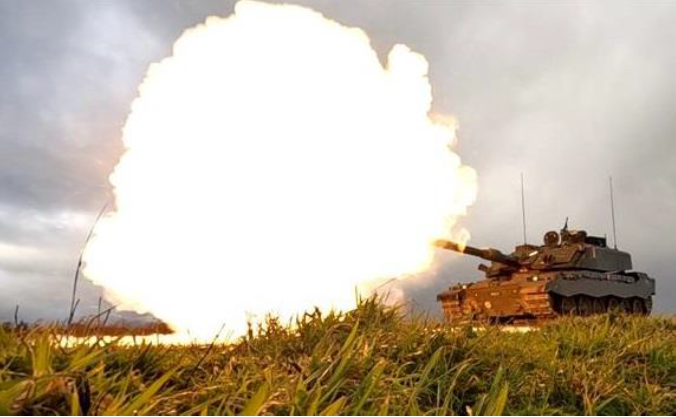
The British Army’s Challenger 3 Main Battle Tank (MBT) programme has achieved a critical technical milestone following the successful completion of the first crewed live firing trials on UK soil.
This event, conducted by Rheinmetall BAE Systems Land (RBSL) in collaboration with Defence Equipment and Support (DE&S) and the Army programme team, represents the first time a newly developed MBT has been fired in the United Kingdom in more than three decades. The achievement marks a significant step in the progressive assurance of the platform’s capabilities and systems as it moves closer to formal service entry.
The testing sequence followed a strictly phased methodology designed to ensure the safety and robustness of the design. Initial trials involved the remote operation of the vehicle’s primary armament before progressing to crewed firing conducted by RBSL personnel. Central to the platform’s enhanced lethality is the 120mm smoothbore L55A1 cannon, manufactured by Rheinmetall Waffe Munitions. This advanced weapon system is capable of firing the latest kinetic energy anti-tank rounds and programmable multipurpose ammunition, providing a substantial upgrade in firepower and digital integration compared to current frontline capabilities.
For industry stakeholders and the UK defence supply chain, the Challenger 3 programme represents a cornerstone of sovereign armoured vehicle development and a significant source of long-term economic activity. The project has already facilitated a £40 million inward investment in RBSL’s Telford manufacturing facility, modernising the site for high-end military production. While the programme leverages a broader European supply chain, it places a heavy emphasis on domestic engagement, with the majority of subcontractors being skilled UK-based Small and Medium-sized Enterprises (SMEs). These partners are geographically distributed across the country, with critical contributions originating from the West Midlands, Glasgow, Newcastle upon Tyne, and the Isle of Wight.
The successful live firing trials provide confidence to the Ministry of Defence and the prime contractors as the programme transitions into its next phase. Later this year, the project will move into additional crewed firing exercises and initial reliability growth trials, which are essential for the platform to reach full operational capability. As the centrepiece of the British Army’s armoured modernisation strategy, the Challenger 3 is designed to deliver a step change in survivability and lethality. The platform is scheduled to sustain the UK’s heavy armour capability until at least 2040, ensuring a stable pipeline of maintenance, upgrade, and support opportunities for the UK defence industrial base for the next two decades.
If you would like to join our community and read more articles like this then please click here

Post written by: Vicky Maggiani
Vicky has worked in media for over 25 years and has a wealth of experience in editing and creating copy for a variety of sectors.
RELATED ARTICLES

September 10, 2026
Homeland - Why 'Structured Collaboration' is Becoming a Defence Necessity
This week, Stuart John, from the Future Defence Support Services (FDSS) Bid Team at Leidos, examines new research with the

September 7, 2026
Homeland - Government commits £71m to Hemerdon tungsten and tin mine near Plymouth
The National Wealth Fund has committed up to £71 million to Tungsten West to restart the Hemerdon tungsten and tin