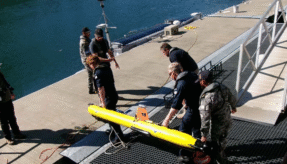



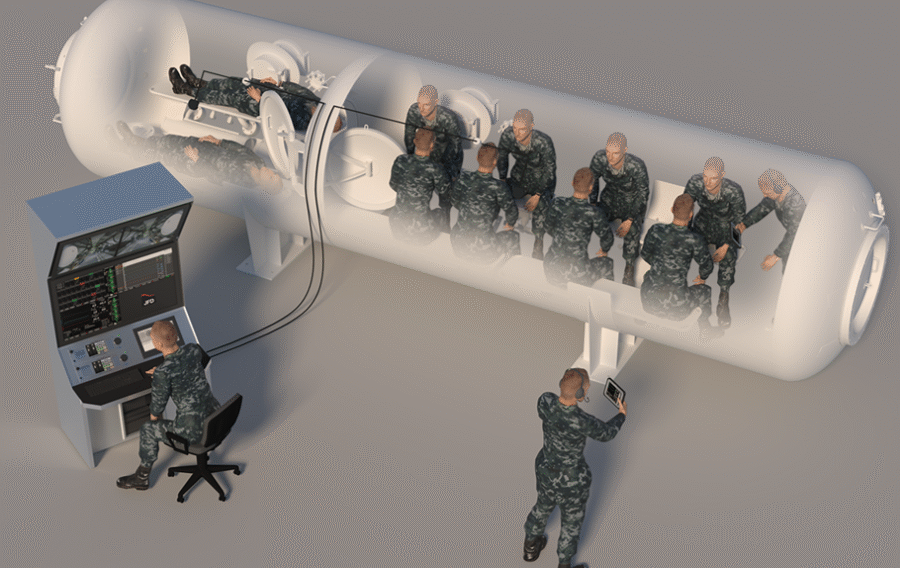
James Fisher Defence (JFD Global) has launched a major project with the UK Submarine Delivery Agency to deliver a new advanced medical monitoring system for integration into the NATO Submarine Rescue System (NSRS). The development represents a step-change in submarine rescue capability, expanding medical monitoring capacity from four personnel to up to 76, including medical staff, during critical rescue operations.
The new system will enable continuous real-time monitoring from the moment submariners enter the Deck Decompression Chamber on board the rescue vessel. Data will be immediately available to medics onboard and to shore-based medical teams via secure satellite links, allowing faster triage and intervention in high-pressure environments. By significantly increasing monitoring capacity and improving data accessibility, the technology aims to enhance clinical outcomes in situations where timely diagnosis and treatment are critical.
The platform employs a three-tier approach to medical care. Wearable devices track vital indicators such as heart rate, fatigue, stress levels, and core temperature. These are complemented by diagnostic tools including ECG monitors and ultrasound, alongside advanced critical care equipment designed for use with unstable or deteriorating casualties. More than 100 certified medical components will feed data through integrated hubs, automating collection and ensuring accuracy across all patient records.
Designed with modularity in mind, the system can be adapted across submarine escape and rescue systems, as well as for wider defence and commercial diving operations. Potential applications include submarine platforms, distressed submarine entry kits, dive recompression chambers, and surface support vessels. The scalability of the platform opens further opportunities for suppliers involved in medical technologies, diagnostics, data systems, and modular integration solutions.
The programme has been endorsed by both clinical and operational leaders within defence. Surgeon Commander Simon Phillips of the Institute of Naval Medicine described the development as a “significant enhancement” that will improve care standards for rescued submariners, while Captain Mike Lyons, Head of Submarine Programmes at the SDA, emphasised its importance in preparing the NSRS to meet any realistic rescue scenario, however rare.
For the defence supply chain, this project highlights growing demand for advanced medical technologies, wearable systems, and integrated data solutions within subsea and naval environments. It underscores opportunities for suppliers capable of delivering certified medical devices, digital health platforms, and modular engineering solutions to support the evolving requirements of submarine rescue and wider underwater operations.
If you would like to join our community and read more articles like this then please click here

Post written by: Vicky Maggiani
Vicky has worked in media for over 25 years and has a wealth of experience in editing and creating copy for a variety of sectors.
RELATED ARTICLES

August 5, 2026
Homeland - UKDI Relaunches Security Open Call- Funding Available for Cyber, Border and Protective Security Innovation
UK Defence Innovation is inviting disruptive technology proposals across Home Office and NPSA priority areas, with funding of up to
August 5, 2026
Land - £4.4 Million Investment Delivers Eastern European-Style Trench Networks Across UK Defence Training Estate
New trench infrastructure at Salisbury Plain and Stanford Training Area reflects how the lessons of modern conflict are being embedded