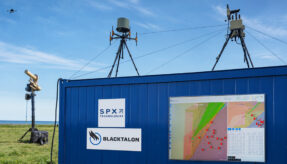




Private capital investment flood into defence tech start-ups signals structural shift in how sovereign capability is being built and funded – with supply chain implications for established UK businesses.
Venture capital investment in defence technology has reached $12.3 billion in the first half of 2026 alone, almost double the equivalent period in 2025 and already exceeding the $9.95 billion recorded across the whole of last year, according to data from PitchBook. The figures mark a decisive shift in how private capital views the defence sector – and for the established UK defence supply chain, the implications extend well beyond the start-up ecosystem.
The investment surge is being driven by the commercial validation of technologies that have proved their battlefield utility in Ukraine and the Gulf: drones, autonomous systems, AI-enabled targeting and decision-making, and uncrewed maritime platforms. These are no longer emerging technologies being evaluated on the margins of defence procurement – they are active operational requirements attracting record government spending, and that government commitment is in turn pulling in private capital at scale.
Daniel Turgel, Partner and Co-head of White and Case’s Global Technology Industry Group, describes the dynamic as “a self-reinforcing flywheel” in which government contracts attract private investment, which accelerates capability development, which generates further contracts. His assessment that defence technology has moved “from the periphery of startup funding to one of the only categories keeping pace with the explosive rise of frontier AI” reflects a structural change in how sovereign capability is now being developed and financed – one that is drawing in investors from well outside the traditional defence universe, including from the Middle East.
For the established UK defence supply chain the picture is two-sided. The capital flowing into defence technology start-ups is accelerating the development of capabilities that primes and tier-1 contractors will need to integrate, qualify and sustain at scale – creating partnership and sub-system supply opportunities for businesses already operating within MOD-approved supply chains. At the same time, the pace and funding depth of the start-up cohort means that businesses without a credible autonomy, AI or uncrewed systems offer risk being bypassed as procurement evolves.
The UK’s own Project Brakestop – which brought an F1-derived SME to flight test within a year – demonstrates that the MOD is actively seeking to engage this new industrial base through accelerated competition models. The venture capital data suggests that pipeline of new entrants will only grow.
Businesses seeking to understand and respond to this shift should consider the following areas as priorities:
- Autonomous systems integration and qualification within existing supply chains
- AI-enabled sensing, targeting and decision support sub-systems
- Uncrewed aerial, ground and maritime platform development and support
- Software-defined hardware and rapid capability refresh architecture
- Partnership and teaming models with defence technology start-ups
- MOD innovation programme engagement including DASA and accelerated procurement routes
Join our new expanding community at DPRTE.co.uk – our new Defence Community Platform, creating a single, year-round digital hub for the UK’s defence procurement and supply chain sector.

Post written by: Vicky Maggiani
Vicky has worked in media for over 25 years and has a wealth of experience in editing and creating copy for a variety of sectors.
RELATED ARTICLES
August 7, 2026
Air - Thales Secures NSPA Contract for Deployable Air Navigation System in Demonstration of NATO Procurement Route
Thales has been selected by the NATO Support and Procurement Agency to supply a Deployable Tactical Air Navigation system to
August 7, 2026
Air - Royal Navy's Dragon Rider Trials Prove Drone Armada Concept Over 200 Miles of Southern England
A week-long exercise integrating multiple uncrewed systems with Wildcat helicopters, Royal Marines and ship commanders has demonstrated that long-range drone