



The head of the UK’s armed forces has issued his starkest assessment yet of the threat facing Britain, warning that the country is living through its most dangerous period since the Cold War and that the military must be ready for sustained, long-term conflict rather than short, contained operations.
Sir Richard Knighton, Chief of the Defence Staff, made the remarks in an interview on BBC Radio 4’s Today programme on 5th June, ahead of the expected publication of the long-awaited Defence Investment Plan, which is now anticipated within the next few weeks.
“This is the most dangerous period that I have known,” Sir Richard said. “The risks and threats to this country are greater than I have known since the Cold War. And it is important that society and all of us recognise and understand that, and that may mean that we need to make different choices and different priorities.”
A Generational Shift in Defence Posture
Sir Richard’s comments signal a fundamental shift in how the UK military is thinking about future conflict. After decades in which the armed forces were configured primarily for short, contained operations, he said the war in Ukraine has demonstrated the need to prepare for longer, more intensive warfare, with all the demands that places on equipment, logistics, stockpiles and industrial capacity.
Last year’s Strategic Defence Review, he said, was a “call to arms”, and the task now is to translate that into funded, deliverable programmes at pace.
With Russian strategic aircraft recording as many airspace incursions in the first five months of 2026 as in the whole of 2025, and Russia probing UK defences through cyber, sabotage and assassination attempts alongside conventional military activity, Sir Richard warned that Moscow risks “crossing a line.”
Drones and Autonomous Systems Central to Future Capability
Of particular relevance to the defence technology and innovation supply chain, Sir Richard highlighted drones and autonomous systems as technologies that will become “increasingly important in the future of warfare.” This aligns with the broader direction of UK defence procurement, where uncrewed systems, autonomous platforms and AI-enabled capability are fast becoming central rather than peripheral to military planning.
For suppliers working in these areas, the message from the top of the military is unambiguous: investment is coming and the pace of adoption needs to accelerate.
Defence Investment Plan Expected Before NATO Summit
The Defence Investment Plan, which will set out how new equipment and defence infrastructure will be funded over the coming decade, has faced repeated delays since it was first due in autumn 2025. Defence Secretary John Healey confirmed earlier this week that the Prime Minister is “determined to publish” it before the NATO summit on 7 July 2026.
For the UK defence supply chain, publication of the plan cannot come soon enough. The document is expected to provide the clearest picture yet of where government investment will flow across land, sea, air, space and cyber domains over the next ten years, giving industry the long-term visibility it needs to invest in people, facilities and capability.
Sir Richard was confident that ministers understand the scale of the challenge. “Exactly as the prime minister says, we need to spend more on defence and do it faster. The challenge for ministers is to make those difficult trade-off decisions,” he said.
What This Means for the Supply Chain
The Chief of the Defence Staff’s intervention carries clear implications for the UK defence industrial base. A military posture oriented around sustained, high-intensity conflict demands a supply chain that can support it, one capable of delivering not just platforms and systems but the munitions, spares, maintenance and through-life support required to keep capability in the field over extended periods.
The experience of Ukraine has already reshaped thinking across NATO on industrial preparedness, stockpile levels and the speed at which industry can surge production in a crisis. Sir Richard’s comments suggest that pressure is now being applied at the very top of the UK military chain, and that the Defence Investment Plan, when it arrives, is likely to reflect that urgency.
For suppliers across the defence procurement community, the direction of travel is clear. Spending is rising, the threat is real, and the armed forces need industry to be ready to deliver.
Suppliers can hear more about the Defence Investment Plan at our October Summit in Manchester.
Featuring a session focussed on the strategy: Decoding the Defence Investment Plan
The anchor session of the day, this session will help suppliers translate the DIP into a credible target-account list: which capability areas, which delivery agents, and which contracting cadence to expect through to 2030. The audience already knows what the DIP is; the question is what it means for their pipeline.
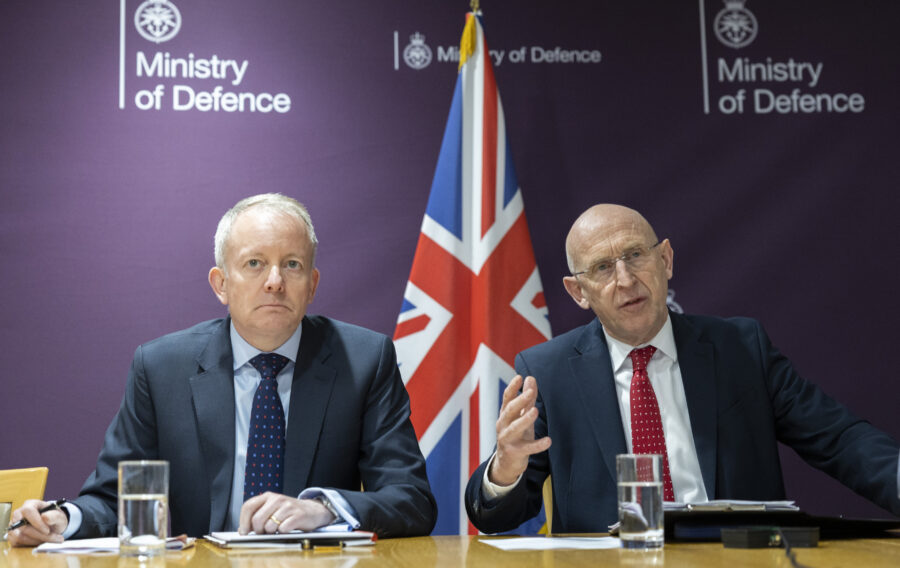
Image: UK MOD © Crown copyright 2026 Pictured: 27th April 2026, The Secretary of State for Defence John Healey (right) and the Chief of the Defence Staff Sir Rich Knighton.

Post written by: Vicky Maggiani
Vicky has worked in media for over 25 years and has a wealth of experience in editing and creating copy for a variety of sectors.
RELATED ARTICLES

September 10, 2026
Homeland - Why 'Structured Collaboration' is Becoming a Defence Necessity
This week, Stuart John, from the Future Defence Support Services (FDSS) Bid Team at Leidos, examines new research with the

September 7, 2026
Homeland - Government commits £71m to Hemerdon tungsten and tin mine near Plymouth
The National Wealth Fund has committed up to £71 million to Tungsten West to restart the Hemerdon tungsten and tin