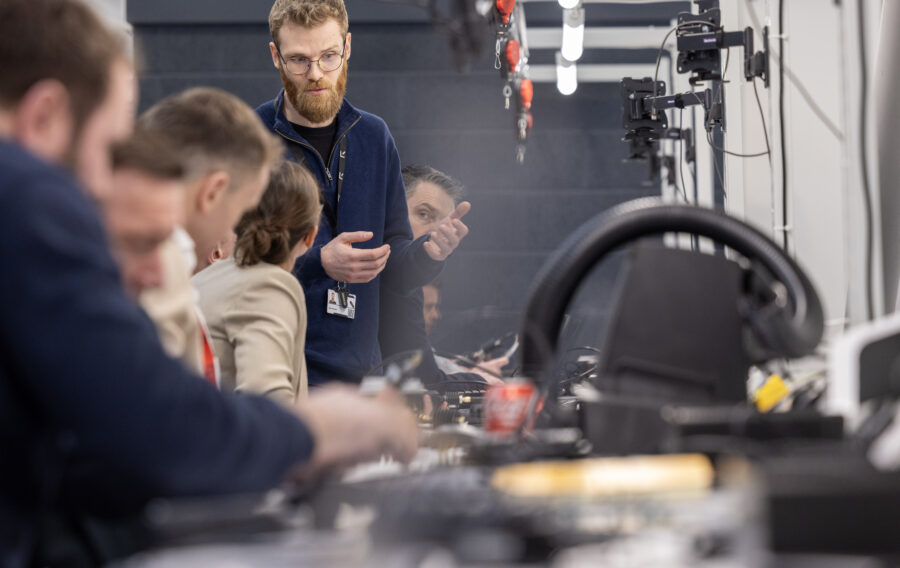
British engineering firm Rowden hosted a visit by British Army Sergeant Majors to explore how collaboration between engineers and soldiers helps shape and deliver operational technology.
The visit was the highlight of a two-day professional development programme linked to the Allied Rapid Reaction Corps (ARRC), focused on deepening understanding of Corps-level operations, the NATO framework, and the ARRC’s role as a high-readiness multinational force.
The wider programme is designed to strengthen professional networks among senior non-commissioned leaders and show them how emerging technologies are shaping modern operations in line with the concept of Techcraft.
During the visit to Rowden, participants engaged with engineers and technical specialists to explore how operational capability is designed, developed, and delivered at pace through close partnership between military users and industry.
Discussions examined industry incentives, the importance of clear standards in capability delivery, and the role senior soldiers play in maintaining those standards across the force.
The session also explored how closer collaboration between engineers and end users can accelerate capability development.
Rowden was picked to visit because it is a mission partner delivering the British Army’s Dismounted Data System through ASGARD, a strategic programme.
ASGARD and Human Machine Teaming were discussed as examples of mission partnerships where outcomes are prioritised over effort and operators work directly with engineers and product owners. This approach shortens feedback cycles and helps ensure that the systems delivered are in-line with what the end user wants.
Participants also examined practical challenges associated with implementing emerging technologies in operational environments. Topics included the deployment of machine learning models on edge platforms, the evolving character of the electromagnetic spectrum, and the growing need to design systems for “walk-up operation”, enabling capability to be used across the force rather than remaining highly specialised.
The second part of the visit focused on practical demonstrations. A hands-on session allowed the group to train with Rowden’s RF decoy system, Mimic, and discuss the operational challenges associated with deploying and managing mixed fleets of networked and distributed edge devices.
The visit highlighted the importance of sustained collaboration between senior soldiers and industry to ensure that new technologies are delivered in ways that align with operational requirements and can adapt as those requirements evolve.
If you would like to join our community and read more articles like this then please click here
Vicky has worked in media for over 25 years and has a wealth of experience in editing and creating copy for a variety of sectors.