



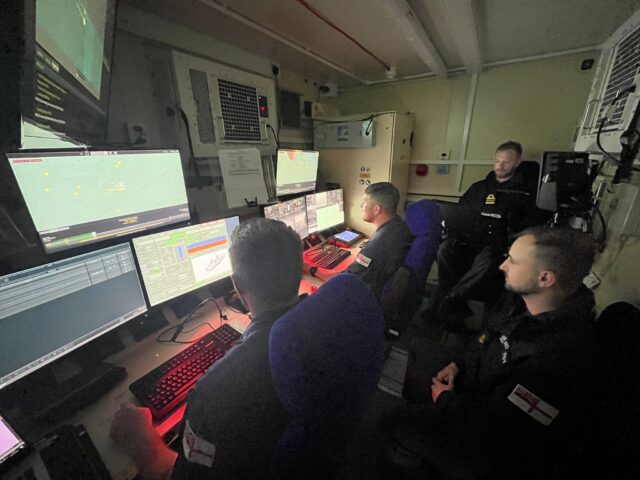
Defence Equipment & Support (DE&S) has awarded a £10 million contract to Thales UK for the delivery of next-generation Remote Control Centres (RCCs), marking a significant advancement in the Royal Navy’s transition toward a hybrid fleet.
The contract, announced at the end of last year, is a primary component of the Mine Hunting Capability (MHC) programme and aligns with the strategic objectives outlined in the 2025 Strategic Defence Review. These new centres are designed to provide personnel with the ability to deploy command-and-control infrastructure rapidly, enabling the remote operation of autonomous underwater mine detection and neutralisation systems from any location globally.
The investment is expected to bolster the UK’s maritime autonomous systems (MAS) sector and supports more than 200 highly skilled roles across Thales UK’s sites in Somerset, Stockport, and Plymouth. This project serves as a key indicator of the government’s commitment to the Defence Industrial Strategy, which emphasises the integration of the UK supply chain to maintain a competitive technological advantage. The RCCs expand upon the existing Thales Portable Operations Centre (POC) framework, incorporating artificial intelligence-powered software to facilitate the simultaneous management of multiple autonomous platforms. This capability allows for the sophisticated planning, execution, and analysis of drone missions, effectively removing sailors from high-risk environments while increasing operational efficiency.
Strategically, the programme supports the UK’s Atlantic Bastion initiative, a central pillar of the recent Strategic Defence Review. This initiative integrates autonomous vessels, AI, and traditional naval assets to protect critical undersea infrastructure, such as cables and pipelines, against evolving threats in the North Atlantic. For businesses within the defence supply chain, the project highlights a growing requirement for interoperable software and modular autonomous hardware. Under the direction of the Ministry of Defence, Thales UK will collaborate with several high-profile industry partners, including TKMS Atlas UK, SeeByte, and QinetiQ, to ensure that current and future MAS technologies can be seamlessly integrated into the RCC architecture.
This contract represents a paradigm shift in mine countermeasures, transitioning from traditional platform-centric operations to a data-driven, autonomous approach. For sub-contractors and technology providers, the move toward a hybrid Navy presents opportunities in AI development, secure communications, and remote sensing technologies. As the Royal Navy continues to modernise its Mine Counter Measures capability, the focus remains on leveraging domestic industrial expertise to deliver world-class innovation that enhances national security while acting as an engine for regional economic growth. The successful implementation of these systems is expected to solidify the UK’s leadership in maritime autonomy and provide a scalable model for future international naval operations.
Image courtesy DE&S
If you would like to join our community and read more articles like this then please click here

Post written by: Vicky Maggiani
Vicky has worked in media for over 25 years and has a wealth of experience in editing and creating copy for a variety of sectors.
RELATED ARTICLES

March 31, 2026
Maritime - Boost to British jobs with £283.5m Maintenance Contracts
The Ministry of Defence has announced the award of contracts totalling £283.5 million to provide comprehensive support and maintenance for
March 31, 2026
Homeland - MOD Outlines Strategic Procurement Reform and SME Growth Targets at DPRTE 2026
At the opening of the DPRTE 2026 conference in Farnborough, Minister for Defence Readiness and Industry Luke Pollard MP detailed