



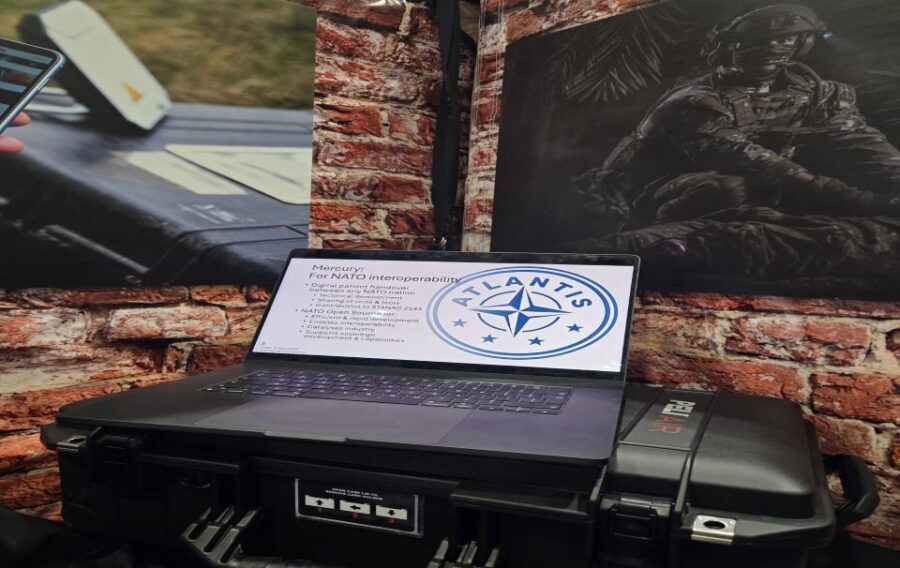
Defence Medical Services (DMS) has awarded a £2.5 million contract to Avenue3, a Leeds-based digital healthcare consultancy, to advance the implementation of Project Mercury. This initiative, managed under the Cyber & Specialist Operation Command, focuses on the development of a Deployed Clinical Record system designed to provide military clinicians with secure, global access to medical records.
The contract marks a significant transition for the project, moving from the initial proof-of-concept phase into full-scale implementation. The first live release of the system is scheduled for Spring 2026, with continued development and a broader rollout planned throughout 2027.
The technological core of Project Mercury is an application that enables the viewing, recording, and sharing of medical data across multiple devices during global deployments. Crucially, the system is engineered to function in remote environments where internet connectivity is unavailable. It achieves this through the integration of Near Field Communication (NFC) technology, allowing for the secure transfer of data offline in a manner similar to contactless payment systems. This capability is expected to significantly enhance the delivery of healthcare to personnel serving in frontline or isolated locations.
From a strategic and procurement perspective, this contract award is a direct reflection of the Defence Industrial Strategy 2025. This policy outlines a clear governmental mandate to increase Ministry of Defence (MOD) expenditure within the Small and Medium Enterprise (SME) sector. By partnering with Avenue3, the MOD is demonstrating its commitment to leveraging agile, specialised contractors to modernise its digital infrastructure. Project Mercury itself is a component of the broader Programme Cortisone, a multi-year effort delivered in collaboration with Defence Digital to replace legacy systems with a secure, modern ecosystem of healthcare information services.
For businesses and sub-contractors within the UK defence supply chain, the project highlights the increasing demand for secure, resilient digital solutions that adhere to open standards and clinically led design principles. The emphasis on interoperability and “open standards” suggests future opportunities for providers who can integrate with this evolving healthcare platform. The project’s Clinical Lead, Lt Col Michael Claydon, indicated that the system will undergo rapid optimisation through ongoing engagement with UK and NATO commanders, ensuring the technology remains relevant for future conflict scenarios. As the MOD continues to digitise its operational support services, the successful rollout of Project Mercury will serve as a benchmark for how modernised medical logistics can bolster national resilience and the effectiveness of deployed forces.
Image: Project Mercury equipment on display. MOD Crown copyright.
If you would like to join our community and read more articles like this then please click here

Post written by: Vicky Maggiani
Vicky has worked in media for over 25 years and has a wealth of experience in editing and creating copy for a variety of sectors.
RELATED ARTICLES

March 27, 2026
Land - British engineering firm Rowden hosts the British Army to explore frontline Techcraft
British engineering firm Rowden hosted a visit by British Army Sergeant Majors to explore how collaboration between engineers and soldiers helps shape

March 27, 2026
Air - DroneShield Expands C2 Interoperability
DroneShield, a global leader in counter-unmanned systems (C-UxS) solutions, today announced interoperability between DroneSentry-C2 command-and-control software, and optical sensing technologies from OpenWorks Engineering. The partnership strengthens DroneShield’s ability to unify multi-domain sensor inputs