


The Royal Navy’s Anti-Submarine Warfare (ASW) Spearhead programme has unveiled three groundbreaking autonomous platforms – CETUS, PROTEUS and SCYLLA – signalling a step-change in Britain’s naval capability and its contribution to the AUKUS partnership.
Backed by £400 million of investment, the programme demonstrates how innovative acquisition models, multi-year funding, and close collaboration between UK Defence Innovation (UKDI), the Defence Science and Technology Laboratory (Dstl), industry and academia can rapidly transform ideas into deployable capability.
CETUS – Britain’s largest autonomous submarine
Built by Plymouth-based MSubs Ltd, CETUS is one of the world’s largest and most advanced uncrewed submersibles, weighing 25 tonnes with payload. The platform’s modular payload bay enables diverse missions from anti-submarine warfare and seabed operations to covert intelligence gathering. Following successful sea trials earlier this year, CETUS – formally named XV EXCALIBUR – is now shaping the Navy’s future autonomous underwater doctrine.
PROTEUS – next-generation rotary autonomy
Delivered by Leonardo, PROTEUS is a 3-tonne autonomous rotary platform designed to perform dangerous and high-cost missions currently reliant on crewed helicopters. Initially trialling sonobuoy deployment and communications relay roles, PROTEUS is being developed to extend into logistics support, search and rescue coordination, and wide-area maritime surveillance. Its three-year journey from requirement to flying testbed underscores the value of streamlined innovation pathways.
SCYLLA – submarine-launched innovation
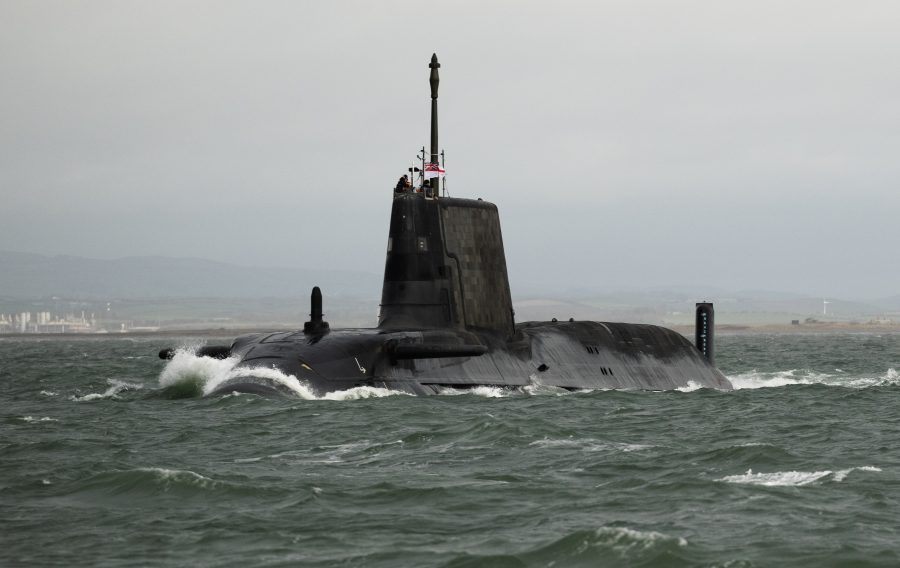
SCYLLA represents a breakthrough in torpedo tube–launched autonomous systems, able to deploy and recover from ASTUTE-class submarines without modification. With mission-specific modular payloads, SCYLLA supports seabed warfare, ISR and covert surveillance missions. Its development is directly aligned with AUKUS Pillar 2 objectives, expanding undersea warfare options for allied navies.
Defence innovation at pace
The programme’s seven-step governance model has allowed rapid progress without compromising safety. By embedding Dstl technical support and securing long-term funding, the Royal Navy has ensured faster concept-to-capability delivery while offering stability for industry partners.
Commander Chris Hill MBE RN, ASW Spearhead Programme Director, described SCYLLA as “a paradigm shift in ASW capabilities, the most significant since the introduction of Tomahawk.”
Supply chain and strategic impact
For UK industry and the wider defence supply chain, the Spearhead programme highlights the demand for advanced autonomy, modular systems, undersea payload technologies and resilient communications. It also sets a precedent for how future capabilities will be developed – with sustained investment, collaborative partnerships, and agile governance delivering results at pace.
By fielding CETUS, PROTEUS and SCYLLA, the UK is cementing its position at the forefront of autonomous naval warfare, strengthening operational resilience while contributing directly to allied capabilities under AUKUS.
If you would like to join our community and read more articles like this then please click here

Post written by: Vicky Maggiani
Vicky has worked in media for over 25 years and has a wealth of experience in editing and creating copy for a variety of sectors.
RELATED ARTICLES
March 31, 2026
Maritime - Boost to British jobs with £283.5m Maintenance Contracts
The Ministry of Defence has announced the award of contracts totalling £283.5 million to provide comprehensive support and maintenance for
March 31, 2026
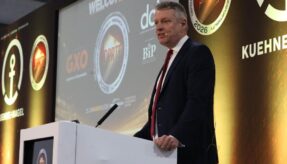
Homeland - MOD Outlines Strategic Procurement Reform and SME Growth Targets at DPRTE 2026
At the opening of the DPRTE 2026 conference in Farnborough, Minister for Defence Readiness and Industry Luke Pollard MP detailed