



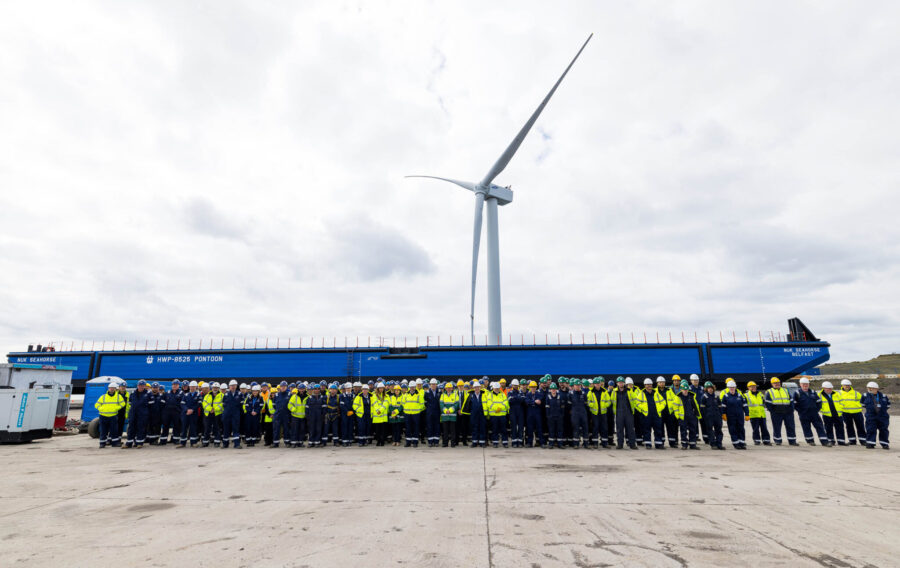
The delivery of the Seahorse transport barge at Methil – designed with Scottish naval architecture expertise and built on budget in eight months – offers a practical lesson in how major defence shipbuilding programmes can and should engage the wider UK supply chain.
Navantia UK has highlighted the role of Fife-based Alexander Marine Design in the successful delivery of Seahorse, the 85-metre, 1,400-tonne transport barge built at its Methil yard in Scotland to support the Fleet Solid Support programme. The vessel, which arrived at Navantia UK’s Appledore shipyard in North Devon last month, will transport major ship blocks and components between Appledore and Belfast as part of the distributed build strategy for three new Fleet Solid Support ships being constructed for the Royal Fleet Auxiliary.
Seahorse was delivered on budget and in just eight months from first steel cut to christening – a timeline that reflects both the quality of the build team at Methil and the practical, production-focused approach that Alexander Marine Design brought to the naval architecture and design work. Led by Andrew Alexander, a naval architect with more than 25 years of experience across UK and international maritime industries including Ferguson Shipbuilders and Harland & Wolff, the Newport-on-Tay consultancy worked closely with Navantia UK’s engineering and production teams to develop a vessel that was not only technically sound but genuinely buildable within the programme’s constraints. That distinction – between design that works on paper and design that works in a shipyard – is one that experienced naval architects with a production background are well placed to navigate, and Seahorse demonstrates the value of engaging that expertise early.
The personal dimension of Alexander’s involvement adds a meaningful thread to the story. Having spent four years at Harland & Wolff in Belfast earlier in his career, Alexander has now helped design a vessel that will deliver ship blocks to that same yard for final assembly on the Fleet Solid Support programme – a connection that illustrates the interwoven nature of UK maritime heritage and the ongoing relevance of the people and firms that carry it forward.
The build itself was a collaborative effort across Navantia UK’s Methil workforce, with apprentices working alongside experienced welders, platers, engineers and project managers throughout the eight-month programme. The workforce at Methil has grown from approximately 180 to 260 people since Navantia UK took ownership of the yard, with continued investment in facilities, equipment and skills aimed at building a sustainable pipeline of future work. Seahorse is both a programme deliverable and a demonstration of what that growing capability can achieve when given the opportunity to contribute to a major national programme.
Steve Chisholm, General Manager at Methil, was direct about the strategic intent behind Navantia UK’s approach to local supply chain engagement. Working with companies such as Alexander Marine Design, he said, is not only about delivering individual projects – it is about helping rebuild the wider network of designers, engineers, manufacturers and skilled workers needed to sustain shipbuilding in the UK for the long term. That framing reflects a broader and increasingly important argument in UK defence industrial policy: that sovereign shipbuilding capability is not just a function of the prime contractors and major yards but of the ecosystem of specialist designers, consultancies, component manufacturers and skilled trades that surrounds them.
The Fleet Solid Support programme’s distributed build strategy – with work spread across Appledore, Belfast and the Scottish yards – is itself a practical expression of that philosophy, designed to retain economic value within the UK supply chain and strengthen sovereign capability across multiple sites and regions rather than concentrating it in a single location.
For the UK defence supply chain
The Seahorse story is a useful illustration of how major defence shipbuilding programmes create opportunity well beyond the prime contractor and the headline build activity. Naval architecture, design consultancy, marine engineering, specialist manufacturing and skilled trades all play essential roles in delivering programmes of this scale – and the Navantia UK model of active local supply chain engagement demonstrates that primes are increasingly recognising the value of investing in that broader ecosystem rather than simply sourcing from the most established names. For businesses across the maritime design and engineering supply chain, the Fleet Solid Support programme and the wider Royal Navy shipbuilding pipeline represent a sustained and geographically distributed source of opportunity.
Image Navantia
Join our new expanding community at DPRTE.co.uk – our new Defence Community Platform, creating a single, year-round digital hub for the UK’s defence procurement and supply chain sector.

Post written by: Vicky Maggiani
Vicky has worked in media for over 25 years and has a wealth of experience in editing and creating copy for a variety of sectors.
RELATED ARTICLES
August 4, 2026
Maritime - Royal Navy Deploys Autonomous Underwater Systems with AUKUS Allies in Critical Seabed Infrastructure Protection Exercise
Exercise Lanternfish marks a significant step in allied undersea warfare integration – moving from theory and testing to live operational

August 4, 2026
Homeland - TechUK Welcomes MoD SME Action Plan but Warns on Accountability and Pace of Delivery
The UK’s leading technology trade association has given a cautious welcome to the MoD’s long-awaited SME Action Plan – but