



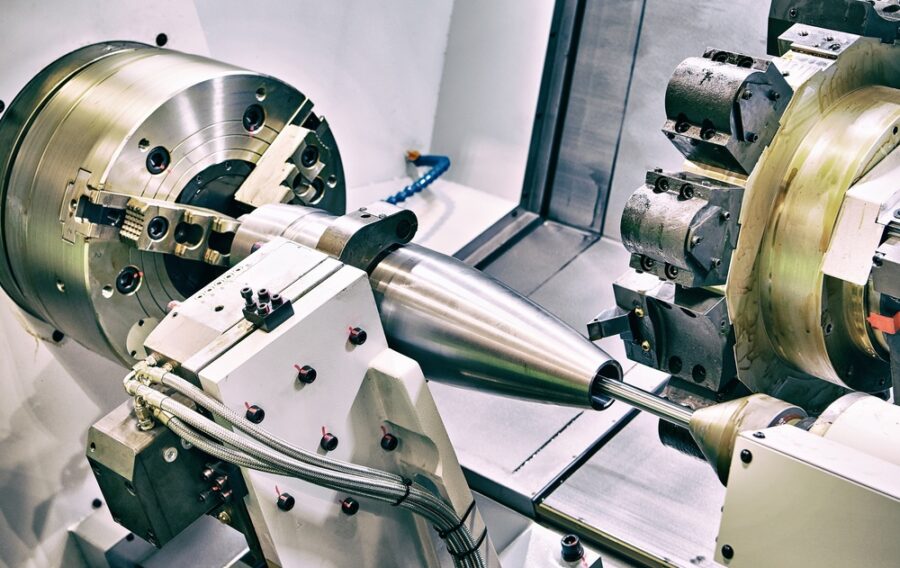
Feasibility study contracts worth up to £300,000 each mark the opening phase of a programme to build at least six new energetics manufacturing facilities across England, Scotland and Wales – restoring a sovereign munitions supply pipeline that has declined over decades.
The Ministry of Defence has awarded feasibility study contracts to 22 companies – including British SMEs from across England, Scotland and Wales – to develop detailed proposals for new energetic materials manufacturing facilities. Each contract is worth up to £300,000, with companies expected to return their findings by the end of September 2026 and construction of the first new energetics factories planned to begin before the end of the year. On completion of the feasibility studies, the strongest proposals will be offered Front End Engineering Design contracts worth up to £5 million each to develop engineering designs for at least six new manufacturing sites.
Energetic materials – the explosives, propellants and pyrotechnics that are essential components of small arms ammunition, artillery, mortars, countermeasures, bombs and missiles – underpin the UK’s ability to arm, sustain and resupply its forces. The programme addresses a capability gap that has been building for decades. Britain’s sovereign energetics manufacturing base has contracted significantly over the years, leaving the UK dependent on international supply chains for materials that are fundamental to warfighting readiness. The conflict in Ukraine has made the strategic risk of that dependency impossible to ignore, demonstrating with clarity the importance of a fast, sovereign and always-on munitions resupply pipeline in sustained high-intensity conflict.
The feasibility work follows the identification in November 2025 of at least 13 potential sites across the UK suitable for energetics and munitions manufacture, spanning Monmouthshire, Cumbria, Dumfries and Galloway, North Ayrshire, Shropshire, Cheshire, Derbyshire, Essex, Worcestershire, Hampshire, Pembrokeshire, Falkirk and other locations. The geographic spread is deliberate – bringing high-skilled manufacturing back to industrial communities across the four nations rather than concentrating capability in a single location or region.
The 22 companies awarded feasibility contracts represent a deliberately diverse cohort. Commodore Caroline Dix, Deputy Director Lethality and Protect in the National Armaments Director Group, described the group as ranging from innovative SMEs to major defence primes and major chemical industry partners – a breadth of industrial engagement designed to draw on the widest possible range of manufacturing expertise, site options and commercial approaches. The programme is structured to be competitive: feasibility studies feed into FEED contracts for the strongest proposals, which in turn feed into construction of the new facilities, creating a clear and sequenced pathway from initial study to operational factory.
The investment sits within the £11.1 billion allocated through the Defence Investment Plan for munitions and weapons – one of the largest single capability investment commitments in the DIP and a direct expression of the government’s intent to increase UK stockpiles and ensure the armed forces have the right mix of capabilities to defeat the full range of targets efficiently. Minister for Defence Readiness and Industry Luke Pollard framed the programme in both capability and industrial terms, describing it as restoring Britain’s sovereign manufacturing capabilities after decades of decline while creating at least 1,000 high-skilled jobs in communities that have long been the backbone of British industry.
The pace of the programme is notable. Feasibility studies awarded in July, findings due by end of September, construction planned to start by end of 2026 – this is a timeline that reflects the operational urgency the MoD has attached to rebuilding sovereign energetics supply, and one that will require the selected companies to move quickly and decisively through each phase.
For the UK defence supply chain
The energetics manufacturing programme represents one of the most direct and accessible supply chain opportunities to emerge from the Defence Investment Plan’s munitions allocation. Unlike some major defence programmes where the supply chain is already established and entry is difficult, this is a programme being built from the ground up – with the explicit objective of bringing new industrial capacity, new facilities and new suppliers into a sector that has seen sustained contraction. The FEED contract stage, with up to £5 million available per proposal, creates a significant near-term opportunity for companies with relevant engineering, site development and manufacturing expertise to move from feasibility into detailed design.
Join our new expanding community at DPRTE.co.uk – our new Defence Community Platform, creating a single, year-round digital hub for the UK’s defence procurement and supply chain sector.

Post written by: Vicky Maggiani
Vicky has worked in media for over 25 years and has a wealth of experience in editing and creating copy for a variety of sectors.
RELATED ARTICLES

July 30, 2026
Land - Agon Launches with $30 Million Seed Investment to Build Europe's Sovereign Defence AI Infrastructure
A European defence AI start-up has launched with one of the largest early-stage defence technology seed rounds in Europe this

July 30, 2026
Homeland - Europe is building a military on chips it cannot make
In 1950 Jean Monnet persuaded Europe that pooling coal and steel would make another Franco-German war almost impossible. The idea