



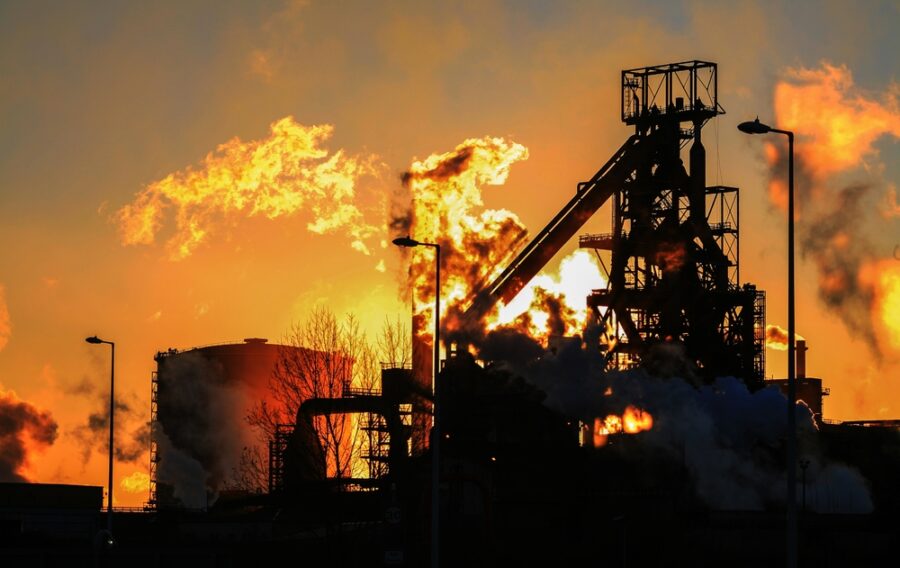
The government has taken British Steel into public ownership following the Steel Industry (Nationalisation) Act receiving Royal Assent, in a landmark decision that ministers say is necessary to protect the UK’s domestic steelmaking capability, thousands of jobs, and the supply chains underpinning major infrastructure, defence, and energy programmes.
The decision follows more than a year of government intervention that began in April 2025 when ministers stepped in to keep British Steel’s Scunthorpe blast furnaces running and prevent a disorderly closure. Extensive negotiations with former owner Jingye ultimately failed to produce an agreement that would secure the company’s future while delivering value for taxpayers, leaving public ownership as the government’s chosen course of action.
Why Steel Matters to National Security and Defence
The decision has been framed explicitly in terms of national interest, with ministers citing steel’s critical role in defence, major construction projects, transport networks, and energy infrastructure. Maintaining domestic steelmaking capability at Scunthorpe is considered essential to the UK’s ability to produce the materials on which major defence and infrastructure programmes depend.
Prime Minister Keir Starmer said: “British Steel is part of the fabric of our nation and a cornerstone of Britain’s industrial strength. Today’s decision secures the future of steelmaking in the UK, protects skilled jobs and safeguards a vital national capability. This Government will always act in the national interest to support British industry, strengthen our economy and ensure the industries we rely on can thrive long into the future.”
Business Secretary Peter Kyle added: “British Steel now belongs to the British people, and our focus is on the future: stabilising the business, backing the communities that rely on it and building a sustainable, competitive and decarbonised steel sector for the years ahead.”
New Leadership and Immediate Priorities
A newly appointed team of Non-Executive Directors has been put in place to lead British Steel through its initial period of public ownership. Their immediate priorities are stabilising operations at Scunthorpe, maintaining health and safety standards, sustaining production, and working with management, trade unions, and staff on a commercially sustainable, low-carbon future for the business.
British Steel Interim CEO Allan Bell said: “This is a momentous day for British Steel, and everyone connected with our business. Much more than that, it is an historic day for Britain and UK manufacturing, one which safeguards our future and strengthens national security and infrastructure. Together, we look to the future with great optimism and will work together to make the world-class steel Britain needs now and for decades to come.”
Wider Steel Strategy and Industrial Context
The nationalisation forms part of a broader package of government support for the UK steel sector. The first ever Steel Strategy, published in March and backed by up to £2.5 billion of investment, set an ambition for up to 50% of steel used in the UK to be made domestically. Additional measures include a new trade policy limiting tariff-free steel imports by reducing overall quota volumes by 51%, £500 million for Tata Steel to support its Port Talbot green steel transformation, and energy cost support worth hundreds of millions of pounds per year through the Supercharger and British Industrial Competitiveness Scheme.
Chancellor of the Exchequer Rachel Reeves said: “Bringing British Steel into public ownership is the right thing to do so we can stabilise the business going forward, protect UK steelmaking and the communities it supports. We are backing British industry and investing in the industries that create growth, with steel vital to our security, resilience and economic strength.”
GMB National Secretary Charlotte Brumpton-Childs said: “It’s no exaggeration to say Ministers have saved the UK steel industry. But the hard work to keep it alive starts here, beginning with a commitment to public infrastructure projects to buy British.”
What This Means for Defence and Infrastructure Procurement
For the UK defence and infrastructure procurement community, the nationalisation of British Steel carries significant supply chain implications. Steel is a foundational material for shipbuilding, armoured vehicle production, military infrastructure, and major capital programmes across transport and energy. Securing domestic production reduces dependence on overseas supply chains for a strategically important material at a time when supply chain resilience has moved to the top of the national security agenda.
The government’s ambition to source up to 50% of UK-used steel domestically also has direct procurement policy implications. For contracting authorities and prime contractors running major defence and infrastructure programmes, the direction of travel toward domestic sourcing is clear, and supply chain strategies will need to reflect it.
An independent valuer will be appointed to assess whether any compensation is payable to the former owner, with a compensation scheme expected to be established through regulations in autumn 2026.
Image credit: Gareth Abraham / Shutterstock.com

Post written by: Vicky Maggiani
Vicky has worked in media for over 25 years and has a wealth of experience in editing and creating copy for a variety of sectors.
RELATED ARTICLES


July 27, 2026
Air - BAE Systems Unveils Brontanax: The UK's First Autonomous Collaborative Combat Aircraft
The unveiling of Brontanax at Farnborough International Airshow marks a defining moment for UK sovereign combat air capability – and