


Behind the headlines from Ankara sits a wave of procurement activity, new industry frameworks and multinational projects that suppliers across the defence supply chain will want to take note of.
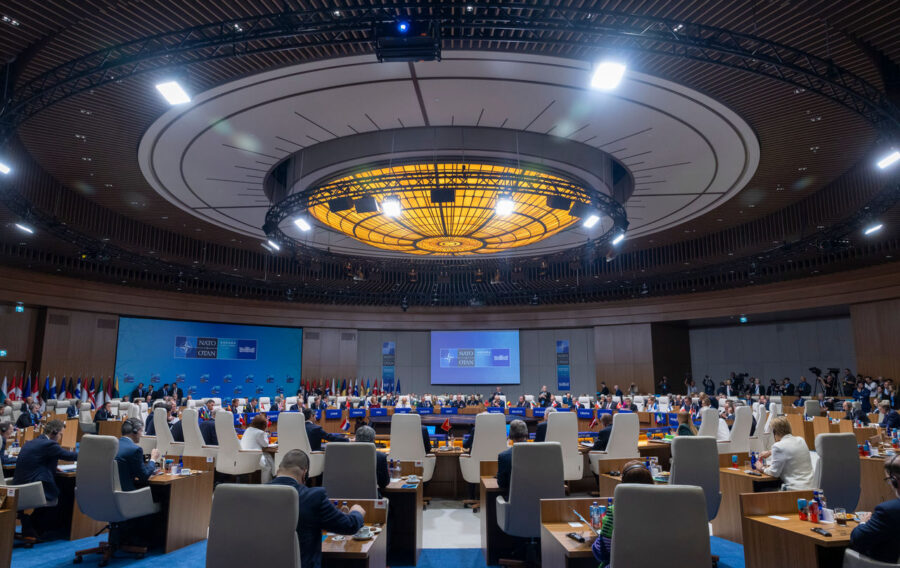
The NATO Summit Defence Industry Forum brought together Allied ministers and representatives from over 100 companies to turn last year’s Hague investment commitments into contracts, and the results were substantial. Rutte told the Forum that “the money is there, and more is coming,” while calling on government and industry to move faster and work more closely together.
Two new mechanisms stand out for suppliers trying to navigate how to engage with NATO. The NATO Front Door for Industry is a new platform designed to simplify how companies, particularly SMEs and non-traditional suppliers, engage with the Alliance. Alongside it, NATO published its first public unclassified demand signal, giving industry much clearer visibility of Allied capability requirements ahead of procurement. Both sit under the newly endorsed Strategy for Industry-NATO Cooperation (SYNC), which sets out to improve industry access to NATO, provide greater visibility of capability needs and simplify engagement for firms of all sizes.
On the hardware side, the scale of procurement was considerable. Eleven Allies agreed the joint procurement of Saab GlobalEye aircraft as NATO’s new Airborne Warning and Control System, replacing part of the ageing Boeing E-3 fleet, while Denmark, Finland, Germany and Norway will procure up to five Northrop Grumman MQ-4C Triton uncrewed aircraft to strengthen maritime surveillance. A transatlantic industrial consortium will deliver the Triton programme, with Airbus Defence and Space among the European partners providing ground segment and mission support work.
Munitions and strike capability also saw major multinational activity. Nine Allies launched the Generic NATO Indirect Fire Round project to develop a prototype interoperable 155mm munition, aimed at streamlining production and removing the interoperability barriers that have long constrained artillery supply chains. A separate six-nation project will explore new ground-based precision strike capabilities, including launchers and missiles. NATO’s Support and Procurement Agency also awarded contracts worth hundreds of millions of dollars for surveillance drones, alongside framework contracts for additional 155mm ammunition and loitering munitions.
Supply chain resilience got its own dedicated initiative, with twelve Allies launching a new project focused on the acquisition, storage, transport and management of critical raw materials and components for defence production. Rutte was direct about the reasoning: “For our defence to remain ready and strong, we need our industrial base and our supply chains to be resilient.”
Airlift and air defence capacity also expanded. Seven Allies launched a new multinational project for an Airbus A400M fleet, following the pooling-and-sharing model used for the A330 Multi-Role Tanker Transport fleet, which received its tenth aircraft as Finland joined as its ninth member nation. NATO’s Support and Procurement Agency will separately acquire 700 PAC-2 and 200 PAC-3 missiles, while Belgium and the Netherlands signed a government-to-government procurement agreement for air defence systems.
Perhaps most notable for the finance side of the supply chain was NATO’s new Call to Action, urging banks and financial institutions to increase lending and equity investment in defence, security and resilience. Institutions including Barclays, BNP Paribas, Citi, Deutsche Bank and NatWest have already mobilised USD 217 billion in capital, a figure Rutte called “just the beginning.”
For suppliers, the message from Ankara is consistent: demand is real, funding is flowing, and NATO is actively trying to widen the door for companies, including SMEs, to get involved.
For the UK defence supply chain the procurement activity unveiled at Ankara carries a clear signal. Multinational programmes on this scale, spanning munitions, airborne surveillance, strike capability and air defence, generate sustained sub-tier demand across guidance and sensor systems, launcher and ground support engineering, uncrewed platform integration, and the raw materials and components that sit behind them. The interoperability standards built into projects like the Generic NATO Indirect Fire Round and the multinational strike initiatives mean UK suppliers capable of meeting allied standards will be well placed. Rutte’s call to “do more, faster, together,” combined with the new Front Door for Industry and first public demand signal, reinforces that NATO is compressing procurement timelines and actively opening routes for SMEs and non-traditional suppliers.
Businesses with relevant capabilities should monitor the following areas as these programmes move into implementation:
- 155mm munition design, production and interoperable ammunition standards
- Long-range and precision strike systems, including launchers and missiles
- Uncrewed aircraft systems and maritime surveillance technology
- Airborne early warning platform integration and ground segment support
- Integrated air and missile defence systems, including PAC-2/PAC-3 supply
- Critical raw materials, components and defence supply chain resilience
- Strategic airlift and air-to-air refuelling support services
- NATO-compliant bidding routes and demand-signal-driven procurement opportunities
Image: NATO
Join our new expanding community at DPRTE.co.uk – our new Defence Community Platform, creating a single, year-round digital hub for the UK’s defence procurement and supply chain sector.

Post written by: Vicky Maggiani
Vicky has worked in media for over 25 years and has a wealth of experience in editing and creating copy for a variety of sectors.
RELATED ARTICLES
August 7, 2026
Air - Thales Secures NSPA Contract for Deployable Air Navigation System in Demonstration of NATO Procurement Route
Thales has been selected by the NATO Support and Procurement Agency to supply a Deployable Tactical Air Navigation system to
August 7, 2026
Air - Royal Navy's Dragon Rider Trials Prove Drone Armada Concept Over 200 Miles of Southern England
A week-long exercise integrating multiple uncrewed systems with Wildcat helicopters, Royal Marines and ship commanders has demonstrated that long-range drone