



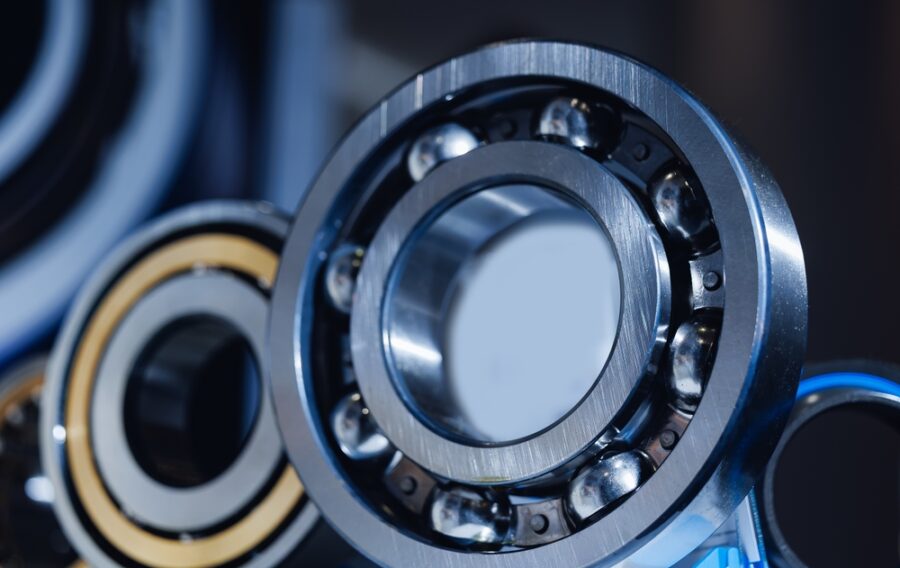
A written Commons question has forced the Government to address the impact of the UK’s incoming 50% steel tariff on a quietly critical piece of sovereign defence capability: ball bearings. The Department for Business and Trade response confirms extensive industry engagement but stops short of a specific impact assessment – and for the UK defence supply chain, that gap carries real commercial consequence.
Dame Harriett Baldwin (Conservative, West Worcestershire) tabled the written question asking the Secretary of State for Business and Trade what assessment had been made of the tariff’s potential effect on the UK’s ability to manufacture ball bearings domestically. The question, answered on 18 June 2026 by Minister Chris McDonald MP (Labour, Stockton North), confirmed that the Government had engaged “extensively with both primary steel producers and downstream users”, including a Call for Evidence in July 2025. The Minister’s response characterised the approach as one designed “to strike a careful balance between supporting domestic steelmaking and maintaining secure, reliable supply for all downstream users”.
The reassurance is broad. No specific assessment of the tariff’s effect on UK ball-bearing manufacture was confirmed – and the omission matters. Ball bearings are an unavoidable input to almost every rotating defence platform in service. Helicopter rotor hubs, aero-engine ancillaries, vehicle drivetrains, naval propulsion gearboxes, missile actuators, radar pedestals and turret stabilisation systems all depend on them. A constrained UK ball-bearing manufacturing base – whether driven by input-cost pressure on specialist alloys or by substitution towards imported finished bearings – translates directly into sovereign risk across prime and tier-2 sustainment programmes throughout the UK fleet.
The Hansard exchange follows growing scrutiny of the steel measure’s wider defence implications. Trade press coverage ahead of the 1 July implementation date has flagged that the tariff’s full impact on the UK defence investment plan remains unclear, with downstream users actively seeking clarity on exemption scope and pricing pass-through before the measure takes effect.
For SMEs operating across the UK defence supply chain, the practical read is clear. Downstream bearing users – and the businesses supplying, machining, heat-treating and qualifying bearing materials – should be engaging with the Department for Business and Trade and with prime contract managers now to surface specific cost and continuity-of-supply risks. The Government’s framing of “balance” signals a willingness to deploy targeted exemptions or quotas where the sovereign downstream case is made on evidence, making engagement on bearing-specific supply data both timely and commercially high-value.
Businesses operating in the following areas should monitor this issue closely and consider early engagement with Whitehall procurement channels:
- Precision bearing manufacture and specialist alloy supply
- Heat treatment, machining and materials qualification for defence components
- Aero-engine, rotary and naval propulsion supply chains
- Vehicle drivetrain and armoured platform sustainment
- Radar, missile and stabilisation system sub-assembly

Post written by: Vicky Maggiani
Vicky has worked in media for over 25 years and has a wealth of experience in editing and creating copy for a variety of sectors.
RELATED ARTICLES

September 10, 2026
Homeland - Why 'Structured Collaboration' is Becoming a Defence Necessity
This week, Stuart John, from the Future Defence Support Services (FDSS) Bid Team at Leidos, examines new research with the

September 7, 2026
Homeland - Government commits £71m to Hemerdon tungsten and tin mine near Plymouth
The National Wealth Fund has committed up to £71 million to Tungsten West to restart the Hemerdon tungsten and tin