



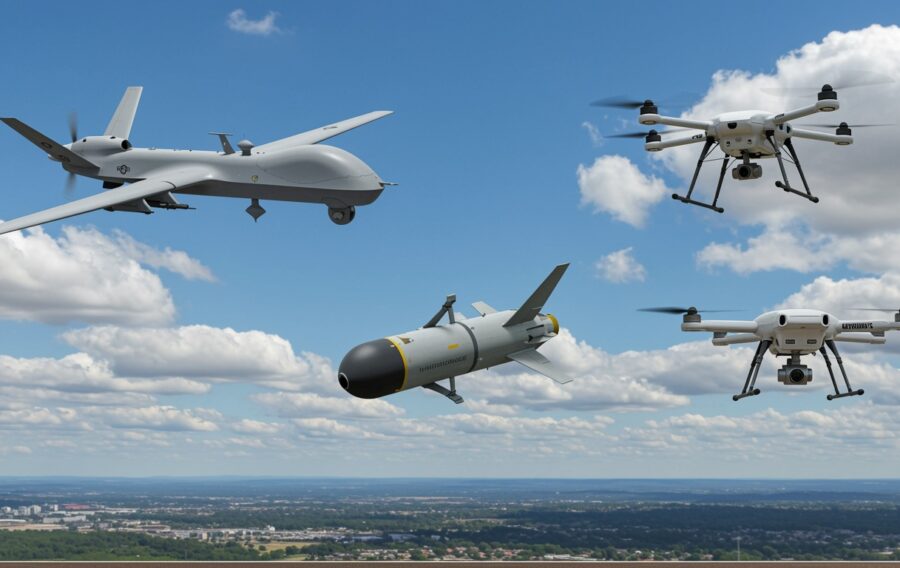
Defence Secretary Dan Jarvis MBE has announced a £752 million package to deliver 150,000 drones and more than 350 air defence missiles and radars to Ukraine by the end of 2026, funded through the UK’s Extraordinary Revenue Acceleration (ERA) loan backed by immobilised Russian sovereign assets.
The package is notable for its structure. The 150,000 drones are described as Ukrainian-produced, meaning UK funding is flowing into Ukrainian domestic drone manufacturing rather than drawing solely on existing UK stockpiles. For UK drone manufacturers and component suppliers already engaged in the Ukrainian market, or those pursuing entry via programmes like SPARC AI’s CFC Defence engagement announced this week, this represents a significant injection of procurement funding into an ecosystem they are actively building relationships within.
The air defence element includes Lightweight Multirole Missiles (LMM) and ground-based radar systems, to be delivered by end of 2026. LMM is a UK-developed precision missile produced by Thales, placing British manufacturing directly in the delivery chain for this element of the package.
The announcement came as the Defence Secretary co-chaired the 35th Ukraine Defence Contact Group (UDCG) in Brussels alongside German counterpart Boris Pistorius, with nearly 50 nations present. The UK also confirmed it is taking command of the Multinational Force for Ukraine Headquarters, with Major General Tom Bateman assuming command next month at Lieutenant General rank.
For the UK defence supply chain, the package reinforces several concurrent signals. The scale of drone demand Ukraine is generating, with domestic production targets running to tens of thousands of units per month, is driving investment in exactly the manufacturing automation, GPS-denied navigation, and wire harness production capabilities that UK companies including Q5D and SPARC AI are bringing to market. UK firms that can demonstrate relevance to high-volume, operationally proven drone production have a direct route into a funded, active procurement pipeline.
The Defence Secretary confirmed that lessons from Ukraine will be central to the Defence Investment Plan, due before the NATO Summit. For supply chain businesses, that means the operational evidence base for capability investment decisions is being shaped right now by what is working on Ukrainian battlefields.

Post written by: Vicky Maggiani
Vicky has worked in media for over 25 years and has a wealth of experience in editing and creating copy for a variety of sectors.
RELATED ARTICLES

September 10, 2026
Homeland - Why 'Structured Collaboration' is Becoming a Defence Necessity
This week, Stuart John, from the Future Defence Support Services (FDSS) Bid Team at Leidos, examines new research with the

September 7, 2026
Homeland - Government commits £71m to Hemerdon tungsten and tin mine near Plymouth
The National Wealth Fund has committed up to £71 million to Tungsten West to restart the Hemerdon tungsten and tin