


The Defence Science and Technology Laboratory (Dstl) has entered a strategic collaboration with the US Defense Advanced Research Projects Agency (DARPA) to investigate the integration of artificial intelligence into high-stakes battlefield medical decision-making.
Utilising hardware and methodologies developed under DARPA’s “In the Moment” (ITM) research programme, the initiative explores the technical and psychological thresholds required for military medics to delegate critical triage decisions to autonomous systems. This collaboration represents a significant step in the development of human-AI teaming, a priority area for future UK defence procurement and industrial research.
The trials, which took place in October 2025 at Merville Barracks in Colchester and RAF Brize Norton in Oxfordshire, were designed to address the challenges of information overload in combat environments. As the volume of data available to frontline personnel increases, the Ministry of Defence is seeking technological solutions that can process complex variables to assist in or lead medical prioritisation. For businesses operating in the defence technology sector, particularly those specialising in machine learning and human factors engineering, this research highlights a growing requirement for AI systems that can be “aligned” with specific human ethical frameworks and operational priorities.
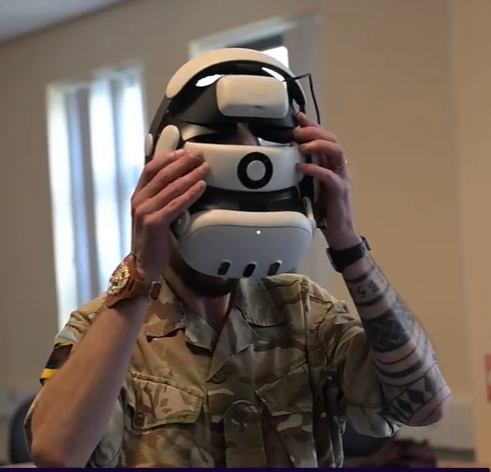
During the simulations, researchers utilised virtual reality and desktop-based scenarios to baseline the decision-making attributes of experienced medical personnel. The trials focused on subjective factors where no single correct outcome exists, such as merit focus, potential quality of life, and affiliation preferences. AI systems were then programmed to either align or misalign with these individual human attributes. Participants were asked to review AI-generated responses and determine their willingness to delegate triage tasks to the system. This methodology aims to quantify trust and identify the specific technical features that enable reliable human-AI collaboration in life-or-death scenarios.
The findings from these trials are set to inform ongoing Dstl research within the “Humans in Systems” and “People Implications of AI” workstreams. For the UK defence supply chain, this indicates a clear long-term demand for sophisticated AI-alignment technologies, immersive VR training platforms, and decision-support software capable of operating under extreme pressure. The programme suggests that future medical equipment procurement may increasingly require AI-enabled triage capabilities to ensure that casualty care is delivered at the speed and scale required by modern peer-adversary conflicts. By establishing these trust-based frameworks now, the MOD and its international partners are laying the groundwork for a more resilient and technologically advanced frontline medical infrastructure.
If you would like to join our community and read more articles like this then please click here

Post written by: Vicky Maggiani
Vicky has worked in media for over 25 years and has a wealth of experience in editing and creating copy for a variety of sectors.
RELATED ARTICLES

August 6, 2026
Homeland - Beyond the Domestic Market: Manchester Summit to Give UK Defence Suppliers a Practical Guide to the Export Opportunity
From NSPA contracting to AUKUS Pillar 2 and the UK-EU security pact, the addressable market for UK defence suppliers has

August 6, 2026
Homeland - Joint Procurement and Shared Stockpiling Could Create £3.4 Billion in Fiscal Headroom for UK Defence, IPPR Finds
New analysis from the Institute for Public Policy Research makes the economic case for deeper allied defence cooperation – and