



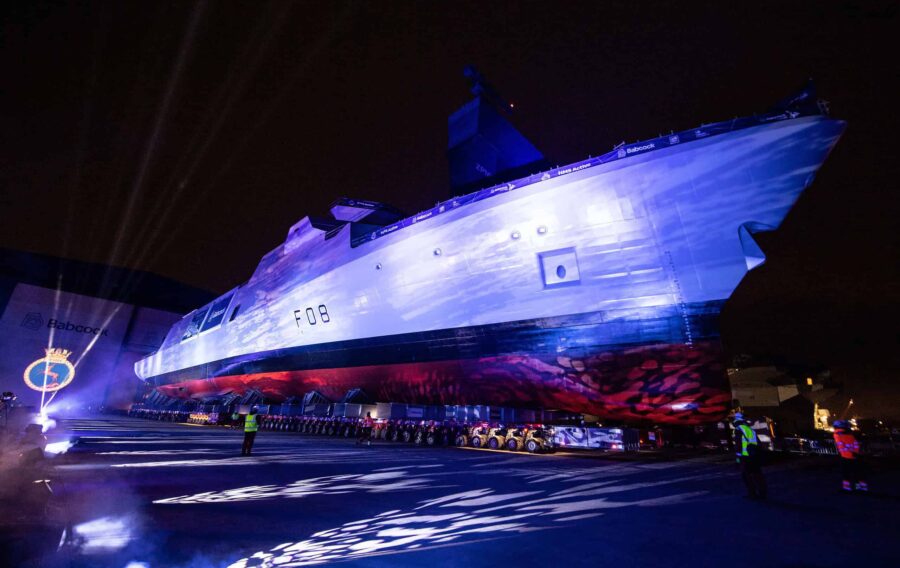
Babcock International Group has reached two significant production milestones in the Royal Navy’s Type 31 Inspiration Class frigate programme, underscoring the industrial momentum at its Rosyth facility.
On 24 February 2026, the company celebrated the ceremonial steel cut for HMS Bulldog, the fourth of five planned vessels, alongside the official rollout of HMS Active from the ship assembly hall. These developments mark a transition for the second frigate into its final fitting-out phase and signal the commencement of structural assembly for the fourth ship. For professionals in the UK defence supply chain, these milestones provide a clear indication of a sustained production cadence and the maturity of Babcock’s modular construction methodology.
The Type 31 programme currently sustains 1,250 highly skilled jobs directly within the programme and an additional 1,250 roles across the wider UK supply chain. This industrial activity is underpinned by approximately £200 million of investment by Babcock at the Rosyth site, including the purpose-built Venturer Building assembly hall. This facility enables the simultaneous construction of two 5,700-tonne frigates, positioning the UK at the forefront of modern naval shipbuilding and creating long-term visibility for sub-contractors. The programme is a key component of the government’s “make, build, and buy in Britain” policy, which is reinforced by a commitment to increase defence spending to 2.6% of GDP by 2027.
The Type 31 frigates are based on the British-designed Arrowhead 140 platform, which has already achieved significant international export success. With design and build licences secured in Indonesia and Poland, the programme is establishing a global standard for modular, adaptable naval platforms. This exportable intellectual property offers UK-based sub-contractors the potential to integrate into international programmes, leveraging the same design and engineering standards established for the Royal Navy. Furthermore, the ships are designed to be part of a future “hybrid fleet,” incorporating both crewed vessels and uncrewed systems. This focus on adaptability ensures that the supply chain remains engaged throughout the vessels’ life cycles as they undergo modular upgrades to meet evolving threats.
Minister for Defence Readiness and Industry Luke Pollard MP highlighted that the programme is delivering world-class warships while providing tangible economic benefits to Scottish and UK communities. The programme has also established over 400 apprenticeship roles, ensuring the long-term retention of engineering and advanced manufacturing skills within the domestic sector. As the Strategic Defence Review continues to shape the future of the Royal Navy, the Type 31 programme remains a critical driver for sovereign industrial capacity and maritime interoperability.
If you would like to join our community and read more articles like this then please click here

Post written by: Vicky Maggiani
Vicky has worked in media for over 25 years and has a wealth of experience in editing and creating copy for a variety of sectors.
RELATED ARTICLES
August 7, 2026
Air - Thales Secures NSPA Contract for Deployable Air Navigation System in Demonstration of NATO Procurement Route
Thales has been selected by the NATO Support and Procurement Agency to supply a Deployable Tactical Air Navigation system to

August 7, 2026
Air - Royal Navy's Dragon Rider Trials Prove Drone Armada Concept Over 200 Miles of Southern England
A week-long exercise integrating multiple uncrewed systems with Wildcat helicopters, Royal Marines and ship commanders has demonstrated that long-range drone