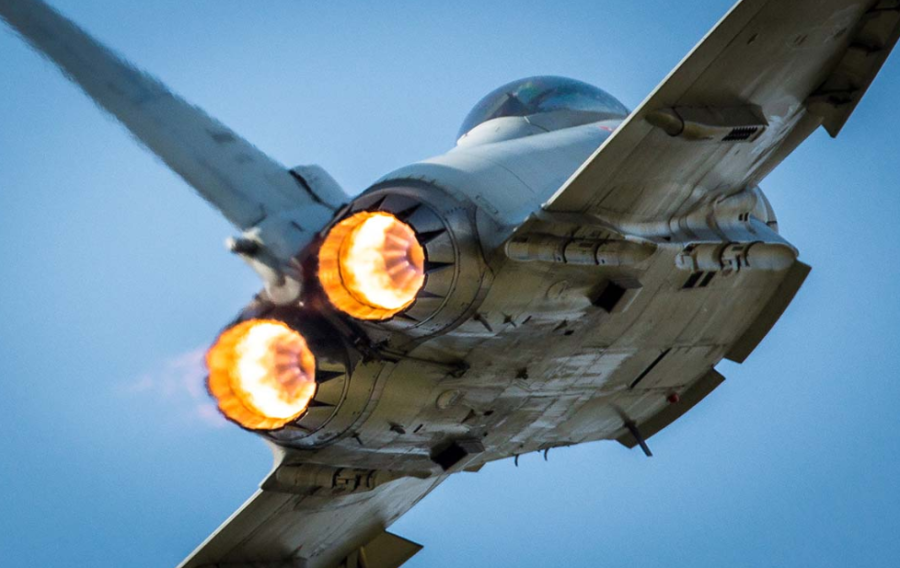
The United Kingdom has secured a significant export agreement with Turkey for the supply of 20 Typhoon fighter jets, a deal valued at up to £8Bn.
This contract represents the largest export order for the aircraft in nearly two decades and is the first new UK Typhoon order since 2017. The agreement is set to provide long-term stability for the UK’s combat aircraft production lines and will sustain a workforce estimated at 20,000 people across the country. The deal was formalised during a prime ministerial visit to Ankara, underscoring the strategic importance of the UK-Turkey relationship within the NATO alliance. For the UK defence supply chain, this agreement provides a critical injection of work, ensuring the continuation of advanced manufacturing and engineering roles for years to come.
The industrial impact of the contract will be distributed across key manufacturing hubs. BAE Systems sites in Warton and Samlesbury, which handle production and final assembly, will be major beneficiaries. The programme also secures specialist roles in the wider supply chain, including at Rolls-Royce in Bristol, responsible for producing modules and components for the Typhoon’s EJ200 engines, and at Leonardo in Edinburgh, which manufactures the aircraft’s advanced radar systems. The workshare agreement stipulates that over a third (37%) of each aircraft will be manufactured in the UK, with the remainder being produced by other Eurofighter partner nations. This arrangement ensures a substantial flow of work to UK-based prime contractors and their extensive network of sub-contractors.
From a strategic perspective, the deal enhances Turkey’s combat air capabilities and promotes greater interoperability between the Royal Air Force and the Turkish Air Force. This alignment is viewed as a key contributor to strengthening NATO’s collective deterrence in a strategically sensitive region. The procurement follows other recent UK defence export successes and is being presented by the government as evidence of a strategy to leverage the defence sector as a driver for national economic growth and high-skilled employment. The first deliveries of the Typhoon jets to Turkey are scheduled to commence in 2030, providing a clear and extended timeline for industry planning and investment. The longevity of the programme is expected to preserve sovereign skills in combat air design and manufacturing, which are vital for the UK’s future defence capabilities.
If you would like to join our community and read more articles like this, please click here.