


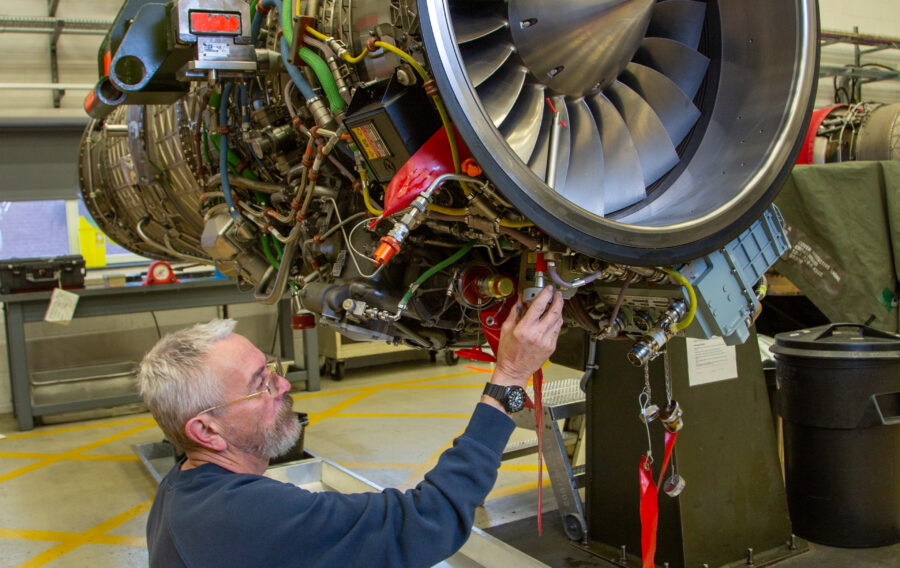
Serco has secured a direct five-year contract with the Ministry of Defence (MOD) for the provision of maintenance and logistics services pertaining to the EJ200 engines that power the Royal Air Force’s (RAF) Typhoon multi-role aircraft fleet.
This agreement, valued at approximately £7.8 million, signals a significant transition in the Typhoon’s in-service support structure, moving Serco from a subcontracted entity to a direct service provider to Defence Equipment and Support (DE&S).
For the wider defence supply chain, this contract affirms the sustained and formalized requirement for specialist engineering and logistics support across critical RAF air platforms. The work, which will be executed at RAF Coningsby in Lincolnshire and RAF Lossiemouth in Moray, specifically underpins the operational readiness of the Typhoon fleet, ensuring the UK’s commitment to air defence and NATO obligations can be met. This continuity of service sustains twenty-six highly skilled roles—twenty technicians and six logisticians—across the two primary RAF stations.
This development is instructive for businesses looking to expand their footprint within the UK defence support sector, particularly those operating in the Maintenance, Repair, and Overhaul (MRO) domain. Serco’s ability to transition from a subcontracted role—previously managed through Rolls-Royce—to a direct contractual relationship with the MOD indicates that DE&S is actively seeking to streamline the supply chain for complex platform support. Companies with proven technical expertise and a long-standing on-base presence are increasingly positioned to bid for and manage critical support contracts independently.
Furthermore, this award highlights the increasing commercial maturity and capability diversification within key defence services providers. The EJ200 engine contract follows a series of substantial contract wins for Serco throughout the year, including major agreements for Royal Navy Maritime Services and the Armed Forces Recruitment Service. This accumulation of support contracts across air, land, and sea domains confirms a trend toward leveraging large, integrated service providers for complex, through-life support requirements, thereby consolidating numerous small-scale contracts into larger, more comprehensive support packages. Subcontractors should note that future entry points into these major programmes will increasingly rely on forming strategic partnerships with these primary service providers to secure work across the key operating bases.
If you would like to join our community and read more articles like this then please click here

Post written by: Vicky Maggiani
Vicky has worked in media for over 25 years and has a wealth of experience in editing and creating copy for a variety of sectors.
RELATED ARTICLES

July 27, 2026
Air - BAE Systems Unveils Brontanax: The UK's First Autonomous Collaborative Combat Aircraft
The unveiling of Brontanax at Farnborough International Airshow marks a defining moment for UK sovereign combat air capability – and