



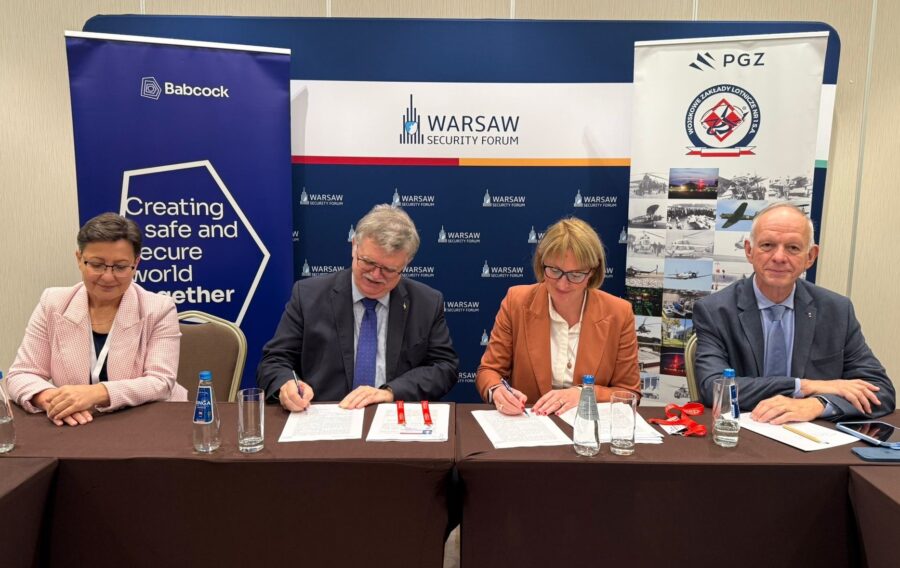
Babcock International Group has signed a Memorandum of Understanding (MoU) with Wojskowe Zakłady Lotnicze No. 1 (WZL 1) in Warsaw to explore the creation of a joint helicopter sustainment and training centre for the Polish Armed Forces. The proposed development is intended to strengthen Poland’s ability to maintain and operate its helicopter fleet domestically, while also delivering technical training to enhance operational readiness and long-term capability.
The agreement builds on the Strategic Cooperation Agreement signed earlier this month at MSPO in Kielce between Polska Grupa Zbrojeniowa SA (PGZ) and Babcock, which set the framework for expanded collaboration across sea and air domains. WZL 1, part of the PGZ group of companies, will work with Babcock to develop solutions that provide sovereign sustainment capability for modern helicopter platforms. The partnership aims to ensure that the Polish defence industry can independently manage through-life support requirements while raising the skills base of technical personnel to internationally recognised standards.
For UK defence suppliers, the partnership illustrates the growing scope for industrial collaboration with Poland in both rotary and maritime domains. As one of NATO’s fastest-growing defence markets, Poland continues to invest heavily in expanding its operational capabilities and modernising its equipment base. The sustainment and training centre concept reflects an increasing focus on through-life capability management, which creates opportunities not only for prime contractors but also for sub-suppliers specialising in maintenance, repair, training systems, avionics integration and digital support services.
Babcock’s Aviation Sector Chief Executive, Pierre Basquin, underlined the strategic importance of the project, noting that a fully deployable helicopter fleet is central to Poland’s national and international security obligations. He added that the collaboration with WZL 1 will deliver operational excellence and contribute to the wider development of Poland’s defence autonomy.
Babcock already maintains an established presence in Poland through Babcock Polska, with operations in Gdynia and Warsaw. The company plays a central role in the PGZ-Miecznik consortium as platform design provider and technology partner for Poland’s Miecznik frigate programme, further demonstrating its integration into Poland’s long-term defence industrial base.
This latest agreement strengthens Babcock’s position in Poland’s defence market and signals potential future requirements across sustainment, training, and technology transfer. For UK businesses operating in the defence supply chain, the development highlights emerging opportunities to align with major primes and contribute to projects that are central to NATO capability growth in Eastern Europe.
Image: Officials from Babcock and WZL1 sign MoU in Warsaw
If you would like to join our community and read more articles like this then please click here

Post written by: Vicky Maggiani
Vicky has worked in media for over 25 years and has a wealth of experience in editing and creating copy for a variety of sectors.
RELATED ARTICLES

August 3, 2026
Land - BAE Systems Reports £84 Billion Order Backlog and Upgraded Guidance as Global Defence Spending Drives Record Performance
BAE Systems’ strongest first-half results in years – with sales up 9%, a record order backlog and full-year guidance raised

August 3, 2026
Maritime - US Awards $76.6 Billion Submarine Contract in Historic Undersea Modernisation Drive
A landmark US shipbuilding investment spanning Columbia and Virginia Class submarines signals the scale of allied commitment to undersea deterrence