



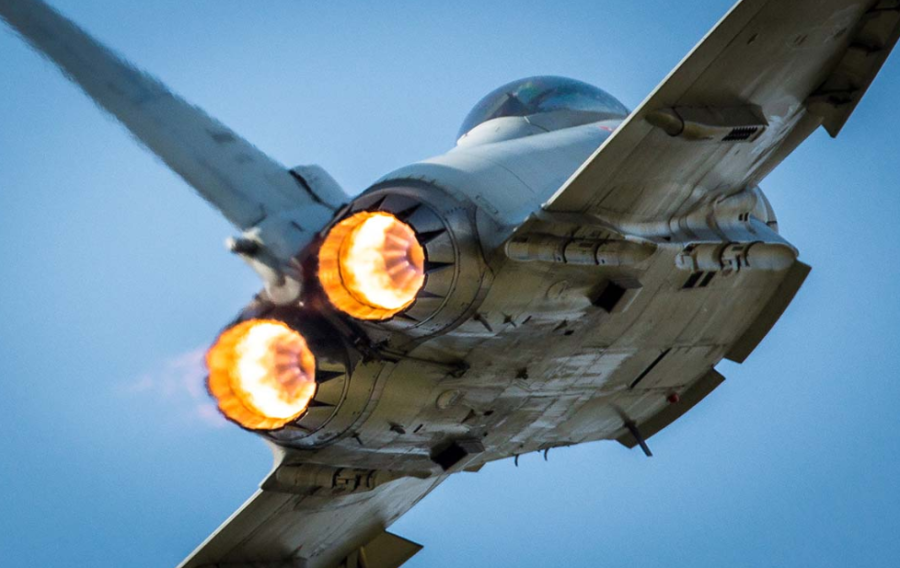
The Royal Air Force has commenced NATO air defence operations over Poland, with Typhoon fighter jets conducting their first patrol as part of Operation Eastern Sentry. The mission follows a significant Russian drone incursion into Polish airspace, described as the most serious violation of NATO airspace since the invasion of Ukraine began.
Two Typhoons departed RAF Coningsby on 20 September, supported by a Voyager refuelling aircraft from RAF Brize Norton, to patrol Polish skies. The aircraft returned to the UK after completing the sortie, which was designed to deter and defend against aerial threats, including drones, on NATO’s eastern flank. More than 400 RAF personnel will directly support the UK contribution to the mission.
The deployment underscores the UK’s growing commitment to NATO’s collective security. It follows consultations under Article 4 of the Washington Treaty, initiated by Poland after recent Russian incursions. Defence Secretary John Healey confirmed that the operation demonstrates NATO’s resolve to protect Alliance territory, while Air Chief Marshal Harv Smyth highlighted the RAF’s ability to integrate rapidly with allied forces to deliver airpower at range.
For UK defence industry, the operation highlights ongoing demand for advanced air platforms, weapons systems, and supporting technologies. The Typhoon, equipped with sophisticated sensors and ASRAAM missiles, remains central to UK and NATO air defence. This creates opportunities for suppliers engaged in avionics, precision munitions, maintenance support, and digital integration across allied fleets. The Voyager’s refuelling capability also reinforces the importance of air-to-air refuelling platforms, sustaining operational reach across NATO missions.
The government’s wider commitment to increase defence spending to 2.6% of GDP by April 2027 will underpin long-term procurement and modernisation programmes. With UK forces continuing to play a leading role across NATO, from the Army’s permanent presence in Estonia to repeated RAF deployments in Eastern Europe, industrial demand will remain high for capability upgrades, training, logistics, and sustainment.
For suppliers, the evolving NATO mission profile emphasises opportunities not only with prime contractors delivering frontline aircraft and weapons, but also with the extensive support ecosystem required to keep forces operational. Businesses positioned to provide rapid innovation in sensors, secure communications, sustainment solutions, and advanced munitions are likely to benefit as the UK reinforces its NATO commitments and adapts to heightened airspace threats in Europe.
If you would like to join our community and read more articles like this then please click here

Post written by: Vicky Maggiani
Vicky has worked in media for over 25 years and has a wealth of experience in editing and creating copy for a variety of sectors.
RELATED ARTICLES

August 3, 2026
Land - BAE Systems Reports £84 Billion Order Backlog and Upgraded Guidance as Global Defence Spending Drives Record Performance
BAE Systems’ strongest first-half results in years – with sales up 9%, a record order backlog and full-year guidance raised

August 3, 2026
Maritime - US Awards $76.6 Billion Submarine Contract in Historic Undersea Modernisation Drive
A landmark US shipbuilding investment spanning Columbia and Virginia Class submarines signals the scale of allied commitment to undersea deterrence