


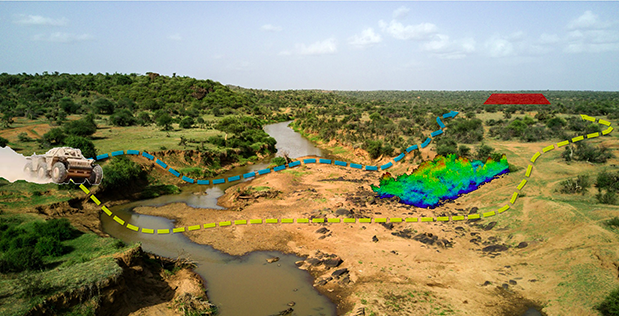
The self-driving car industry has made great autonomy advances, but mostly for well-structured and highly predictable environments. In complex militarily-relevant settings, robotic vehicles have not demonstrated operationally relevant speed and aren’t autonomously reliable. While vehicle platforms that can handle difficult terrain exist, their autonomy algorithms and software often can’t process and respond to changing situations well enough to maintain necessary speeds and keep up with soldiers on a mission.
DARPA’s Robotic Autonomy in Complex Environments with Resiliency (RACER) program aims to make sure algorithms aren’t the limiting part of the system and that autonomous combat vehicles can meet or exceed soldier driving abilities.
Over a four-year timeline, RACER will develop new algorithm technologies that maximise utilization of the sensor and mechanical limits of Unmanned Ground Vehicles (UGVs) and constantly test these algorithms in the field at DARPA-hosted experiments across the country on a variety of terrain. DARPA will provide advanced UGV platforms that research teams will use to develop autonomous software capabilities through repeated cycles of simulations and tests on unstructured off-road landscapes.
“In order to achieve RACER goals of increased speed and resilience, we need to embrace learning approaches that automatically tune system parameters in real time,” said Stuart Young, program manager leading the RACER project. “Successful software will extract features from sensor data and use that information to make on-the-spot driving decisions.”
RACER program goals include not only autonomy algorithms, but also creation of simulation environments that will support rapid advancement of self-driving capabilities for future UGVs.
image and story courtesy of DARPA
If you would like to join our community and read more articles like this then please click here
DARPA off-road unmanned vehicles RACER Robotic Autonomy in Complex Environments with Resiliency
Post written by: Matt Brown
RELATED ARTICLES

October 8, 2024
Homeland - UK, US and Canada to collaborate on cybersecurity and AI research
The Ministry of Defence, the US Defense Advanced Research Projects Agency (DARPA) and the Canadian Department of National Defence will
August 9, 2023
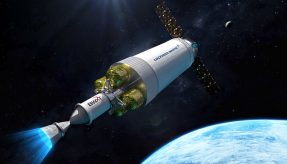
Air - DRACO Technology to help humans travel to Mars
Lockheed Martin has won a contract from the Defense Advanced Research Projects Agency (DARPA) to develop and demonstrate a nuclear-powered