



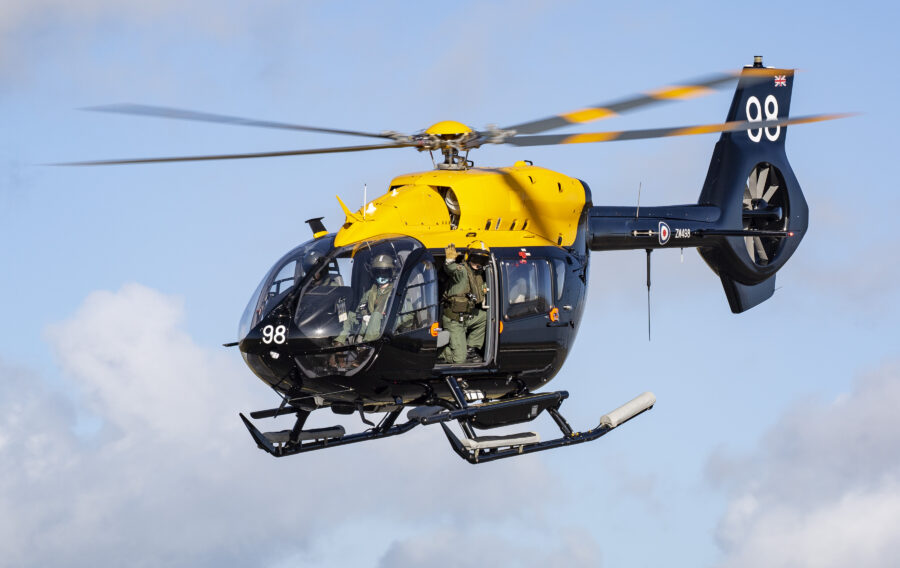
The British Army has reached a significant operational milestone with the delivery of the first two Airbus H145 Jupiter HC Mk2 helicopters to Brunei.
This delivery, part of a wider £148 million Ministry of Defence (MOD) procurement programme, represents one of the department’s most rapid acquisitions in recent years, reaching the frontline in just two years. Operated by 667 Squadron Army Air Corps, the new aircraft will fulfil critical requirements previously held by the retired Puma HC2 fleet, specifically within the demanding jungle training environments of Southeast Asia.
The H145 Jupiter HC Mk2 is tasked with a diverse mission set, including medical evacuation, troop transport, underslung load tasks, firefighting, and intelligence, surveillance, and reconnaissance (ISR). From a supplier perspective, the programme underscores the MOD’s shift toward “accelerated acquisition” models, which prioritise speed to capability while maintaining safety and value for money. For the UK defence industrial base, the contract supports approximately 250 jobs at Airbus Helicopters’ facility in Oxfordshire. Furthermore, a separate £33.6 million support and service agreement was announced in December, securing an additional 30 UK-based roles and establishing a dedicated maintenance presence in Brunei, which includes eight deployed UK personnel.
This procurement aligns with the UK’s Defence Rotary Wing Strategy, which seeks to rationalise the number of helicopter types across the Tri-Service fleet. By increasing commonality between platforms used by the Army and the RAF—specifically the 84 Squadron in Cyprus—the MOD aims to reduce logistical complexity, improve interoperability, and drive down whole-life operational costs. This strategic focus on platform commonality provides a clear signal to sub-contractors and component suppliers regarding the future direction of UK rotary-wing procurement, where simplified support chains and versatile airframes are paramount.
Mark Langrill, Director of Rotary Wing and Uncrewed Air Systems at the National Armaments Director (NAD) Group, emphasised that the successful delivery was the result of close collaboration between the NAD Group, the Army, the RAF, and Airbus Helicopters UK. Crews in Brunei are currently integrating the platforms into their training cycles, building on initial flight experiences gained in the UK over the previous four months. The remaining aircraft in the six-helicopter order are scheduled to be in-theatre and fully operational by the end of 2026, completing the transition to this modern rotary capability and reinforcing the UK’s commitment to maintaining specialised training environments overseas.
Image: Crown Copyright
If you would like to join our community and read more articles like this then please click here

Post written by: Vicky Maggiani
Vicky has worked in media for over 25 years and has a wealth of experience in editing and creating copy for a variety of sectors.
RELATED ARTICLES

April 10, 2026
Air - Astroscale UK Advances MoD Orpheus Mission Following Critical Design Milestone
Astroscale UK has announced the successful completion of the Critical Design Review (CDR) for the Ministry of Defence’s Orpheus mission,

April 9, 2026
Homeland - BFBS Launches Second Season of UK Armed Forces Esports League
The British Forces Broadcasting Service (BFBS) has officially announced the launch of the BFBS Pro League Season Two, marking a