


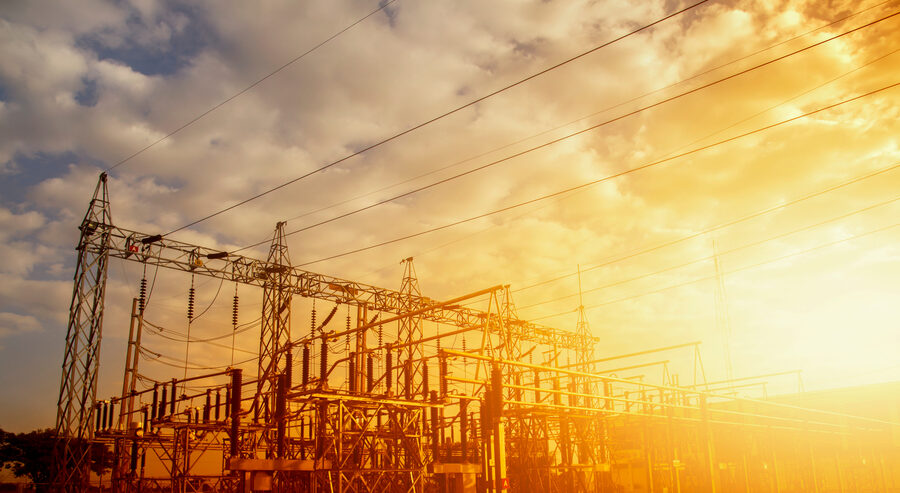
Europe is living through heightened complexity and could be at the brink of a polycrisis. The continent’s export-led model is under strain, squeezed between China’s industrial policy and a more transactional United States. Russia’s invasion of Ukraine brings back hard security, and hybrid attacks on critical infrastructure have become routine. Fiscal space is narrowing just as budgets rise and populations are aging. Meanwhile Europe is warming at twice the global average, driving droughts, floods and high adaptation costs.
These pressures do not operate in isolation: they cascade. Climate shocks hit agricultural yields in Europe and abroad, raise food prices, fuel political tension and migration, and compound fiscal stress. Cyber-attacks on critical infrastructure reverberate through industry, financial markets and public trust. When competitiveness is weakened by energy price spikes or supply chain disruption, Europe’s capacity to invest in defence and climate resilience erodes.
The perennial energy crisis
The war in Iran and the closure of the strait of Hormuz added a shock to these unstable foundations. Energy prices are skyrocketing and this time both oil and gas are impacted. Household inflation, interest rates and fiscal debt burden will follow soon. Energy security is dominating the agenda. Once again, policy makers risk treating price spikes as an anomaly to bridge rather than a pattern to break.
In this context, the energy transition has increased strategic relevance. Fossil fuels are not just a problem because of climate change. Their use is unsustainable, relying on finite and unevenly distributed resources, trading in volatile commodity markets that react instantly to shocks, and flowing through vulnerable choke points such as the Strait of Hormuz or the Suez Canal.
Previous foreign interventions in the Middle East were driven by the desire to stabilise energy markets, but since 2000 energy has increasingly taken the back seat. Whatever the current war aims of the US in Iran are, stable energy prices are not among them. Yet today the havoc in energy markets due to the tensions around Hormuz is rapidly outpacing any other strategic considerations.
Connecting the dots
The war in Iran is demonstrating how threats cascade across geographic domains and strategic dimensions. As the economy comes under strain from energy prices, calls for fiscal subsidies and relaxation of Russian oil sanctions grow louder. Both measures will weaken the Ukrainian war effort. Yet as the war in Iran shifts to drone tactics, combatants on all sides stand to benefit from Ukrainian or Russian drone expertise and manufacturing known-how. Russian oil exports will support Russian Iranian military-industrial collaboration, that develops and supplies those drones.
Europe has only one way out of this conundrum: rapid acceleration of renewable electrification. Solar and wind generate power from domestic resources, often more cheaply. Once installed they generate energy without continuous imports, even if those equipment supplies are halted. The infrastructure is less vulnerable to hostile attacks when hardened through cyber security. The learning curves that come with modular technologies bring cost reduction and innovation dividends.
The energy transition
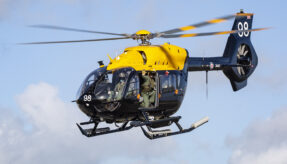
Decoupling from oil and gas provides strategic benefits for defence as much as for the civilian economy. Armed forces have long treated energy logistics as a vulnerability. During the wars in Iraq and Afghanistan, fuel convoys were among the most frequent targets of insurgent attacks and caused a significant share of casualties. Protecting energy supply lines absorbed enormous operational resources. Furthermore, military capabilities depend on industrial production, complex supply chains, and resilient infrastructure. Steel, chemicals, electronics, and advanced manufacturing all require reliable energy inputs, particularly during hostilities.
Heightened risks to energy supplies from geopolitical tensions or maritime disruption affect defence readiness. For this reason, defence planners increasingly consider the broader design of energy systems and opportunities for alternative energy. Electric motors with batteries provide tactical stealth advantages compared to combustion engines. E-SAF could decouple fuel production from access to petroleum supplies. New systems like drones are often electrified by default.
Europe’s current rearmament moment creates an opportunity to align strategic agendas. Investment in defence capabilities will reshape industrial policy across sectors such as aviation, materials, electronics, and advanced manufacturing. These same sectors are central to civilian economy: electrification, resilient grids, advanced batteries, and new energy carriers will shape both economic competitiveness and strategic autonomy. R&D breakthroughs in defence can catalyse civilian uses and increase economic productivity, just like the internet and aerospace did before.
From panic to strategy
The lower European dependence on imported oil and gas, the greater strategic flexibility in a turbulent world and the lower vulnerability to external coercion. Not every use can shift as easily, but every joule that can shift will support European security and autonomy. Seen through this lens, the energy transition is not a distraction from other priorities. It should be framed as is sound security, competitiveness and climate policy all at once.
Peter Hulshof and Boris Vergote at Systemiq, and co-authors of the climate impact on defence report, The European Resilience Agenda, with the University of Oxford and the Clingendael Institute.
If you would like to join our community and read more articles like this then please click here

Post written by: Vicky Maggiani
Vicky has worked in media for over 25 years and has a wealth of experience in editing and creating copy for a variety of sectors.
RELATED ARTICLES
April 13, 2026
Air - GCAP Agency Awards £686m International Contract to Edgewing
The Global Combat Air Programme (GCAP) has reached a definitive milestone with the award of its first joint international contract,
April 10, 2026
Air - Astroscale UK Advances MoD Orpheus Mission Following Critical Design Milestone
Astroscale UK has announced the successful completion of the Critical Design Review (CDR) for the Ministry of Defence’s Orpheus mission,