


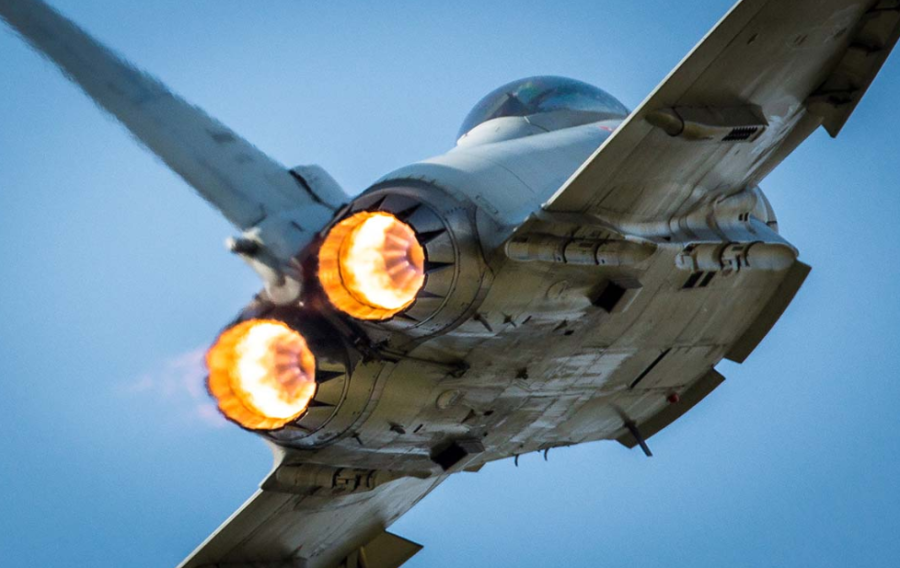
The Ministry of Defence (MOD) has confirmed a £205 million contract extension with QinetiQ to provide essential technical and engineering support for the Royal Air Force’s (RAF) Typhoon fighter jet fleet.
This five-year agreement is designed to ensure the continued operational readiness of the UK’s primary multi-role combat aircraft while supporting approximately 250 high-skilled jobs across the national defence industrial base. The investment underscores the government’s commitment to the Typhoon programme as both a cornerstone of national security and a primary driver of domestic economic growth.
The contract was awarded to QinetiQ as the lead of the Aurora consortium under the Engineering Delivery Partner (EDP) framework. The scope of work focuses on delivering airworthiness, safety expertise, and specialist technical support to maintain the fleet’s capability for 24/7 Quick Reaction Alert duties and international operations, such as Operation Eastern Sentry and missions against Daesh. Geographically, the investment will sustain employment at several key UK sites, including Farnborough, MOD Boscombe Down, Malvern, Lincoln, Bristol, RAF Coningsby, and Warton. For businesses within the UK defence supply chain, this long-term commitment provides a stable landscape and highlights the sustained demand for specialist engineering and maintenance services.
A significant component of the technical support will facilitate the delivery and integration of the European Common Radar System (ECRS) Mk2. This advanced radar technology is designed to allow the aircraft to simultaneously detect, identify, and track multiple targets across air and ground domains, representing a substantial upgrade in electronic warfare capability. The inclusion of such high-end systems within the contract scope offers tangible opportunities for sub-contractors specialising in avionics, radar technology, and complex software development.
This domestic investment follows the substantial £8 billion export agreement secured last year for the sale of 20 Typhoon aircraft to Türkiye, a deal estimated to support a further 20,000 jobs across the UK. These developments align with the government’s broader policy to increase defence spending to 2.6% of GDP by 2027. This fiscal trajectory, combined with commitments in the Strategic Defence Review, indicates a robust pipeline for the UK aerospace sector. As the Typhoon fleet remains central to both UK and NATO defence strategies, this contract ensures that the technical infrastructure and expertise remain in place to support the aircraft’s mission-readiness and the eventual transition toward next-generation air combat capabilities.
If you would like to join our community and read more articles like this then please click here

Post written by: Vicky Maggiani
Vicky has worked in media for over 25 years and has a wealth of experience in editing and creating copy for a variety of sectors.
RELATED ARTICLES

March 27, 2026
Land - British engineering firm Rowden hosts the British Army to explore frontline Techcraft
British engineering firm Rowden hosted a visit by British Army Sergeant Majors to explore how collaboration between engineers and soldiers helps shape

March 27, 2026
Air - DroneShield Expands C2 Interoperability
DroneShield, a global leader in counter-unmanned systems (C-UxS) solutions, today announced interoperability between DroneSentry-C2 command-and-control software, and optical sensing technologies from OpenWorks Engineering. The partnership strengthens DroneShield’s ability to unify multi-domain sensor inputs