



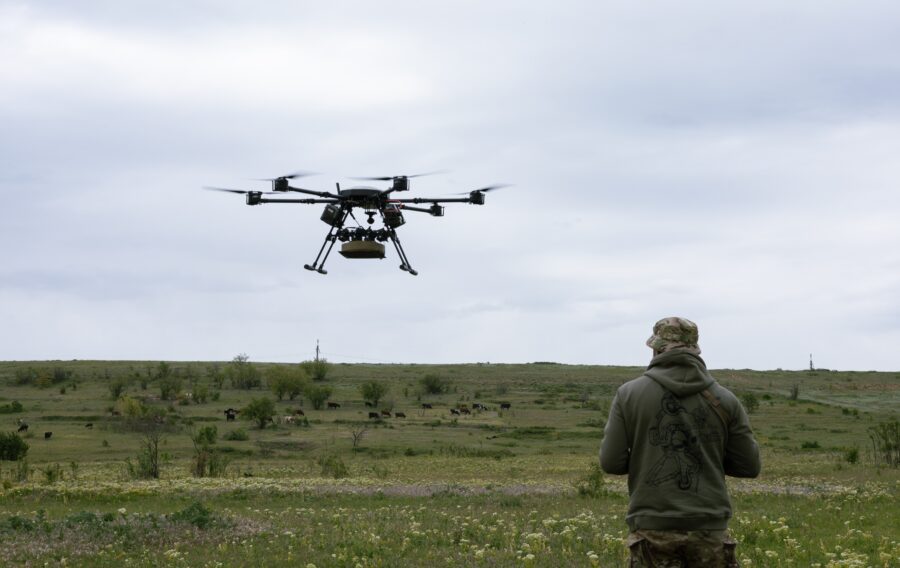
Portugal has been selected to host the European Defence Agency’s (EDA) 2026 Operational Experimentation Campaign, known as OPEX, marking a significant milestone in the acceleration of European defence innovation.
Scheduled for October 2026, the campaign will be staged at the Santa Margarida Military Training Area, which is currently being established as a national regulatory sandbox. This designation provides a controlled, realistic environment where emerging technologies can be tested and validated without the constraints of standard peacetime regulations. For UK-based defence contractors and technology providers monitoring European developments, the campaign represents a critical focal point for the integration of next-generation capabilities into field operations.
The 2026 iteration of OPEX will focus on several high-priority technological domains, including autonomous aerial and ground systems, loitering munitions, and logistics support functions such as automated resupply and casualty evacuation. The campaign is designed to bring technologies that are already at an advanced stage of development into challenging, real-world operational conditions. By merging the international scope of the EDA’s OPEX with the Portuguese Army’s national experimentation initiative, ARTEX26, the programme aims to create a cohesive testing environment that facilitates the rapid transition of prototypes into active service. This approach is particularly relevant for sub-contractors involved in reconnaissance, surveillance, and multi-platform cross-domain field testing.
The EDA’s Hub for Defence Innovation (HEDI) will oversee the campaign, focusing on the alignment of national initiatives with European Union-level tools and processes. Following the inaugural 2025 campaign held in Italy, the 2026 event signifies a shift from a proof-of-concept phase toward a permanent, multinational experimentation network. In addition to core domains, the EDA will provide technical support for emerging and disruptive technologies, including adversarial counter-drone testing and the safe integration of unmanned systems into complex environments. This framework offers a blueprint for defence innovation that prioritises speed and operational relevance, providing essential data for businesses looking to refine their product roadmaps for the military market.
For industry stakeholders, innovators, and suppliers within the defence sector, the campaign provides a structured pathway to demonstrate technical maturity to military decision-makers. The EDA has confirmed that industry participants and relevant organisations will be invited to signal their interest in joining OPEX 2026 starting in early 2026. This timeline allows businesses to align their research and development cycles with the campaign’s specific requirements. Ultimately, the 2026 Operational Experimentation Campaign serves as a vital mechanism for shaping the future of European defence procurement and ensuring that the supply chain is prepared to meet the demands of modern, technology-driven warfare.

Post written by: Vicky Maggiani
Vicky has worked in media for over 25 years and has a wealth of experience in editing and creating copy for a variety of sectors.
RELATED ARTICLES

March 27, 2026
Land - British engineering firm Rowden hosts the British Army to explore frontline Techcraft
British engineering firm Rowden hosted a visit by British Army Sergeant Majors to explore how collaboration between engineers and soldiers helps shape

March 27, 2026
Air - DroneShield Expands C2 Interoperability
DroneShield, a global leader in counter-unmanned systems (C-UxS) solutions, today announced interoperability between DroneSentry-C2 command-and-control software, and optical sensing technologies from OpenWorks Engineering. The partnership strengthens DroneShield’s ability to unify multi-domain sensor inputs