


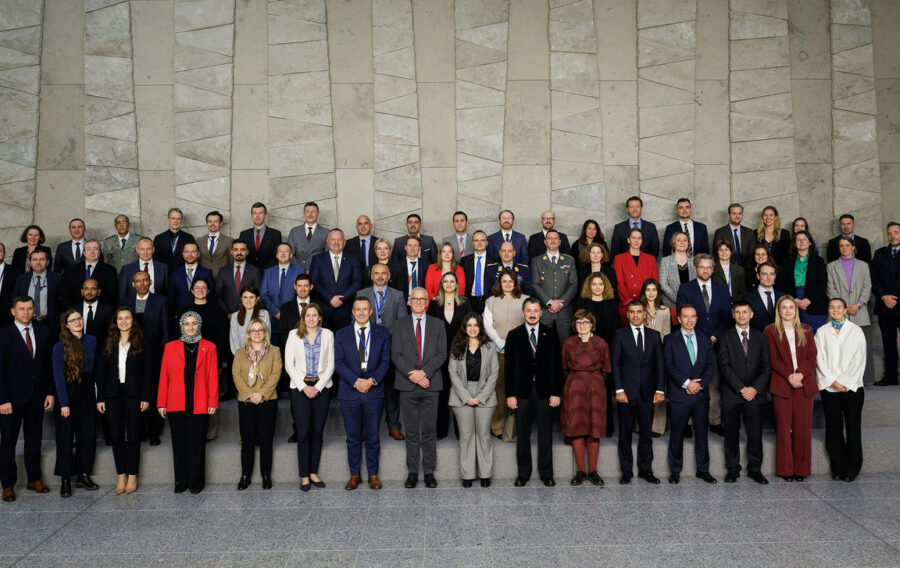
Representatives from NATO member and partner nations convened at the Alliance’s headquarters in Brussels on 19 November 2025 for the annual meeting of National Points of Contact for the Defence and related Security Capacity Building (DCB) Initiative.
The assembly provided a forum for experts to evaluate the implementation of ongoing capacity-building programmes, discuss resource management, and review the specific support packages provided to NATO partner countries. The meeting also served to establish future priorities and enhance coordination within the international DCB community, a key mechanism through which the Alliance supports the development of defence capabilities beyond its membership.
The DCB Initiative, established at the 2014 Wales Summit, is a cornerstone of NATO’s cooperative security efforts. It provides targeted assistance to eight partner nations through strategic advice, education, training, and the provision of equipment and infrastructure. For the UK defence supply chain, this initiative represents a structured framework for international defence engagement. Opportunities may arise for UK-based companies specialising in defence training, consultancy, systems integration, and equipment supply to contribute to these NATO-led programmes. The initiative’s focus on improving resilience and enabling partners to address complex security challenges aligns with the UK’s own strategic objectives, suggesting potential for national contributions.
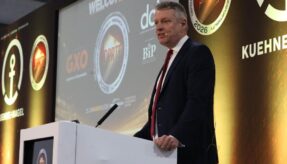
During her keynote address, Burcu San, the Deputy Assistant Secretary General for the Operations Division, highlighted the mutual benefits of the initiative, stating that it strengthens entire defence ecosystems and enables partners to operate alongside Allied forces. This emphasis on interoperability is significant for industry, as it implies a demand for NATO-standard equipment and training methodologies. The DCB framework facilitates joint planning by drawing on operational expertise from across the Alliance, including NATO’s Command Structure. As the initiative moves into its second decade, the discussions held in Brussels will shape the future direction of these support packages, potentially influencing procurement and development priorities for partner nations and creating new avenues for industry collaboration.
Image: NATO
If you would like to join our community and read more articles like this then please click here

Post written by: Vicky Maggiani
Vicky has worked in media for over 25 years and has a wealth of experience in editing and creating copy for a variety of sectors.
RELATED ARTICLES

April 1, 2026
Homeland - £3.9m Solar Project Commences at Bassingbourn Barracks
The Defence Infrastructure Organisation (DIO) has commenced construction on a new £3.9 million solar array at Bassingbourn Barracks, marking a

April 1, 2026
Land - UK and US Defence Agencies Conduct Advanced AI Trials for Battlefield Medical Triage
The Defence Science and Technology Laboratory (Dstl) has entered a strategic collaboration with the US Defense Advanced Research Projects Agency