


The British Army’s 1st Aviation Brigade has commenced a major training deployment, Exercise Pinion Titan, to validate its readiness for high-intensity NATO combat operations.
The exercise involves a significant joint contingent, with up to 50 helicopters, 1,000 vehicles, and 2,000 military personnel from the British Army, Royal Air Force, French Army Light Aviation (ALAT), and the US Army. The exercise, which will run until the end of November, is a critical test of the brigade’s ability to integrate with allied forces and deploy a diverse range of aviation assets.
The initial phase at Wattisham Flying Station in Suffolk saw a combined formation of Apache, Wildcat, Chinook, and Gazelle helicopters launch simultaneously, demonstrating a high level of logistical and engineering coordination. According to Brigadier Nick English, Commander of 1st Aviation Brigade, this exercise marks the culmination of a significant modernisation programme initiated when the brigade was formed in 2020. A key focus of the training will be the integration of cutting-edge technologies, including unmanned aerial systems and advanced communications, presenting clear areas of interest for technology and systems suppliers.
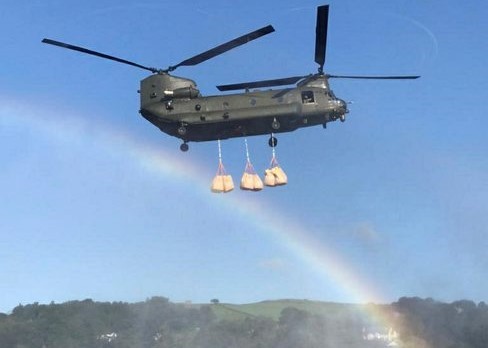
Throughout the exercise, the combined force will establish forward operating bases across northern England and conduct complex training missions from the Scottish Highlands to Salisbury Plain. These will simulate demanding operational scenarios, including deep strike operations where Apache and French Gazelle attack helicopters will be tasked with neutralising high-value targets far behind enemy lines. Concurrently, RAF Chinook helicopters will practice air assault missions, transporting troops and equipment, while Wildcat reconnaissance helicopters will provide vital intelligence, surveillance, and target acquisition. A planning team from the US 12th Combat Aviation Brigade is embedded within the command structure, further enhancing interoperability.
The logistical and engineering backbone for the exercise is provided by 7 Aviation Support Battalion Royal Electrical and Mechanical Engineers and 158 Regiment Royal Logistic Corps. Their role in sustaining the battlegroups with fuel, ammunition, and expert maintenance support is essential to the exercise’s success and highlights the ongoing need for robust and efficient supply chain solutions. The participation of the French 3e Régiment d’Hélicoptères de Combat underscores the continued importance of the bilateral military cooperation established under the 2010 Lancaster House Treaties, reinforcing the requirement for interoperable systems between key NATO allies.
If you would like to join our community and read more articles like this then please click here

Post written by: Vicky Maggiani
Vicky has worked in media for over 25 years and has a wealth of experience in editing and creating copy for a variety of sectors.
RELATED ARTICLES

March 27, 2026
Land - British engineering firm Rowden hosts the British Army to explore frontline Techcraft
British engineering firm Rowden hosted a visit by British Army Sergeant Majors to explore how collaboration between engineers and soldiers helps shape

March 27, 2026
Air - DroneShield Expands C2 Interoperability
DroneShield, a global leader in counter-unmanned systems (C-UxS) solutions, today announced interoperability between DroneSentry-C2 command-and-control software, and optical sensing technologies from OpenWorks Engineering. The partnership strengthens DroneShield’s ability to unify multi-domain sensor inputs