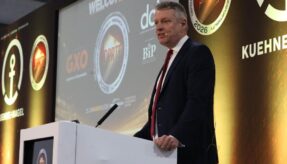




The United Kingdom and Germany are significantly expanding their defence partnership, marking the first anniversary of the landmark Trinity House Agreement with enhanced cyber security collaboration and deeper military integration.
Defence Secretary John Healey and German Defence Minister Boris Pistorius commemorated the milestone during a joint visit to RAF Lossiemouth, where they announced the fifth Trinity House Lighthouse project focusing on unprecedented cyber cooperation between the nations.
The initiative will enable the UK’s new Cyber and Specialist Operations Command and Germany’s Cyber and Information Domain Service to share data, intelligence and operational tools securely with each other and NATO allies. This includes developing a secure cloud network facilitating real-time information sharing whilst defending against cyber attacks.
“A year on from the Trinity House Agreement, the UK and Germany are working closer than ever to keep our two countries and Europe safe,” said Defence Secretary Healey. “Together we’re strengthening NATO, boosting our cyber defences, and ensuring our Armed Forces can operate side by side with ease.“
The partnership extends to protecting NATO’s logistics and transport networks from cyber threats, demonstrating both nations’ commitment to alliance security. In the coming months, a Deutsche Marine P-8A maritime patrol aircraft will visit Lossiemouth for the first time, ahead of joint operations with the RAF in the North Atlantic countering Russian aggression.
During their visit, the defence ministers joined an operational flight aboard an RAF Poseidon P-8A, the cutting-edge maritime patrol aircraft capable of detecting, tracking and defending against hostile ships and submarines. German crews have previously participated in NATO Baltic Sentry missions operating from Lossiemouth.
The Trinity House Agreement has delivered substantial economic benefits for the UK, with German companies committing £800 million investment in British defence industry over the next decade, creating 600 skilled jobs across multiple regions. This supports the government’s Plan for Change, making defence an engine for growth nationwide.
Key investments include Rheinmetall’s new Telford factory manufacturing artillery gun barrels using British steel from Sheffield Forgemasters – the first UK barrel production in a decade. Helsing is establishing a maritime glider drone facility in Plymouth with £350 million AI investment, whilst ARX Robotics is investing £45 million creating 90 high-skilled jobs producing uncrewed systems. Elsewhere, Stark is opening Wiltshire’s major drone manufacturing facility, creating 100 jobs at their first non-German site.
Both nations’ defence industries are collaborating on advanced capabilities, including rapid development of a Deep Precision Strike weapon exceeding 2,000 kilometres range, whilst new agreements will enhance bridge-building equipment for land operations. The Defence Secretary also reaffirmed plans for joint procurement of advanced Sting Ray torpedoes, strengthening NATO’s underwater defence capabilities.
If you would like to join our community and read more articles like this, please click here.
Post written by: Robert Atherton
RELATED ARTICLES

April 1, 2026
Homeland - £3.9m Solar Project Commences at Bassingbourn Barracks
The Defence Infrastructure Organisation (DIO) has commenced construction on a new £3.9 million solar array at Bassingbourn Barracks, marking a

April 1, 2026
Land - UK and US Defence Agencies Conduct Advanced AI Trials for Battlefield Medical Triage
The Defence Science and Technology Laboratory (Dstl) has entered a strategic collaboration with the US Defense Advanced Research Projects Agency