



Writing for Defence Online, Pam Barber, Head of Business Development for Defence at The Open University looks at the importance of lifelong learning for the defence industry.
The coronavirus pandemic has brought about sweeping changes to the way organisations work and their skills priorities. But another development last year also had profound implications for the future of the defence sector.
In November, Boris Johnson announced £16.5 billion in new money over four years. The Prime Minister said that the funding would safeguard “hundreds of thousands” of jobs and create 40,000 new roles and lead to a “once-in-a-generation modernisation” of the Armed Forces.
The opportunity to develop and invest in the skills and careers of Armed Forces personnel and the wider sector is certainly there. It’s now down to educators, leaders, employers and employees themselves, to identify the challenges and opportunities to make this vision a reality.
A focus on digital
According to The Open University’s recent Business Barometer, 56 per cent of employers suggested that the digital skills available to their organisation need to be improved in order to survive the next twelve months.
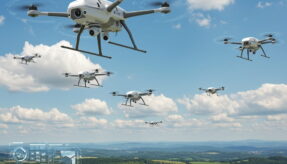
Championing cutting-edge digital skills has long been a priority for the defence sector. It was indicated that the aforementioned funding would bring about investment in new technology such as a new centre dedicated to artificial intelligence, the creation of a national cyber force, and a new RAF space command launching British satellites.
However, the Business Barometer also found that skills gaps are extremely costly for organisations to fill. The report found that costs such as recruitment fees and high salaries for ready-made talent cost UK employers £6.6 billion over a twelve-month period to September 2020.
With exciting technological advancements on the horizon, we need to ensure that employees have the skills necessary to harness the sector’s ever growing tech potential. At The Open University, we believe that developing talent, unlocking potential and widening the talent pool is a more sustainable way of growing the skills needed for the future – whether that that be for new or existing employees.
Keeping pace
The Armed Forces already provides significant training and education as part of the normal career progression.
Nevertheless, when it comes to learning new skills, the pandemic could pave the way for a step change in how the nation embraces lifelong learning. Looking at data from our own OpenLearn free learning platform, across all sectors we have seen a huge increase in online employee learning during the pandemic. STEM courses specifically have seen remarkable growth in terms of enrolment numbers: our Learn to code for data analysis course has seen a twelve-fold increase in course starts when comparing 2019 figures (2,500) to 2020 data (14,000) for instance.
The Open University (OU) also has a rich heritage in providing self-directed, flexible education to Armed Forces personnel through the Enhanced Learning Credits programme. Our experience over the last few years has been that self-directed learning trends towards STEM subjects. At the OU, 66 per cent of forces personnel who embarked on study with us last year took on STEM subjects – a rise of 24 per cent since 2015/2016. The most popular areas of study are Engineering, followed by Computing and Communications and Maths and Statistics. This suggests that this period of uncertainty saw learners embrace the disruption of the pandemic as an opportunity to drive forward their careers and fill crucial skills gaps within the defence sector, or beyond.
Seizing the opportunity
Leaders and educators have the opportunity to utilise this appetite for learning. The strong interest in digital and wider STEM subjects is exciting – especially at a time when we need to recognise we are likely have multiple careers and need to continually update, develop and sometimes realign our skillsets.
For learners, programmes such as Enhanced Learning Credits, and the learning and development offered in the wider sector has never been more critical. Education and lifelong learning are essential for the sector to sustainably grow and bring the ambitious plans set out in the recent funding announcements to fruition.
If you would like to join our community and read more articles like this then please click here
digital future lifelong learning Pam Barber The Open University
Post written by: Matt Brown
RELATED ARTICLES


October 30, 2025
Homeland - A UK-Ukraine Model For Defence Innovation – Research Paper
The war in Ukraine has triggered a fundamental shift in the global defence landscape. Not only has it exposed critical