



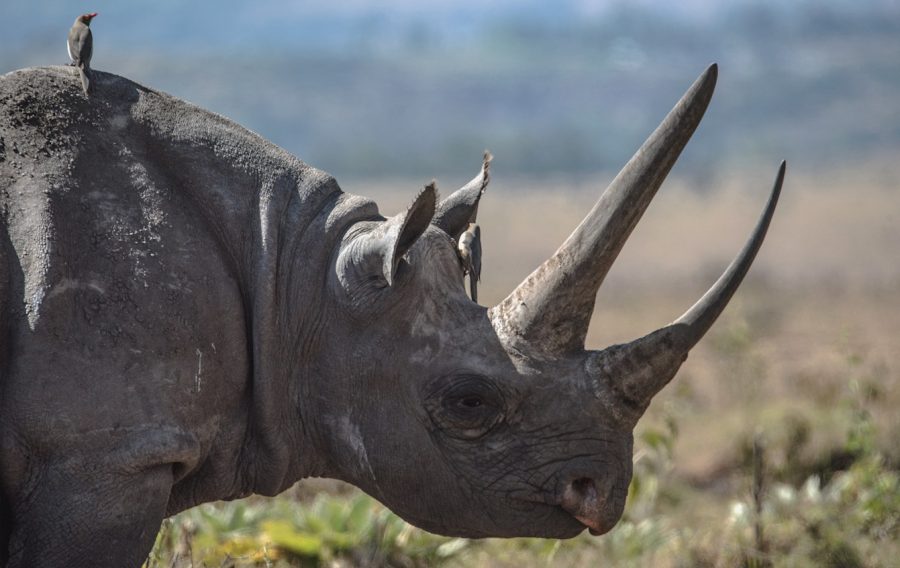
British counter-poaching forces have assisted with the transport of an endangered Black Rhino from South Africa to Malawi.
British troops deployed to Africa to work on counter-poaching operations have taken part in one of the largest translocations of an endangered Black Rhino to date. Troops from the 2nd Battalion Royal Gurkha Rifles recently returned home from deployment in Malawi following the transport of the Rhino.
Towards the end of the deployment the soldiers assisted with the careful offloading of the rhinos who had travelled by air and road from KwaZulu-Natal in South Africa. The project was led by African Parks in conjunction with Malawi’s Department of National Parks and Wildlife Ezemvelo KZN Wildlife.
Officer Commanding British Army Counter Poaching team in Liwonde Major Jez England said: “This latest counter-poaching deployment has been hugely successful. Not only do we share skills with the rangers, improving their efficiency and ability to patrol larger areas, but it also provides a unique opportunity for our soldiers to train in a challenging environment.”
“Helping with the rhino move was a fitting end to our time in Malawi, getting up close to the animals we are here to help protect was an experience the soldiers won’t forget.”
So far, the Army has helped train 200 rangers in Malawi and thanks to effective management and an overhaul of law enforcement by African Parks and the DNPW, supported by the British Army, no high-value species have been poached in Liwonde since 2017. The counter-poaching ranger partnering programme is funded by the Department for Environment, Food and Rural Affairs (Defra) and delivered by the British Army.
If you would like to join our community and read more articles like this then please click here.
Post written by: Matt Brown
RELATED ARTICLES

April 10, 2026
Air - Astroscale UK Advances MoD Orpheus Mission Following Critical Design Milestone
Astroscale UK has announced the successful completion of the Critical Design Review (CDR) for the Ministry of Defence’s Orpheus mission,
April 10, 2026
Air - UK Army Receives Initial H145 Jupiter Helicopters Under Accelerated Procurement
The British Army has reached a significant operational milestone with the delivery of the first two Airbus H145 Jupiter HC